Advanced Fusion Technology for Superior Connection Quality
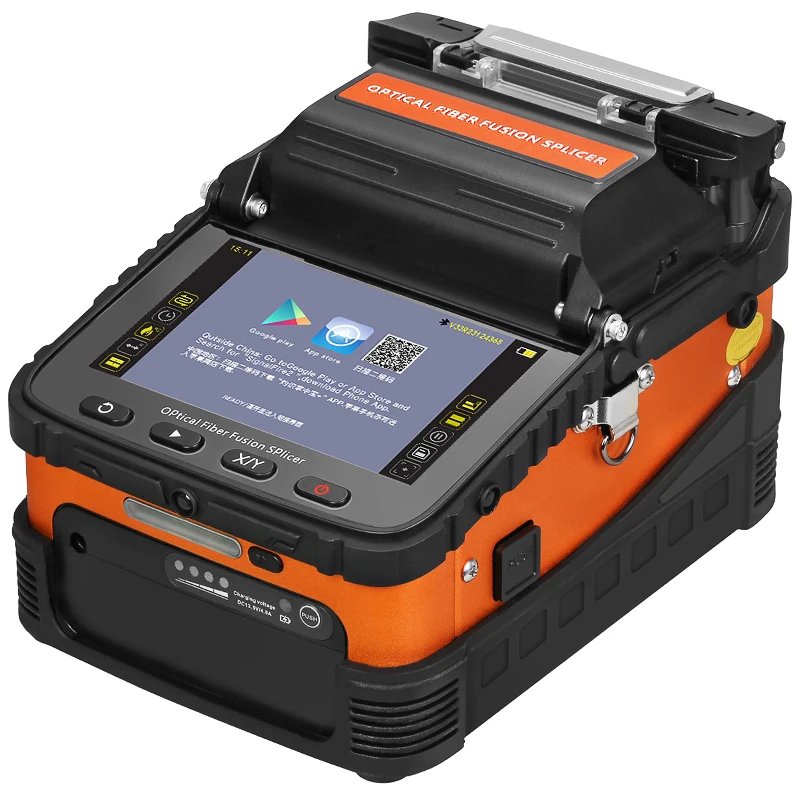
The single fiber splicing machine employs state-of-the-art fusion splicing technology that revolutionizes fiber optic connections through precision engineering and automated control systems. This advanced technology utilizes carefully controlled electric arc discharge to heat fiber ends to their melting point, creating molecular-level bonds that ensure permanent, low-loss connections. The fusion process occurs within a precisely controlled chamber where temperature, timing, and atmospheric conditions are optimized for each splice operation. Sophisticated algorithms analyze fiber characteristics in real-time, automatically adjusting arc power, duration, and positioning to accommodate different fiber types and environmental conditions. The single fiber splicing machine incorporates dual-axis positioning systems that align fibers with sub-micron accuracy before initiating the fusion sequence. High-resolution imaging systems provide magnified views of the splice area, enabling operators to verify proper fiber preparation and alignment throughout the process. Advanced heating profiles ensure uniform temperature distribution across the splice zone, preventing thermal stress that could compromise connection integrity. The technology includes automatic fiber detection capabilities that identify core diameter, cladding specifications, and coating materials, then selects optimal splice parameters accordingly. Protection mechanisms maintain sterile conditions within the splice chamber, preventing contamination that could affect splice quality or long-term reliability. Real-time monitoring systems track splice progress through multiple sensors that measure temperature, arc stability, and fiber movement during the fusion process. Quality assessment algorithms analyze splice geometry and optical characteristics immediately after completion, providing instant feedback on connection performance. The single fiber splicing machine stores comprehensive splice data including parameters used, environmental conditions, and test results for quality documentation and troubleshooting purposes. Calibration systems ensure consistent performance over extended periods, maintaining splice quality standards regardless of usage frequency or environmental variations. This fusion technology delivers splice losses consistently below industry benchmarks while creating connections that withstand mechanical stress, temperature cycling, and environmental exposure throughout their operational lifetime.

 EN
EN