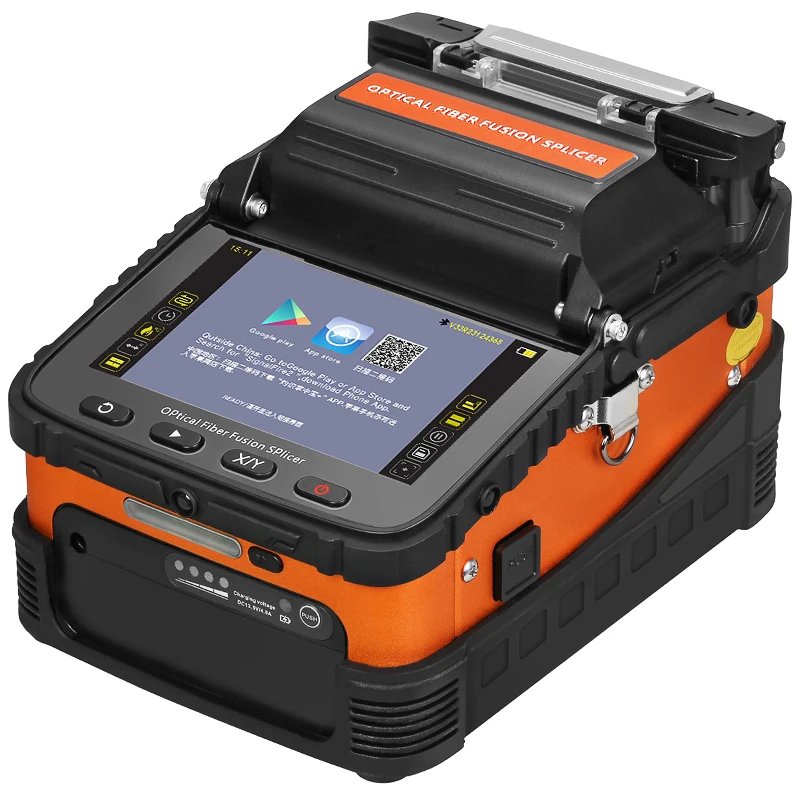
Intelligent Automation Systems for Enhanced Productivity
The splicing machine optical fiber integrates comprehensive automation systems that revolutionize field splicing operations by eliminating manual processes and dramatically improving productivity levels for telecommunications technicians. These intelligent systems begin with automatic fiber recognition technology that identifies fiber types, coatings, and specifications without manual input, ensuring optimal splice parameters are selected for each specific application. Advanced fiber preparation automation includes precise cleaving verification, end-face inspection, and contamination detection that prevents poor quality splices before fusion begins. The splicing machine optical fiber features automated fusion parameter selection that adjusts arc power, time, and positioning based on detected fiber characteristics, environmental conditions, and splice requirements. Sophisticated environmental compensation algorithms automatically modify operating parameters to account for altitude, temperature, humidity, and atmospheric pressure variations that could affect splice quality. The system incorporates intelligent splice sequence management that guides operators through optimal workflows, reducing setup time and ensuring consistent procedures across different technician skill levels. Automated loss estimation technology provides immediate splice quality feedback using advanced optical analysis, eliminating the need for separate testing equipment and reducing overall splice time. The splicing machine optical fiber includes comprehensive data logging capabilities that automatically record splice parameters, loss measurements, and equipment status for quality assurance and network documentation purposes. Smart maintenance scheduling systems monitor equipment usage patterns and component wear, providing predictive maintenance alerts that prevent unexpected failures during critical operations. Automated protective sleeve heating and shrinkage cycles ensure optimal splice protection without manual monitoring, allowing technicians to focus on other preparation tasks. The system features adaptive learning capabilities that optimize performance based on usage patterns and environmental conditions, continuously improving splice quality and operational efficiency. These automation features collectively reduce splice cycle times by up to 60 percent while improving consistency and quality, enabling telecommunications companies to complete projects faster, reduce labor costs, and maintain superior network reliability standards.

 EN
EN