
 EN
EN
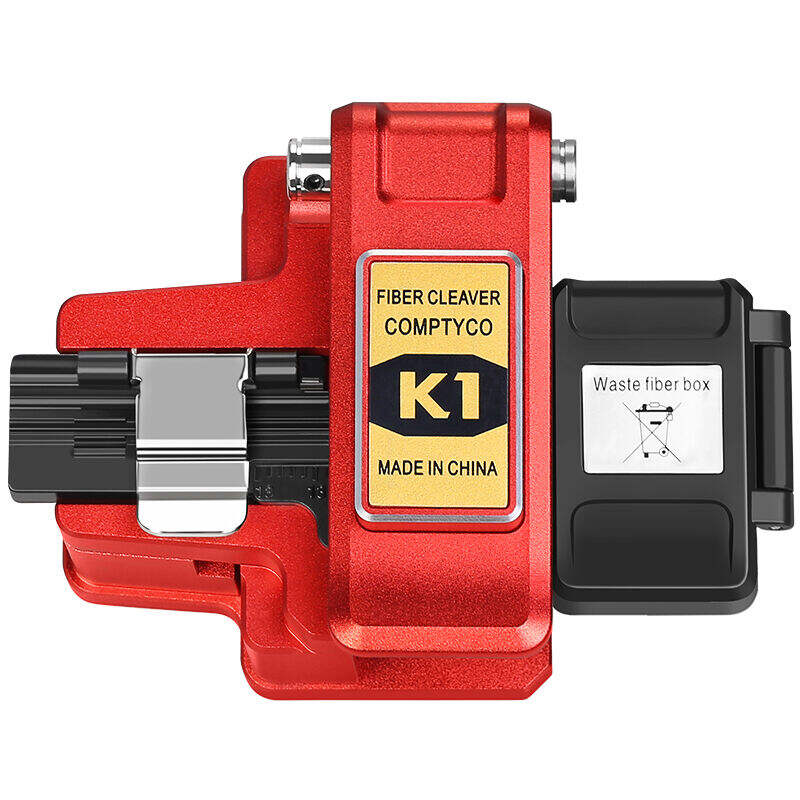
In the intricate world of fiber optic splicing, the cleaver is a foundational tool whose performance dictates the ceiling of success for every subsequent connection. A flawless, mirror-smooth fiber end face is the non-negotiable starting point for achieving low-loss splices. The right cleaver doesn't just make a cut; it ensures consistency, boosts productivity, and safeguards your network's optical performance by transforming a delicate manual task into a reliable, repeatable process.
Modern cleavers like the COMPTYCO K1 High-Precision Hot Melt Fiber Cutting Knife are engineered with features that directly address the core challenges technicians face in the field. From automated mechanisms that enhance precision to robust designs built for durability, understanding these key features is essential for selecting a tool that improves both your splicing quality and workflow efficiency.
The Precision Core: Engineered for Perfect End Faces
Advanced Blade System and Consistent Cleave Angle
The heart of any cleaver is its cutting mechanism. High-quality, hardened blades (often diamond or tungsten carbide) are essential for creating a clean scoring line on the glass fiber without chipping. The true mark of a professional tool, however, is its ability to control the cleave angle. This refers to the deviation of the fiber end face from a perfect 90-degree perpendicular cut. Even an angle of 0.5 degrees can introduce measurable insertion loss and back reflection.
Precision-engineered cleavers like the COMPTYCO K1 are designed to minimize this variable. Through a stable, one-step "press-and-cut" action and a rigid mechanical structure, they ensure the fiber is held and fractured in a perfectly controlled manner. This automation removes technician skill as the primary variable, guaranteeing that every cleave meets a high standard, typically achieving angles well below 1 degree, which is critical for fusion splicing success.
Automatic Return Knife for Efficiency and Safety
A standout feature that dramatically improves workflow is the automatic return knife. After completing a cleave, the blade automatically retracts to its starting position. This simple automation delivers multiple benefits:
Enhanced Safety: The sharp blade is immediately concealed, preventing accidental contact when handling the tool or disposing of fiber scraps.
Operational Speed: Eliminates the manual step of resetting the blade, allowing the technician to immediately prepare the next fiber. This shaves seconds off each cleave, which compounds into significant time savings over a day with hundreds of splices.
Blade Protection: Keeping the blade retracted when not in use protects the critical cutting edge from dust, impact, and accidental damage, extending its service life.
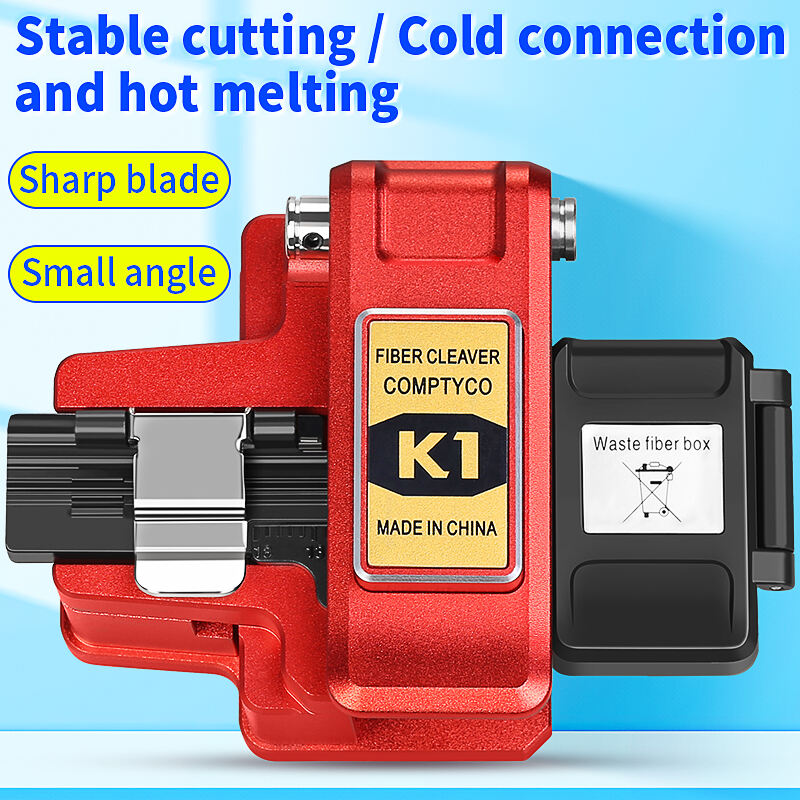
Design for Reliability and Ease of Use
Wide Fiber Compatibility and Simple Operation
A versatile cleaver adapts to the job, not the other way around. A key feature is support for multiple common fiber coatings. The COMPTYCO K1 is specified to handle 250µm (bare fiber), 900µm, 2mm, and 3mm fibers. This covers the vast majority of scenarios in FTTH drop cable installations, premises wiring, and distribution cable work, meaning technicians rarely need to switch tools.
Complementing this is an intuitive, user-centric design. The one-step operation mechanism is straightforward to learn, reducing training time for new technicians. Ergonomic considerations, such as a comfortable grip and logical control placement, reduce hand fatigue during repetitive use, maintaining precision throughout a long work session.
Durable Metal Construction and Integrated Debris Management
Field tools must be tough. The all-metal construction of the K1 cleaver provides the rigidity needed for consistent alignment and the durability to withstand the bumps and vibrations of daily use in vans, toolbags, and job sites. This robust build quality directly contributes to long-term calibration stability and a lower total cost of ownership.
Furthermore, a well-designed cleaver incorporates practical features for cleanliness. An integrated container or easy-access area for collecting the tiny glass fiber fragments (shards) is crucial. It keeps the work area safe, prevents hazardous debris from contaminating other equipment like fusion splicers, and simplifies cleanup, contributing to an overall more professional and efficient working environment.
Quantifying the Impact on Splicing Workflow
Direct Benefits to Splicing Quality and Yield
The cumulative effect of these features is a direct, measurable improvement in splicing outcomes:
Higher First-Pass Success Rate: Consistent, low-angle cleaves lead to more successful fusion splices on the first attempt. This reduces the need for re-stripping, re-cleaving, and re-splicing, which wastes time and fiber.
Lower and More Consistent Insertion Loss: Perfect end faces allow the fusion splicer to make optimal core alignment, resulting in splices with lower and more predictable attenuation. This translates directly to a higher-performing optical link that meets or exceeds design specifications.
Reduced Back Reflection: A smooth, perpendicular end face minimizes light reflections back toward the source, which is critical for systems using lasers and for overall signal integrity.
Boosting Technician Productivity and Project Economics
Beyond quality, efficiency gains directly affect project timelines and costs:
Faster Operation: The combination of one-step action, automatic blade return, and no tool changes for different fiber sizes allows a technician to complete each preparation cycle in seconds.
Reduced Skill Dependency & Training Time: Automated precision makes it easier for technicians of all experience levels to produce professional results, flattening the learning curve.
Lower Operational Costs: Durable construction and protected blades lead to fewer repairs, less downtime, and longer intervals between consumable (blade) replacements. Minimizing fiber waste from bad cleaves also saves material costs.
Selecting the Right Cleaver for Your Needs
Matching Features to Application Scenarios
FTTH & Field Maintenance Teams: Prioritize portability (lightweight, like the K1's 0.35kg), wide fiber compatibility, and ruggedness. Features like automatic return and debris management are invaluable in varied outdoor or customer-premise environments.
Data Center & Enterprise Installers: While still needing reliability, the focus may intensify on impeccable cleave angle consistency for high-density patch panels and ultimate low-loss performance. Speed and cleanliness in a controlled environment are also key.
High-Volume Splicing Contractors: Durability and low long-term operating costs (blade life, maintenance) become critical. Efficiency features that save time per splice have a massive multiplicative effect on large projects.
The Importance of Total Cost of Ownership (TCO)
Evaluate a cleaver based on its total cost over its service life, not just the purchase price. A robust, feature-rich cleaver may have a higher initial cost but delivers a lower TCO through:
- Higher productivity (labor savings).
- Less material waste (fiber, blades).
- Minimal downtime and repair costs.
- Consistent quality that prevents costly rework or network performance issues.
FAQ: Key Questions on Cleaver Features
Why is "automatic return" such an important feature?
It primarily enhances safety and operational speed. By instantly retracting the sharp blade, it prevents injuries and allows the technician to proceed to the next step without pause, streamlining the entire preparation process.
How does wide fiber compatibility (e.g., 250um to 3mm) help?
It provides exceptional versatility for field technicians. With one tool, they can handle everything from bare fiber in splice trays to sheathed drop cables, eliminating the need to carry or switch between multiple dedicated cleavers, saving time and reducing toolbag weight.
Can a good cleaver really improve my fusion splice loss results?
Absolutely. The fusion splicer can only align what you give it. A cleaver that produces a consistent, sub-1-degree end face gives the splicer a perfect starting point, directly enabling it to achieve lower and more stable insertion loss values. The cleaver sets the quality ceiling for the splice.
What should I look for to ensure the cleaver lasts in field conditions?
Prioritize durable materials (e.g., metal housing), a protective carrying case, and a design that shields critical components like the blade and alignment V-grooves from dust and impact. Manufacturer reputation for reliability is also a key indicator.