
 EN
EN
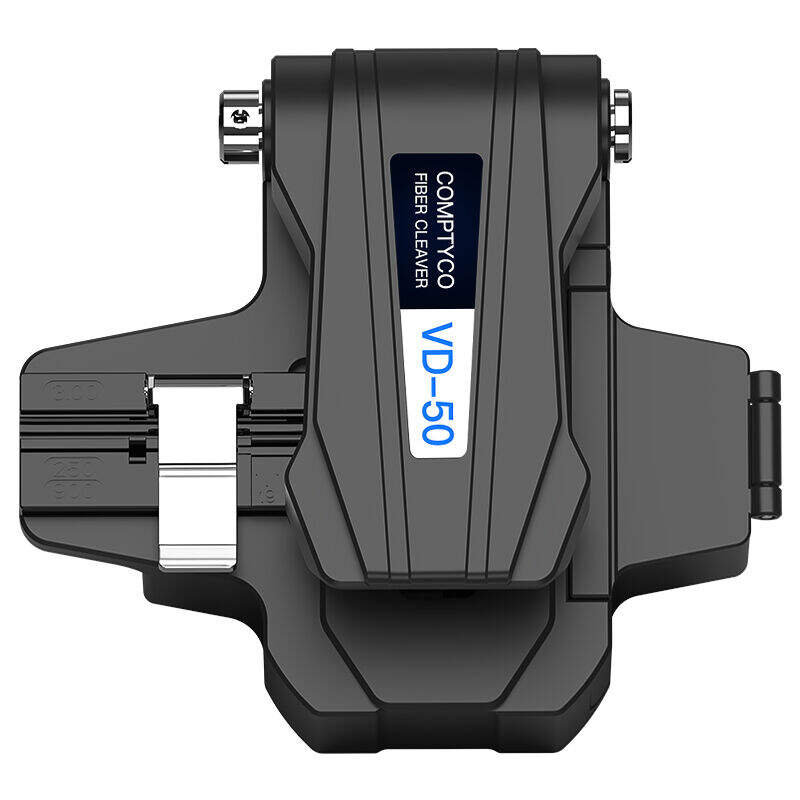
In fiber optic splicing and termination, the quality of the fiber end face is paramount. A clean, perpendicular cleave is the foundation for low-loss connections, directly impacting network performance and reliability. Choosing the right fiber cleaver is therefore not just a matter of convenience, but a critical technical decision that affects splice loss, return loss, and long-term system stability.
For technicians and network engineers, the selection process must balance precision, durability, ease of use, and cost-effectiveness. This guide will walk you through the key considerations for selecting a fiber cleaver, using the COMPTYCO high-precision one-step VD-50 as a reference point to illustrate how modern tools meet the demands of efficient and reliable field operations.
Understanding Fiber Cleaving: Precision from Principle
The Science Behind a Perfect Cleave
Fiber cleaving is a controlled fracture process, not a simple cut. A precision blade scores the glass surface, and then tension is applied to propagate a clean break. The goal is to produce an end face that is mirror-smooth and perfectly perpendicular (90°) to the fiber axis. Any deviation, known as cleave angle, or imperfections like chips or lips, will cause light to scatter or reflect, leading to insertion loss and back reflection at the splice or connector point.
This makes the cleaver one of the most critical tools in the splicing workflow. Its performance sets the upper limit for the quality of the subsequent fusion splice or mechanical connection. Understanding this principle underscores why investing in a reliable, high-precision cleaver is non-negotiable for professional-grade work.
Cleaver Types: From Manual to Automated
Manual Scribers: Basic tools requiring separate scoring and bending. Highly dependent on technician skill, resulting in inconsistent quality unsuitable for low-loss splicing.
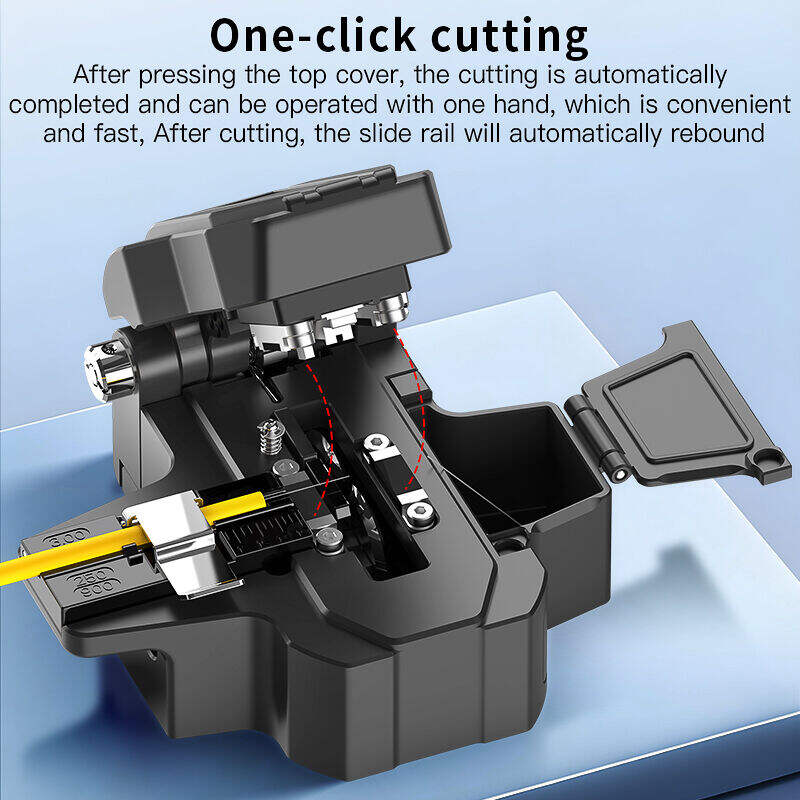
Precision Bench Cleavers: The industry standard for field and shop work. They fixture the fiber and automate the score-and-break action into a single, repeatable operation. The COMPTYCO VD-50 exemplifies this category with its "one press, one cut" mechanism, ensuring high consistency.
Fully Automated Cleavers: Often integrated with fusion splicers for lab or high-volume factory environments. They provide the highest yield and minimal operator intervention but at a significantly higher cost.
Key Selection Criteria for a Professional Fiber Cleaver
Core Performance Metrics
When evaluating cleavers, prioritize these technical specifications:
Cleave Angle: This is the single most important metric. Look for a cleaver that guarantees a maximum angle, typically < 0.5 degrees for field work, and even < 0.3 degrees for high-performance applications. A smaller angle ensures lower splice loss.
Success Rate: A professional tool should achieve a first-attempt success rate of 99%. High reliability minimizes fiber waste, rework, and project delays.
Blade Life & Material: Long-term cost and consistency are tied to the blade. High-quality tungsten steel blades can last for tens of thousands of cleaves. Some models feature a rotating blade with multiple edges to maximize service life between replacements.
Compatibility, Ergonomics, and Design
Fiber Compatibility: Ensure the cleaver matches your common fiber types. The COMPTYCO VD-50 is specified for 250µm (bare fiber), 900µm, 2mm, and 3mm coatings, covering the vast majority of FTTH, premises, and distribution cable work.
Ergonomic Operation: Features like a one-step action, automatic blade return, comfortable grip, and a built-in debris container are crucial for technician efficiency, safety, and fatigue reduction during repetitive tasks.
Durability: A robust construction (metal+plastic, as noted for the VD-50) and a protective carrying case are essential for withstanding the rigors of daily field use.
Application Scenarios: Matching the Tool to the Job
FTTH and Field Service Applications
For Fiber-to-the-Home deployments and general field maintenance, portability, versatility, and ruggedness are key. Technicians need a compact, all-in-one tool that can handle various drop cable sizes (like the 2mm/3mm supported by the VD-50) on a ladder, in a pedestal, or at a customer's home. The tool's compatibility with both hot-melt and cold splice processes, as highlighted for the VD-50, adds significant flexibility for different closure types.
Data Center and High-Density Splicing
In data center or backbone splicing environments, the focus shifts slightly toward ultimate precision and efficiency. While portability is still a factor, consistency across hundreds of splices is critical. Cleavers with excellent angle performance and fast, reliable operation help maintain high workflow speed and ensure every splice meets stringent loss budgets. For ribbon fiber splicing, a dedicated ribbon cleaver would be required.
Cost Analysis and Value Proposition
Evaluating Total Cost of Ownership (TCO)
Look beyond the initial purchase price. Calculate the Total Cost of Ownership by factoring in:
- Blade Replacement Cost: How often and at what price? Diamond blades have a higher upfront cost but a much lower cost-per-cleave.
- Fiber Waste & Rework: A cleaver with a low success rate wastes expensive fiber and technician time.
- Downtime: A durable, reliable tool prevents costly project stalls. A precision cleaver with a proven track record often has a lower TCO than a cheaper, less reliable alternative.
The ROI of a Quality Cleave
The return on investment for a good cleaver is realized through:
Superior Network Performance: Consistently low-loss splices reduce attenuation, improve signal integrity, and minimize future troubleshooting.
Enhanced Technician Productivity: Fast, first-time-right cleaves allow more splices per day, directly improving project throughput and profitability.
Reduced Callbacks: High-quality installations stand the test of time, protecting your reputation and avoiding costly repeat site visits.
Operation, Maintenance, and Best Practices
Daily Use for Optimal Results
- Always operate on a clean, stable surface.
- Follow the manufacturer's steps for fiber placement and cleaving precisely.
- Regularly clean the cutting groove and anvil with the provided tools to remove debris.
- Use the built-in container to safely collect glass fragments.
- Periodically verify and calibrate the cleave length setting as per the manual.
Blade Care and System Longevity
- Monitor cleave quality—a sudden increase in bad angles or chips is the primary indicator of a dulling blade.
- Replace blades promptly. Continuing to use a worn blade damages more fiber and is more costly than a new blade.
- For cleavers with a rotating blade, remember to index to a fresh edge according to the schedule.
- Always store the cleaver in its protective case during transport and when not in use.
FAQ: Common Questions on Fiber Cleavers
What is the most critical spec when choosing a fiber cleaver?
The guaranteed maximum cleave angle (e.g., <0.5°) is paramount for optical performance. Coupled with a high first-time success rate (99%), these specs ensure low-loss splices and field efficiency.
How do I know when to replace the blade?
Replace based on performance, not a fixed schedule. A noticeable drop in cleave quality or success rate is the key signal. Do not wait for the blade to completely fail, as this will waste fiber.
Can the COMPTYCO VD-50 handle all fiber types I encounter?
It covers the most common single fibers from 250µm to 3mm, which includes FTTH drop cables and indoor/outdoor tight-buffered cables. For ribbon fiber or very large diameter cables, a specialized cleaver is needed.
Is a "one-step" cleaver worth it for a beginner?
Absolutely. The "one press, one cut" automation of tools like the VD-50 reduces the skill curve, minimizes human error, and ensures a novice technician can produce consistent, high-quality cleaves much faster than with a manual tool.