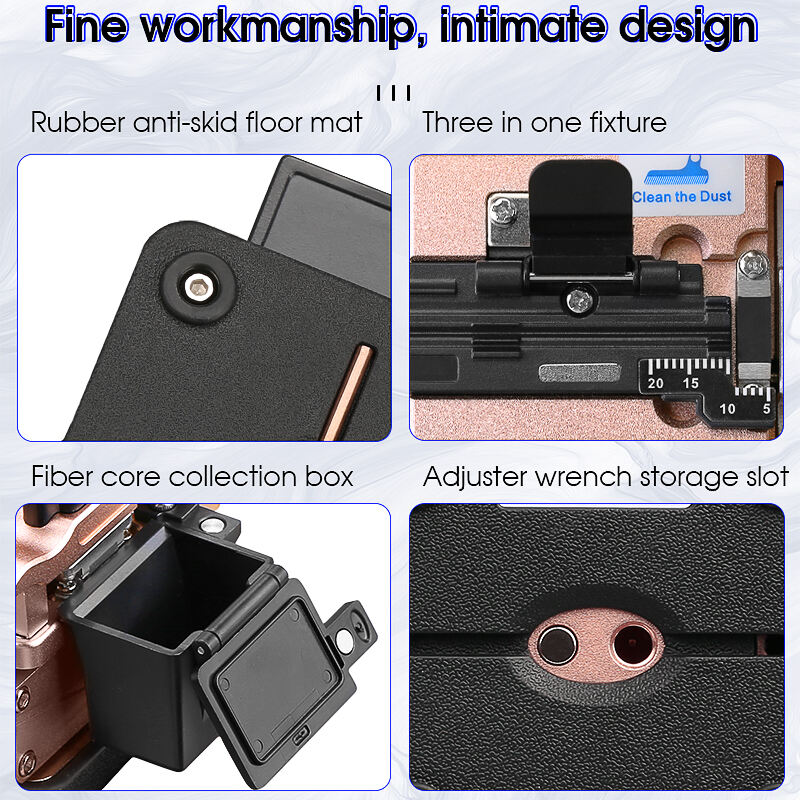
optical splicing machine
An optical splicing machine represents a revolutionary advancement in fiber optic technology, serving as an essential tool for telecommunications professionals worldwide. This sophisticated device creates permanent connections between optical fibers through precise fusion splicing techniques. The optical splicing machine utilizes advanced arc discharge technology to heat fiber ends to approximately 2000 degrees Celsius, melting and fusing them together to form seamless connections with minimal signal loss. Modern optical splicing machines incorporate cutting-edge imaging systems that provide real-time visual feedback during the splicing process. These machines feature high-resolution cameras and sophisticated alignment mechanisms that ensure precise positioning of fiber cores before fusion occurs. The technological foundation of an optical splicing machine includes automated alignment systems, programmable splice parameters, and intelligent loss estimation capabilities. Contemporary models offer touchscreen interfaces that simplify operation while providing comprehensive splice data analysis. The optical splicing machine supports various fiber types including single-mode, multimode, and specialty fibers used in different applications. Advanced models feature automatic fiber identification systems that detect fiber types and automatically adjust splicing parameters accordingly. The machine's core functionality extends beyond basic splicing to include comprehensive testing and quality assurance features. Many optical splicing machines incorporate built-in optical time domain reflectometry capabilities for immediate splice verification. The technological sophistication of modern optical splicing machines enables consistent splice losses typically below 0.02dB for standard single-mode fibers. These machines find extensive applications across telecommunications infrastructure development, data center installations, and fiber-to-the-home deployments. The optical splicing machine has become indispensable for network technicians working on submarine cables, long-haul networks, and metropolitan area networks where splice quality directly impacts system performance.

 EN
EN