
 EN
EN
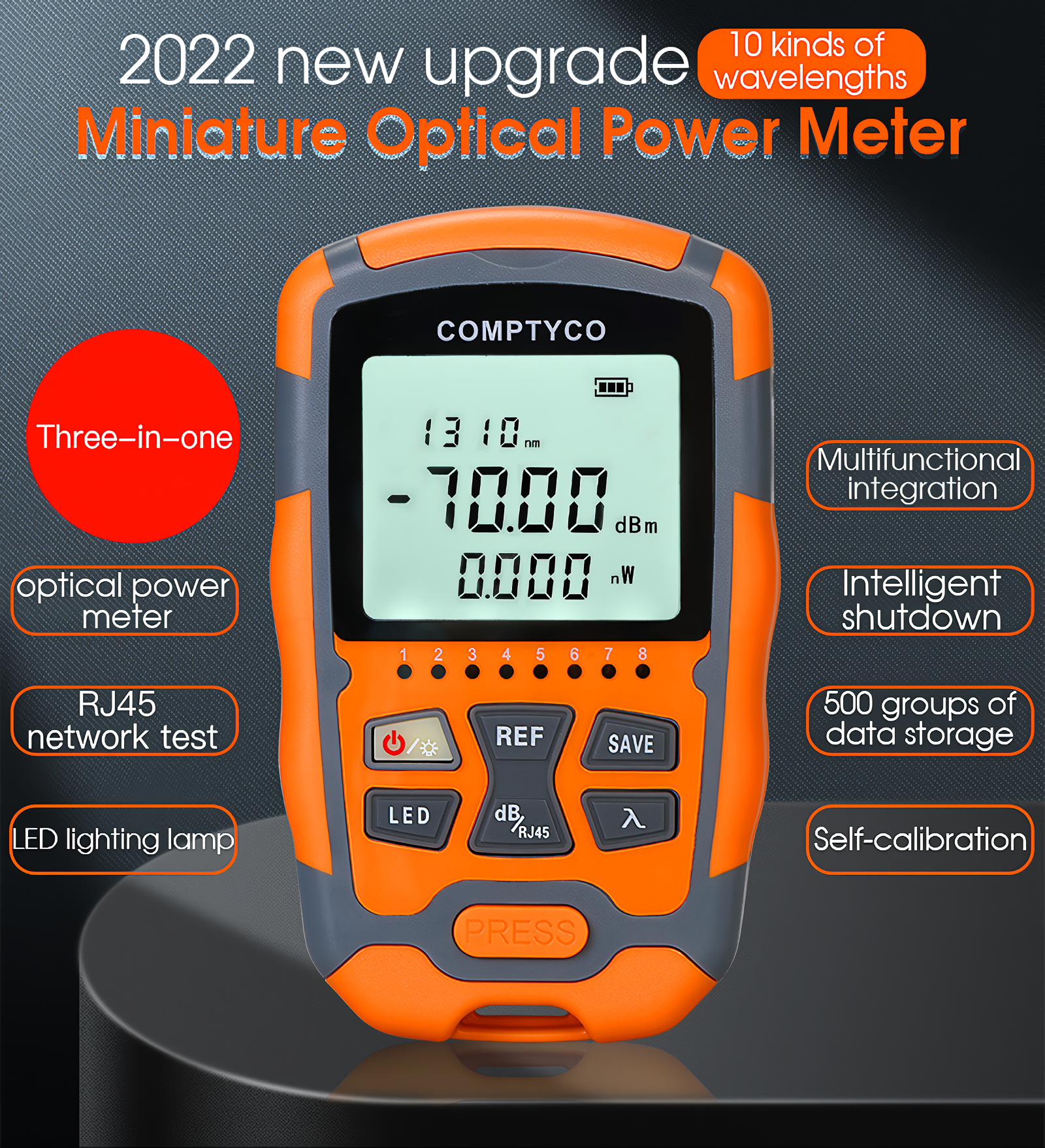
Professional handheld optical power meters represent essential measurement instruments in fiber optic network installation, maintenance, and troubleshooting applications. These precision devices enable technicians to accurately measure optical signal strength across various wavelengths, ensuring network performance meets specifications and identifying potential issues before they impact system reliability.
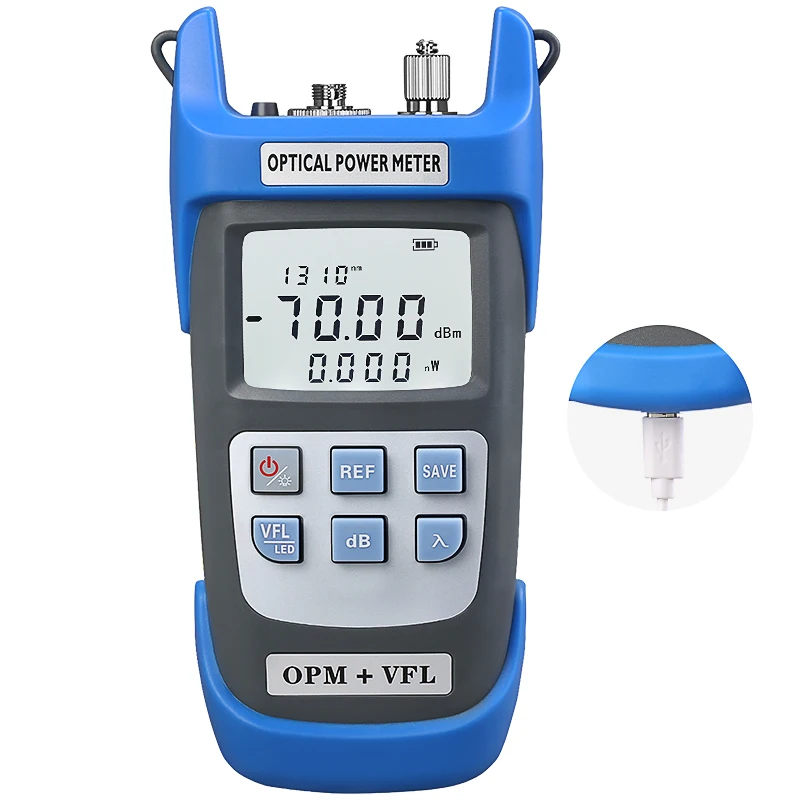
Understanding the key features that define a professional-grade optical power meter becomes crucial when selecting equipment for demanding field applications. These sophisticated instruments incorporate multiple advanced capabilities that distinguish them from basic consumer models, including extended wavelength ranges, high measurement accuracy, robust construction standards, and intelligent calibration systems that ensure consistent performance across diverse operating environments.
Measurement Accuracy and Precision Capabilities
Dynamic Range and Resolution Performance
Professional optical power meters deliver exceptional dynamic range capabilities, typically spanning from -70 dBm to +10 dBm or broader, enabling accurate measurements across weak and strong signal conditions. This extensive range ensures technicians can measure everything from low-power receiver sensitivity levels to high-power transmitter outputs without requiring multiple instruments or range switching complications.
The resolution specification of a quality optical power meter directly impacts measurement precision, with professional units offering resolution down to 0.01 dB increments. This fine resolution becomes critical when performing insertion loss measurements, return loss assessments, or fiber characterization tasks where small signal variations can indicate significant network performance issues.
Measurement accuracy typically reaches ±0.05 dB or better in professional-grade instruments, achieved through precision photodiode sensors, advanced signal processing algorithms, and comprehensive factory calibration procedures. This accuracy level ensures reliable documentation of network performance metrics and supports compliance with industry standards such as TIA-568 and ISO/IEC 14763.
Wavelength Coverage and Versatility
Modern professional optical power meters support multiple standard telecommunications wavelengths including 850nm, 1300nm, 1310nm, 1490nm, 1550nm, and 1625nm, covering both multimode and single-mode fiber applications. This comprehensive wavelength support eliminates the need for multiple specialized instruments when working with diverse fiber optic systems.
Advanced units incorporate automatic wavelength recognition capabilities that detect the incoming signal wavelength and adjust measurement parameters accordingly. This intelligent feature reduces operator error potential and accelerates measurement workflows, particularly valuable during complex multi-wavelength system installations or troubleshooting scenarios.
Some professional optical power meter models extend coverage into specialized wavelengths for CWDM and DWDM applications, supporting dense wavelength division multiplexing system characterization and maintenance requirements across extended spectral ranges.
Display Technology and User Interface Design
Screen Quality and Readability Features
Professional handheld optical power meters incorporate high-resolution LCD or OLED displays designed for optimal readability under challenging field conditions. These displays feature adjustable backlighting systems that maintain visibility in bright sunlight while conserving battery power during indoor applications.
The display interface presents measurement data in multiple formats including numerical readouts, graphical trending displays, and statistical analysis views. Professional units often include dual-display capabilities showing current measurements alongside reference values, simplifying comparative analysis during insertion loss testing or system optimization procedures.
Advanced models feature color-coded displays that use visual indicators to highlight measurement status, alarm conditions, or calibration requirements. These intuitive visual cues reduce interpretation time and help prevent measurement errors during complex testing sequences.
Control Interface and Navigation Systems
Ergonomic control interfaces on professional optical power meters balance functionality with ease of use, incorporating dedicated buttons for frequently accessed functions such as wavelength selection, reference setting, and measurement hold capabilities. This dedicated control approach enables single-handed operation while maintaining secure grip on the instrument.
Menu navigation systems in quality optical power meters utilize logical hierarchical structures that minimize the steps required to access measurement parameters or configuration settings. Professional units often include shortcut keys or function combinations that provide direct access to commonly used features without menu traversal.
Some advanced optical power meter models incorporate touchscreen interfaces that combine traditional button reliability with modern gesture-based navigation, enabling intuitive operation while maintaining functionality when wearing work gloves or operating in challenging environmental conditions.
Power Management and Battery Performance
Battery Technology and Runtime Specifications
Professional handheld optical power meters employ advanced battery technologies such as lithium-ion or lithium-polymer cells that deliver extended operating times while maintaining compact form factors. Quality units typically provide 40-100 hours of continuous operation on a single charge, supporting full-day field deployments without power concerns.
Smart battery management systems in professional optical power meters monitor cell condition, remaining capacity, and charging status through integrated fuel gauge circuits. These systems provide accurate battery life estimates and implement automatic power-saving modes that extend operational time during periods of reduced activity.
Rapid charging capabilities enable quick turnaround between field deployments, with many professional units supporting USB charging interfaces that allow power restoration from vehicle adapters, portable power banks, or standard wall chargers. Some models include replaceable battery options for extended field operations.
Power Conservation and Efficiency Features
Intelligent power management in quality optical power meters includes automatic shutdown timers, display dimming algorithms, and selective component power control that optimizes energy consumption based on usage patterns. These features significantly extend battery life without compromising measurement capabilities or response time.
Low-power measurement circuits in professional optical power meters utilize advanced semiconductor technologies and optimized signal processing algorithms that maintain measurement accuracy while minimizing current consumption. This efficiency enables continuous monitoring applications where extended battery life becomes essential.
Construction Quality and Environmental Durability
Physical Design and Ruggedness Standards
Professional optical power meters feature robust construction utilizing high-impact plastic housings, reinforced connector interfaces, and protective rubber overmolding that withstand the physical demands of field deployment. These design elements protect internal components from drops, vibrations, and mechanical stress encountered during typical installation and maintenance activities.
Industry-standard environmental ratings such as IP54 or IP65 classify professional optical power meters for dust and moisture resistance, ensuring reliable operation in challenging outdoor conditions. These ratings indicate tested performance levels for particle ingress protection and water spray resistance that field technicians regularly encounter.
Temperature operation ranges in quality optical power meters typically span -10°C to +60°C or broader, enabling reliable measurements across seasonal variations and diverse geographic deployment areas. This temperature stability ensures consistent accuracy whether working in air-conditioned data centers or outdoor cable installations.
Connector Interface and Adapter Systems
Professional optical power meters incorporate precision connector interfaces designed for thousands of mating cycles without degradation in measurement accuracy or mechanical integrity. These interfaces typically feature ceramic ferrules, precision alignment sleeves, and spring-loaded retention mechanisms that maintain consistent optical coupling.
Comprehensive adapter systems enable professional optical power meters to interface with various connector types including FC, SC, ST, LC, and MU configurations. These adapters maintain the same accuracy specifications as the base unit while providing flexibility to work with diverse fiber optic systems without measurement compromise.
Some advanced optical power meter models include universal connector interfaces that accept multiple connector types directly, eliminating the need for separate adapters and reducing the potential for measurement errors or connector damage during frequent changes.
Advanced Features and Measurement Capabilities
Data Logging and Documentation Functions
Professional optical power meters incorporate comprehensive data logging capabilities that automatically record measurement values, timestamps, location information, and test parameters for documentation and analysis purposes. These logging functions typically store hundreds or thousands of measurement records in internal memory.
Advanced data management features enable measurement result organization by project, location, or technician identification, facilitating report generation and quality assurance documentation. Many professional units include PC connectivity options through USB interfaces that enable data transfer for analysis and archival storage.
Real-time measurement trending capabilities in quality optical power meters provide graphical displays of signal variations over time, enabling identification of intermittent issues, environmental effects, or system instabilities that single-point measurements might miss.
Calibration and Verification Systems
Professional optical power meters include built-in calibration verification systems that enable field confirmation of measurement accuracy using internal reference sources or standardized test procedures. These verification capabilities help maintain measurement traceability and support quality management system requirements.
Automatic calibration reminder systems track calibration intervals and provide advance notification when recalibration becomes due, ensuring continued measurement accuracy and compliance with industry standards. These systems typically include calibration history logging for audit trail documentation.
Some advanced optical power meter models incorporate self-calibration capabilities using internal reference standards, enabling field accuracy verification without external calibration sources. This feature proves particularly valuable for remote deployment scenarios or applications requiring frequent accuracy confirmation.
FAQ
What measurement accuracy should I expect from a professional optical power meter?
Professional optical power meters typically deliver measurement accuracy of ±0.05 dB or better across their specified wavelength and power ranges. This accuracy level meets or exceeds industry standards for fiber optic testing and provides the precision necessary for reliable network characterization, loss budget verification, and system troubleshooting applications.
How many wavelengths should a professional optical power meter support?
A comprehensive professional optical power meter should support at least six standard telecommunications wavelengths including 850nm, 1300nm, 1310nm, 1490nm, 1550nm, and 1625nm. This wavelength coverage enables testing across multimode and single-mode fiber applications, FTTH systems, and most common network configurations without requiring multiple specialized instruments.
What battery life can I expect from a professional handheld optical power meter?
Professional handheld optical power meters typically provide 40-100 hours of continuous operation on a single battery charge, depending on display brightness, measurement frequency, and environmental conditions. Advanced power management features and efficient circuit designs in quality units ensure reliable all-day field operation without battery concerns.
Are professional optical power meters suitable for outdoor field work?
Yes, professional optical power meters are specifically designed for outdoor field deployment with environmental ratings such as IP54 or IP65 for dust and moisture protection. These instruments feature rugged construction, wide temperature operation ranges, readable displays in bright conditions, and durable connector interfaces that withstand the physical demands of field installation and maintenance work.
Table of Contents
- Measurement Accuracy and Precision Capabilities
- Display Technology and User Interface Design
- Power Management and Battery Performance
- Construction Quality and Environmental Durability
- Advanced Features and Measurement Capabilities
-
FAQ
- What measurement accuracy should I expect from a professional optical power meter?
- How many wavelengths should a professional optical power meter support?
- What battery life can I expect from a professional handheld optical power meter?
- Are professional optical power meters suitable for outdoor field work?