
 EN
EN

The deployment of 5G networks represents one of the most significant technological transformations in telecommunications history, demanding unprecedented precision in fiber optic connectivity. At the heart of this infrastructure revolution lies a critical piece of equipment that determines the success or failure of network performance: the fusion splicer. This sophisticated device serves as the cornerstone technology that enables the seamless integration of fiber optic cables, ensuring the ultra-low latency and high-bandwidth connections that 5G networks require to deliver their promised capabilities.
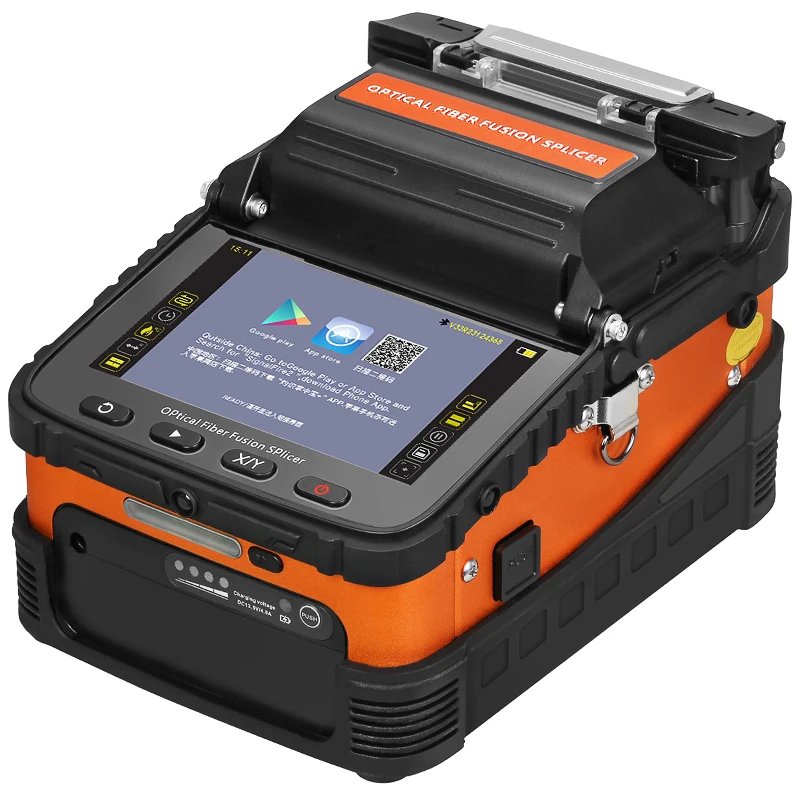
The role of a robust fusion splicer in 5G network deployment extends far beyond simple cable joining, encompassing the critical function of maintaining signal integrity across vast network infrastructures. As telecommunications providers race to establish comprehensive 5G coverage, the reliability and precision of fusion splicing operations directly impact network performance, operational efficiency, and long-term maintenance costs. Understanding how these advanced splicing systems support 5G deployment reveals why investing in high-quality fusion splicer technology has become essential for network operators worldwide.
Critical Performance Requirements for 5G Fiber Infrastructure
Ultra-Low Latency Demands
The 5G network architecture fundamentally depends on achieving latency levels below one millisecond for critical applications, making the quality of fiber optic connections paramount. A robust fusion splicer ensures that each splice maintains optimal signal transmission characteristics, preventing the microscopic imperfections that could accumulate across thousands of connection points to create measurable delays. These precision requirements demand fusion splicer technology capable of achieving splice losses consistently below 0.02 dB, a tolerance level that requires advanced arc control and fiber alignment systems.
Network operators deploying 5G infrastructure cannot afford the signal degradation that results from substandard splicing operations. Every connection point created by a fusion splicer becomes a potential source of signal reflection, absorption, or scattering that could compromise the network's ability to support real-time applications like autonomous vehicles, industrial automation, and augmented reality systems. The cumulative effect of multiple poor-quality splices can transform a theoretically capable 5G network into one that fails to meet performance specifications.
Massive Connection Density Requirements
The deployment of 5G networks requires exponentially more fiber connections than previous generation technologies, with small cell installations demanding hundreds of fusion splices per square kilometer in urban environments. A robust fusion splicer must demonstrate the throughput capacity to handle this connection density while maintaining consistent quality across every splice operation. This scalability challenge drives the need for fusion splicer systems that combine rapid splice cycles with automated quality verification processes.
Modern 5G deployment schedules leave no room for splicing bottlenecks that could delay network activation or expansion phases. Telecommunications contractors rely on fusion splicer technology that can complete high-quality splices in under 15 seconds while providing immediate verification of connection quality. The economic implications of splicing efficiency extend throughout the deployment process, affecting labor costs, project timelines, and the overall competitiveness of 5G service launches.
Technical Precision Requirements in 5G Splicing Operations
Advanced Fiber Alignment Capabilities
The success of 5G network performance hinges on the precision with which a fusion splicer aligns individual fiber cores before executing the splice. Modern 5G applications transmit data across multiple fiber types, including single-mode fibers with core diameters as small as 9 micrometers, requiring alignment accuracy measured in fractions of micrometers. This level of precision demands fusion splicer systems equipped with high-resolution imaging systems and automated alignment algorithms that can compensate for fiber variations and environmental conditions.
The alignment process becomes even more critical when splicing different fiber types within the same 5G network infrastructure. A robust fusion splicer must accommodate various fiber specifications while maintaining consistent splice quality regardless of fiber diameter, coating type, or manufacturer variations. This adaptability ensures that network operators can optimize their fiber infrastructure choices without compromising splice quality or operational efficiency.
Environmental Durability and Reliability
The deployment of 5G networks often occurs in challenging environmental conditions, from rooftop installations exposed to temperature extremes to underground utility spaces with high humidity levels. A robust fusion splicer must maintain its precision capabilities across these diverse operating environments while providing reliable performance throughout extended deployment campaigns. Environmental durability extends beyond weather resistance to include vibration tolerance, dust protection, and the ability to function accurately despite temperature fluctuations that could affect splice quality.
Field technicians deploying 5G infrastructure require fusion splicer equipment that delivers consistent results regardless of installation location or environmental challenges. The reliability of splice operations directly impacts network uptime and maintenance requirements, making environmental durability a critical factor in fusion splicer selection for 5G projects. Temperature compensation systems, sealed optical components, and ruggedized housings represent essential features that enable fusion splicer technology to support demanding 5G deployment schedules.
Operational Efficiency in Large-Scale 5G Deployments
Automated Quality Verification Systems
The scale of 5G network deployments makes manual quality inspection of every splice economically impractical, driving the need for fusion splicer systems with integrated automated testing capabilities. Advanced fusion splicer technology incorporates real-time splice loss estimation, automated acceptance testing, and digital documentation systems that ensure quality compliance without slowing deployment progress. These automated systems reduce the risk of human error while providing comprehensive quality records for network documentation and maintenance planning.
Network operators benefit from fusion splicer systems that can detect and flag potential quality issues before they impact network performance. Automated quality verification extends beyond simple pass-fail testing to include predictive analysis of splice longevity and performance trends. This capability allows maintenance teams to identify potential failure points before they cause service interruptions, supporting the high availability requirements that 5G networks must maintain for critical applications.
Integration with Network Management Systems
Modern 5G deployments require comprehensive documentation and tracking of every network component, including detailed records of splice locations, quality metrics, and maintenance history. A robust fusion splicer equipped with digital connectivity capabilities can integrate directly with network management systems, automatically uploading splice data and GPS coordinates to centralized databases. This integration eliminates manual data entry errors while providing network operators with real-time visibility into deployment progress and quality metrics.
The data generated by connected fusion splicer systems becomes valuable for optimizing future deployments and predicting maintenance requirements. Network analytics platforms can process splice quality data to identify patterns, optimize splicing procedures, and schedule proactive maintenance activities. This data-driven approach to network management represents a significant advantage for operators managing large-scale 5G infrastructures across multiple geographic regions.
Economic Impact of Fusion Splicer Quality on 5G Networks
Long-Term Maintenance Cost Reduction
The quality of fusion splicing operations performed during initial 5G deployment directly influences the long-term operational costs of network maintenance and upgrades. High-quality splices created by robust fusion splicer technology demonstrate superior longevity and stability, reducing the frequency of maintenance interventions required to maintain network performance standards. This reliability translates into significant cost savings over the operational lifetime of 5G infrastructure, justifying the investment in premium fusion splicer capabilities.
Network operators must consider the total cost of ownership when evaluating fusion splicer technology for 5G deployments. While advanced fusion splicer systems may require higher initial investment, the reduced maintenance requirements and improved network reliability often result in lower overall costs over multi-year deployment cycles. The economic benefits extend beyond direct maintenance savings to include improved customer satisfaction, reduced service interruptions, and enhanced competitive positioning in rapidly evolving telecommunications markets.
Deployment Timeline Optimization
The efficiency and reliability of fusion splicing operations directly impact the speed at which 5G networks can be deployed and activated for customer service. A robust fusion splicer enables installation teams to complete splicing tasks quickly and accurately, reducing project timelines and accelerating revenue generation from new 5G services. This timeline advantage becomes particularly valuable in competitive markets where first-to-market positioning can determine long-term market share and profitability.
Project managers overseeing large-scale 5G deployments rely on fusion splicer technology that minimizes rework and quality-related delays. The ability to complete high-quality splices consistently on the first attempt eliminates the time and cost penalties associated with splice failures and remedial work. This operational efficiency enables telecommunications providers to meet aggressive deployment schedules while maintaining the quality standards necessary for reliable 5G service delivery.
FAQ
What specific splice loss requirements must a fusion splicer meet for 5G network deployment?
A fusion splicer used in 5G network deployment must consistently achieve splice losses below 0.02 dB for single-mode fibers to maintain the signal integrity required for ultra-low latency applications. The cumulative effect of splice losses across large network infrastructures can significantly impact 5G performance, making this precision requirement critical for network operators. Advanced fusion splicer systems achieve these specifications through precise fiber alignment, optimized arc parameters, and automated quality verification processes.
How does environmental durability affect fusion splicer performance in 5G deployments?
Environmental durability ensures that a fusion splicer maintains consistent splice quality across the diverse installation conditions encountered in 5G network deployment, from extreme temperatures to high humidity environments. Robust fusion splicer designs incorporate temperature compensation systems, sealed optical components, and ruggedized housings that protect critical components while maintaining precision alignment capabilities. This durability reduces the risk of splice quality degradation due to environmental factors and ensures reliable operation throughout extended deployment campaigns.
What role does automation play in fusion splicing for large-scale 5G projects?
Automation in fusion splicing enables the rapid, consistent, and documented splice operations required for large-scale 5G deployments where thousands of connections must be completed with minimal quality variation. Modern fusion splicer systems incorporate automated fiber recognition, optimized splicing programs, real-time quality verification, and digital documentation capabilities that reduce operator dependency while maintaining high quality standards. This automation becomes essential for meeting the aggressive deployment timelines and quality requirements that characterize 5G network rollouts.
How do fusion splicer capabilities impact the total cost of ownership for 5G networks?
The capabilities of a fusion splicer directly influence the total cost of ownership for 5G networks through their impact on splice quality, deployment efficiency, and long-term maintenance requirements. High-quality splices created by robust fusion splicer technology demonstrate superior longevity and stability, reducing ongoing maintenance costs and service interruptions throughout the network's operational lifetime. Additionally, efficient splicing operations accelerate deployment timelines, enabling faster revenue generation and improved return on infrastructure investments.
Table of Contents
- Critical Performance Requirements for 5G Fiber Infrastructure
- Technical Precision Requirements in 5G Splicing Operations
- Operational Efficiency in Large-Scale 5G Deployments
- Economic Impact of Fusion Splicer Quality on 5G Networks
-
FAQ
- What specific splice loss requirements must a fusion splicer meet for 5G network deployment?
- How does environmental durability affect fusion splicer performance in 5G deployments?
- What role does automation play in fusion splicing for large-scale 5G projects?
- How do fusion splicer capabilities impact the total cost of ownership for 5G networks?