
 EN
EN

Selecting the right industrial-grade fusion splicer requires careful evaluation of multiple technical specifications and operational factors that directly impact splice quality, field efficiency, and long-term reliability. Industrial environments demand fusion splicer equipment that can withstand harsh conditions while delivering consistent, low-loss connections across diverse fiber optic applications. Understanding the key selection criteria ensures your investment in a fusion splicer aligns with both current project requirements and future network expansion needs.
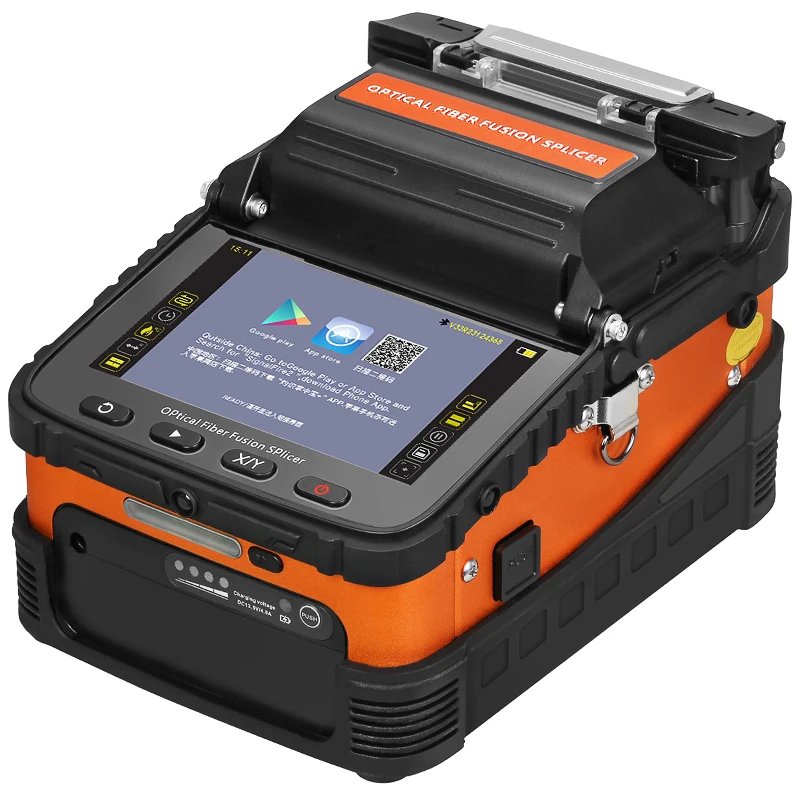
The decision-making process for industrial fusion splicer selection involves analyzing performance specifications, environmental durability, operational efficiency features, and total cost of ownership factors. Each consideration plays a critical role in determining whether a particular fusion splicer model will meet the demanding requirements of industrial fiber optic installations, maintenance operations, and emergency repair scenarios that characterize professional telecommunications work.
Core Performance Specifications for Industrial Applications
Splice Loss Performance Standards
Industrial-grade fusion splicer performance begins with splice loss specifications that determine connection quality and network reliability. The best fusion splicer models for industrial use typically achieve splice losses below 0.02 dB for single-mode fibers and below 0.01 dB for multimode applications. These low-loss specifications are essential for maintaining signal integrity across long-distance industrial networks where accumulated losses can significantly impact system performance.
Splice loss consistency represents another critical performance factor when evaluating fusion splicer options. Industrial applications require repeatable results across thousands of splices, with minimal variation in loss measurements regardless of environmental conditions or operator skill levels. Advanced fusion splicer models incorporate automatic splice optimization algorithms that adjust arc power, positioning, and timing parameters to maintain consistent low-loss performance.
The fusion splicer should also demonstrate excellent splice strength characteristics, with tensile strength ratings exceeding 1.96 N for standard applications and higher ratings for harsh environment installations. Proof test capabilities built into the fusion splicer allow immediate verification of splice mechanical integrity, preventing field failures that could disrupt critical industrial communications.
Fiber Compatibility and Versatility
Comprehensive fiber compatibility ensures that your fusion splicer investment supports diverse industrial applications without requiring multiple splicing platforms. Modern industrial fusion splicer systems should accommodate standard single-mode fibers, multimode fibers, dispersion-shifted variants, and specialty fibers commonly used in industrial sensing and monitoring applications. This versatility reduces equipment inventory requirements and simplifies technician training programs.
Core alignment precision becomes particularly important when working with different fiber types within the same fusion splicer session. Advanced models use sophisticated imaging systems and automated alignment algorithms to optimize splice geometry for each specific fiber combination. The ability to store multiple splice programs within the fusion splicer memory allows rapid switching between different fiber specifications without manual parameter adjustments.
Industrial environments often require splicing of ribbon fibers, bend-insensitive fibers, and other specialized variants. Ensure that your selected fusion splicer includes appropriate holder systems and splice programs for these specific fiber types. Some models offer modular holder designs that can be quickly reconfigured for different fiber configurations, enhancing operational flexibility.
Environmental Durability and Reliability Features
Operating Environment Specifications
Industrial fusion splicer applications frequently occur in challenging environments that test equipment durability beyond typical telecommunications settings. Temperature operating ranges should extend from -10°C to +50°C for most industrial applications, with some specialized models capable of functioning in even more extreme conditions. Humidity resistance becomes critical in manufacturing facilities, power plants, and outdoor industrial installations where moisture levels fluctuate dramatically.
Vibration resistance specifications ensure that the fusion splicer maintains alignment accuracy and splice quality even when operating on unstable platforms or in proximity to industrial machinery. Look for models that meet or exceed IEC 60068-2-6 vibration standards, with additional shock resistance ratings for transportation and field handling scenarios. These specifications directly impact the fusion splicer's ability to deliver consistent results in real-world industrial environments.
Dust and debris protection levels should meet IP54 or higher standards to prevent contamination of optical components during industrial fusion splicer operations. Sealed enclosures protect sensitive alignment mechanisms and imaging systems from airborne particles that could compromise splice quality or damage expensive optical components. Some models incorporate positive pressure systems or filtered air circulation to maintain clean internal environments.
Mechanical Robustness and Build Quality
The physical construction of an industrial fusion splicer must withstand the rigors of field transportation, setup, and operation across multiple job sites. Reinforced housing materials, shock-absorbed mounting systems, and protected optical components contribute to long-term reliability and reduced maintenance requirements. Quality fusion splicer models feature precision-machined components that maintain alignment accuracy despite repeated use and environmental stress.
Arc electrode longevity directly impacts operational costs and field productivity for industrial fusion splicer applications. High-quality electrodes should provide consistent arc characteristics for thousands of splices before requiring replacement. Some advanced models incorporate electrode monitoring systems that track usage and performance degradation, providing predictive maintenance alerts to prevent splice quality issues.
Component accessibility for field maintenance and calibration represents another important durability consideration. Industrial fusion splicer designs should allow technicians to perform routine maintenance, electrode replacement, and basic calibration procedures without returning the unit to service centers. This capability minimizes downtime and reduces total cost of ownership for industrial operations.
Operational Efficiency and User Interface Considerations
Splice Cycle Time and Throughput
Splice cycle time directly impacts project completion schedules and labor costs in industrial fiber optic installations. High-performance fusion splicer models complete standard splice cycles in 7-15 seconds, including fiber preparation, alignment, splicing, and protection sleeve heating. Fast heating capabilities for protection sleeves can reduce total splice time to under 20 seconds for complete splice preparation, significantly improving field productivity.
Automated sequence operations within the fusion splicer reduce operator workload and minimize potential for human error during high-volume splicing operations. Features such as automatic fiber detection, core alignment optimization, and splice parameter selection streamline the splicing process while maintaining consistent quality results. Advanced models can execute complete splice sequences with minimal operator intervention once fibers are properly positioned.
Batch processing capabilities allow experienced technicians to prepare multiple fiber pairs simultaneously, maximizing fusion splicer utilization during large installation projects. Some models support ribbon splicing or multiple single-fiber splice sequences that can be executed rapidly once the initial setup is complete. These efficiency features become particularly valuable in industrial environments where labor costs represent a significant portion of project budgets.
User Interface and Control Systems
Intuitive user interfaces reduce training requirements and minimize operational errors when deploying fusion splicer equipment across multiple work crews. Large, high-resolution color displays provide clear visibility of fiber alignment, splice parameters, and system status information even in challenging lighting conditions common in industrial environments. Touchscreen interfaces with tactile feedback enable efficient operation while wearing work gloves.
Menu organization and navigation logic should follow intuitive patterns that allow technicians to access frequently used functions quickly while providing access to advanced configuration options when needed. Multi-language support capabilities ensure that the fusion splicer can be effectively utilized by diverse work crews, while standardized icon sets reduce language barriers in international operations.
Data logging and splice documentation features within the fusion splicer support quality assurance programs and regulatory compliance requirements common in industrial applications. Automatic recording of splice parameters, loss measurements, and operational conditions creates comprehensive records that can be exported for project documentation and performance analysis. Some models include GPS integration for automatic location tagging of splice records.
Power Management and Portability Features
Battery Performance and Power Options
Extended battery life ensures that industrial fusion splicer operations can continue throughout full work shifts without interruption for recharging. High-capacity lithium-ion battery systems should provide power for 200-300 splice cycles including protection sleeve heating, with some premium models achieving 400+ cycles per charge. Battery performance specifications should account for operation in temperature extremes that may reduce capacity compared to laboratory conditions.
Multiple power input options enhance fusion splicer versatility for different industrial scenarios. AC power adapters enable continuous operation in facility-based installations, while DC power inputs allow connection to vehicle electrical systems for mobile operations. Some models include universal power supplies that automatically adapt to different voltage and frequency standards, simplifying international deployment.
Power management features within the fusion splicer optimize battery usage and extend operational time between charges. Intelligent sleep modes, automatic display dimming, and selective component power control contribute to efficient energy utilization. Battery condition monitoring provides early warning of capacity degradation, allowing proactive battery replacement to prevent field disruptions.
Physical Design and Transportation
Compact fusion splicer designs reduce transportation weight and storage space requirements while maintaining full functionality for industrial applications. Total system weight including accessories should remain below 2-3 kg for handheld models, while maintaining robust construction suitable for field use. Integrated carrying cases protect the fusion splicer and accessories during transportation while providing organized storage for consumables and tools.
Ergonomic considerations become important during extended splicing sessions common in industrial installations. Fusion splicer positioning should allow comfortable operation from multiple angles, with adjustable display tilt and easy access to fiber holders and controls. Some models include detachable displays or wireless remote control capabilities that enhance operator comfort and positioning flexibility.
Accessory organization and storage integration within the fusion splicer system reduces setup time and prevents loss of critical components during field operations. Dedicated storage for electrodes, cleaving tools, protection sleeves, and cleaning supplies ensures that all necessary items remain readily accessible. Magnetic tool holders and cable management features contribute to organized work areas and efficient operation.
FAQ
What splice loss specifications should I expect from an industrial-grade fusion splicer?
Industrial-grade fusion splicer models typically achieve splice losses below 0.02 dB for single-mode fibers and below 0.01 dB for multimode applications. These specifications ensure signal integrity across long-distance industrial networks while providing consistent performance across thousands of splice cycles. Higher-end models may achieve even lower loss specifications with advanced core alignment technologies.
How many splices can an industrial fusion splicer complete on a single battery charge?
Most industrial fusion splicer systems provide power for 200-300 complete splice cycles including protection sleeve heating on a single battery charge. Premium models with high-capacity batteries and efficient power management can achieve 400+ cycles per charge. Actual performance varies based on environmental conditions, splice cycle complexity, and usage of auxiliary features like LED illumination or data logging.
What environmental conditions can industrial fusion splicer equipment withstand?
Industrial fusion splicer models are designed to operate reliably in temperature ranges from -10°C to +50°C with high humidity resistance and dust protection ratings of IP54 or higher. Many models exceed IEC 60068-2-6 vibration standards and include shock resistance features for transportation and field handling. These specifications ensure consistent performance in challenging industrial environments including manufacturing facilities, power plants, and outdoor installations.
How do I ensure fusion splicer compatibility with different fiber types used in industrial applications?
Select a fusion splicer that supports comprehensive fiber compatibility including standard single-mode, multimode, dispersion-shifted, and specialty fibers commonly used in industrial sensing applications. Verify that the model includes appropriate splice programs and holder systems for your specific fiber types, including ribbon fibers and bend-insensitive variants. Advanced models with modular holder designs and programmable splice parameters provide maximum flexibility for diverse industrial applications.
Table of Contents
- Core Performance Specifications for Industrial Applications
- Environmental Durability and Reliability Features
- Operational Efficiency and User Interface Considerations
- Power Management and Portability Features
-
FAQ
- What splice loss specifications should I expect from an industrial-grade fusion splicer?
- How many splices can an industrial fusion splicer complete on a single battery charge?
- What environmental conditions can industrial fusion splicer equipment withstand?
- How do I ensure fusion splicer compatibility with different fiber types used in industrial applications?