
 EN
EN
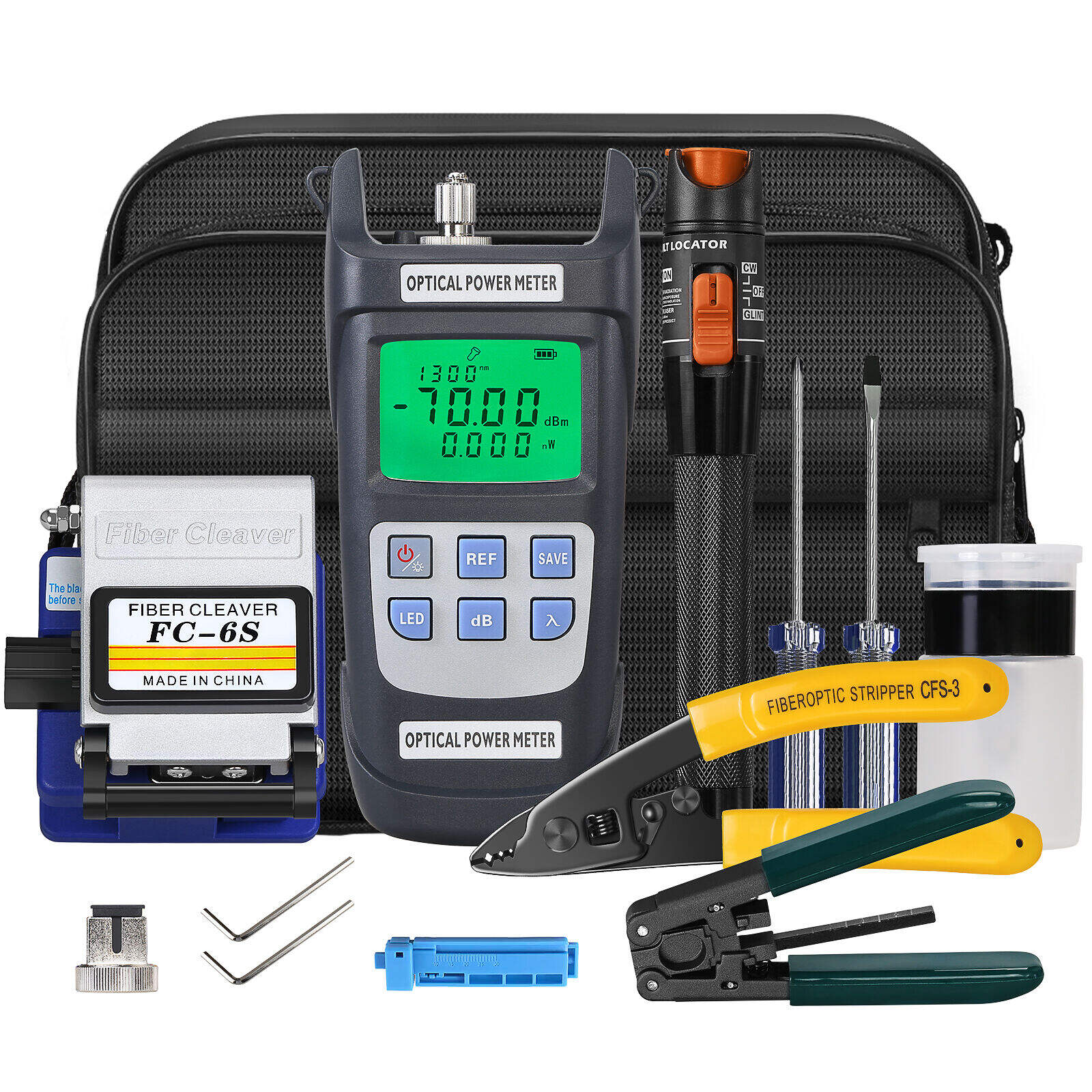
For professional field technicians, a well-stocked fiber optic tool kit is more than just a collection of instruments—it's a mobile workshop and a guarantee of success. Every job, whether it's a new Fiber-to-the-Home (FTTH) installation or an urgent network repair, presents unique challenges. Having the right tools on hand is what separates a smooth, efficient operation from a costly, time-consuming ordeal. A comprehensive kit empowers technicians to handle any situation with confidence, ensuring work is done right the first time, meeting quality standards, and keeping customers satisfied.
An ideal kit strikes a perfect balance between comprehensiveness and portability. It should cover the entire workflow—from preparation and splicing to testing and troubleshooting—without being cumbersome to carry to rooftops, basements, or remote pedestals. This guide breaks down the essential categories of tools every field technician needs, using a well-configured kit like the COMPTYCO Affordable FTTH Fiber Cold Junction Kit as a benchmark for a professional, ready-to-deploy solution.
Core Testing and Measurement Instruments
Optical Power Meter (OPM): The Essential Verifier
No field kit is complete without an Optical Power Meter. This is the primary device for quantifying light loss and verifying signal strength. After making a connection or splicing a fiber, the OPM provides an objective, numerical measurement (in dBm or dB) to confirm the link is within acceptable loss budgets. A professional-grade OPM in a kit should be robust, have a wide dynamic range, and support all relevant wavelengths for your work (e.g., 1310nm, 1490nm, 1550nm for FTTH PON networks).
Look for features that enhance field usability: a clear backlit display for low-light conditions, auto-wavelength detection to prevent measurement errors, and a durable case. The ability to save and recall readings is a significant plus for reporting. In a bundled kit, the OPM often comes with interchangeable adapters (like SC, FC, LC) to test various connector types encountered on-site.
Visual Fault Locator (VFL): The Troubleshooting Flashlight
When a fiber link has high loss or is completely dark, the Visual Fault Locator is your first line of investigation. This tool injects a bright red laser beam into the fiber. By observing where the light escapes, a technician can quickly identify problems like tight bends (macro-bends), breaks, or poor connectors, even through the cable jacket over short distances.
A good VFL is invaluable for its simplicity and speed. It helps locate faults within patch panels, behind wall plates, or in buried drop cables without needing complex equipment. It's also essential for verifying fiber continuity before splicing. A kit that includes both an OPM and a VFL, like the COMPTYCO set, provides a powerful one-two punch for basic installation certification and rapid fault finding.
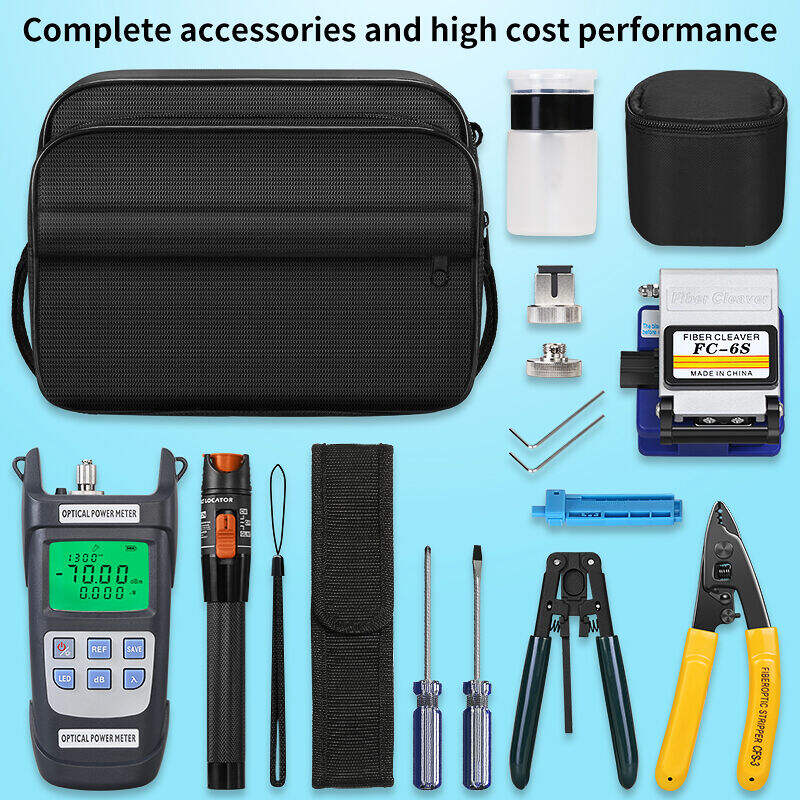
Fiber Preparation and Termination Tools
Precision Fiber Cleaver: The Foundation of a Good Splice
The quality of a fusion splice or mechanical connection is entirely dependent on the quality of the fiber end face. A precision cleaver is non-negotiable. It creates a perfectly flat, perpendicular end by scoring and snapping the glass. For field work, a "one-step" or automatic cleaver is recommended. It ensures consistent, low-angle cleaves (typically under 0.5 degrees) with minimal skill variation, which is critical for achieving low-loss splices.
A field kit cleaver should be durable, have a mechanism to collect glass shards for safety, and be compatible with the common fiber coatings you handle (e.g., 250um bare fiber, 900um tight buffer, 2mm/3mm cable). While the linked COMPTYCO kit is a "cold junction" kit (focusing on connectors), a cleaver is equally vital for field splicing teams and is a core component of any comprehensive toolkit.
Fiber Strippers, Cleaners, and Hand Tools
Stripping Tools: A set of precision strippers is needed to remove the various layers of a fiber cable without nicking the fragile glass. This includes cable sheath strippers, Kevlar cutters, and precise coating strippers for 250um and 900um fibers.
Cleaning Supplies: Contamination is the number one enemy of optical connections. A kit must include lint-free wipes, high-purity isopropyl alcohol (IPA) in swab or pen form, and connector end-face cleaners for FC, SC, LC types. Never skip cleaning.
Basic Hand Tools: Don't forget the essentials: precision screwdrivers, small scissors, tweezers with non-magnetic tips, a sharp blade or knife, and a flashlight or headlamp for working in dark spaces.
Connectorization and Splicing Essentials
Mechanical or Cold Splice Components
For quick repairs, drop cable installations, or situations where a fusion splicer isn't available, mechanical splice units are crucial. The COMPTYCO kit is centered around this "cold junction" capability. These are pre-aligned sleeves where the cleaved fibers are inserted and locked in place with a gel or mechanical clamp that matches the refractive index. They provide a fast, permanent, and low-loss solution ideal for FTTH final drops.
A proper cold splice kit should include an assortment of splice units (for single-mode and possibly multimode fiber), a splice tray or organizer to protect the completed splices, and the necessary installation tool to crimp or lock the unit. While loss is slightly higher than a fusion splice, a well-made mechanical splice is perfectly reliable for most access network applications.
Connector Installation Tools (If Applicable)
For technicians who install field-terminated connectors (e.g., quick-termination connectors like SC/APC), a specific set of tools is required. This typically includes a connector assembly tool, a curing oven (for epoxy-based connectors), a precision scribe tool to break the fiber, and a connector polishing puck and films to achieve an optical-quality finish. While not in every general field kit, teams specializing in connectorization need these items.
Organization, Carrying, and Best Practices
The Kit Case: Organization is Key
A professional toolkit needs a professional case. A hard-shell, foam-lined case with custom-cut compartments is ideal. It protects sensitive instruments like the OPM and VFL from impact, keeps small parts (splices, cleaners, adapters) organized and easy to find, and prevents tools from rattling around and getting damaged. A well-organized kit saves time on site and projects competence.
Building and Maintaining Your Kit
Start with a Solid Base: A pre-assembled kit like the COMPTYCO offering is an excellent starting point, as it ensures core tools are compatible and designed to work together.
Customize for Your Needs: Add specialized tools based on your most common tasks. This might include a fiber identifier, an OTDR for longer links, a fiber microscope for end-face inspection, or specific mandrels for bend radius testing.
Regular Maintenance: Check and calibrate your OPM regularly. Restrip consumables like alcohol wipes, cleaning pads, and splice units before they run out. Keep the case clean and ensure all tools are returned to their designated spots after each job.
FAQ: Building a Field Technician's Tool Kit
What is the single most important tool in a fiber kit?
While all are important, the Optical Power Meter is arguably the most critical for quality assurance. It provides the hard data that proves your work meets specifications. Without it, you are working blind and cannot certify a link's performance.
Can I use a pre-assembled kit like the COMPTYCO one for professional work?
Yes, a well-designed pre-assembled kit is an excellent foundation. It ensures you have the core tools (OPM, VFL, cleaver, strippers, splices) that are compatible and ready to go. It saves the time and research needed to source each item individually. You can then customize it with additional tools as your specific needs evolve.
What's the difference between a "cold splice" and fusion splice?
A cold splice (mechanical splice) uses an alignment sleeve and index-matching gel to join two fibers without heat. It's faster, requires less equipment, and is perfect for repairs and FTTH drops. A fusion splice melts the fiber ends together with an electric arc, creating a seamless, lower-loss joint but requires a fusion splicer machine. A field tech's kit often focuses on cold splicing for its portability and speed.
How often should I calibrate the tools in my kit?
The Optical Power Meter should be calibrated at least annually, or according to the manufacturer's guidelines, to ensure measurement traceability and accuracy. Other tools like cleavers require regular maintenance (blade replacement) based on usage. Visual tools like the VFL need no calibration but should be kept clean and have fresh batteries.