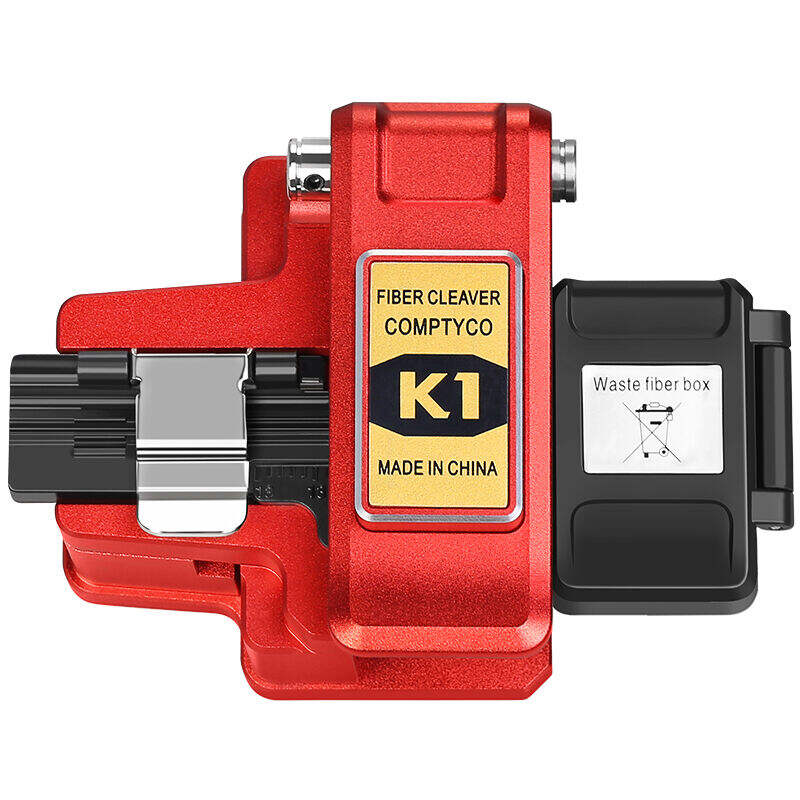
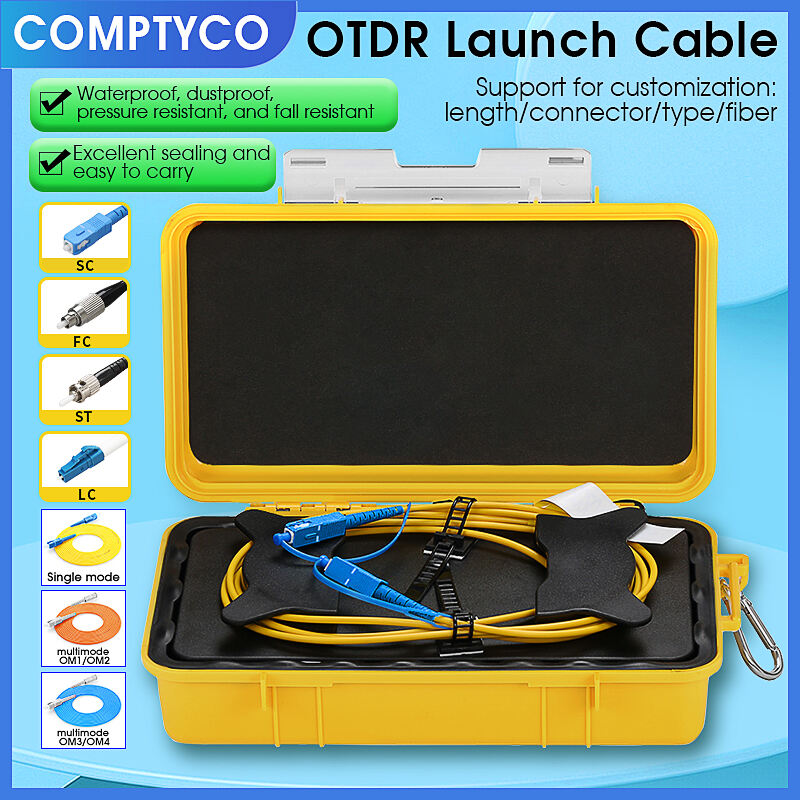
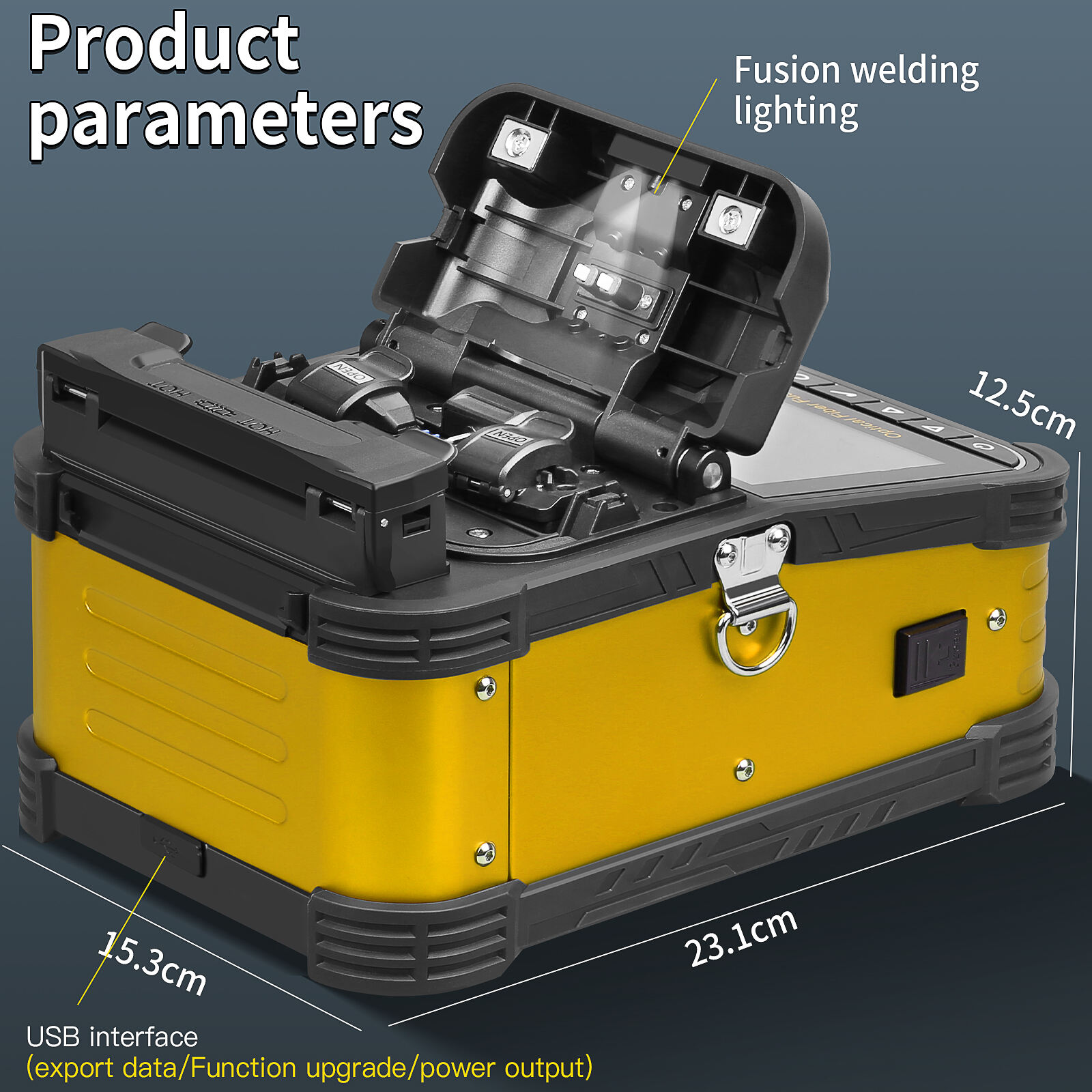
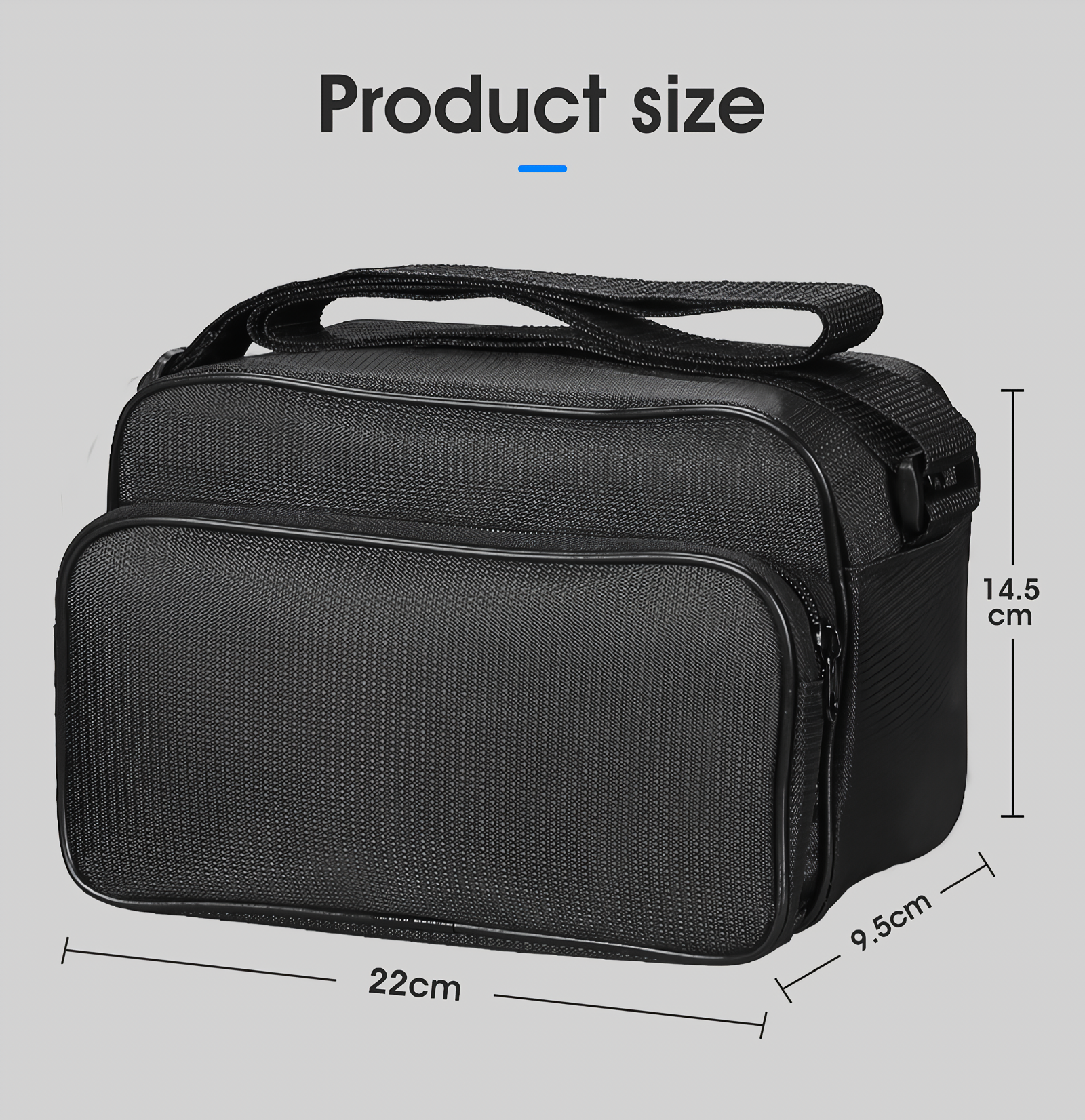
Professional Optical Fiber Identifier - Non-Intrusive Signal Detection & Testing Equipment

All Categories

optical fiber identifier

An optical fiber identifier represents a sophisticated testing instrument designed specifically for telecommunications professionals who work with fiber optic networks. This essential device serves multiple critical functions in network maintenance, installation, and troubleshooting operations. The optical fiber identifier operates by detecting optical signals transmitted through fiber optic cables without requiring physical disconnection or service interruption. Modern optical fiber identifiers utilize advanced photodetector technology combined with precision electronics to capture and analyze light signals passing through the fiber core. The device typically features a mechanical clamping mechanism that securely attaches to the fiber cable, creating optimal contact for signal detection. This non-intrusive testing approach allows technicians to verify signal presence, determine transmission direction, and measure relative power levels efficiently. The optical fiber identifier incorporates sophisticated filtering systems that distinguish between different wavelengths, enabling identification of specific service channels within dense wavelength division multiplexing systems. Advanced models include digital displays that present real-time measurements, signal strength indicators, and directional information in user-friendly formats. The device supports various fiber types including single-mode and multi-mode configurations, accommodating diverse network architectures. Calibration features ensure measurement accuracy across different operating conditions and environmental factors. The optical fiber identifier proves invaluable during network commissioning phases, routine maintenance procedures, and emergency troubleshooting situations. Its compact design facilitates field deployment while robust construction withstands demanding operational environments. Battery-powered operation provides extended field use capabilities, while intuitive interfaces minimize training requirements for technical personnel. The instrument's ability to function without network disruption makes it indispensable for maintaining service continuity during testing procedures. Modern optical fiber identifiers often incorporate data logging capabilities, enabling documentation of measurement results for compliance reporting and network analysis purposes.

New Product Recommendations

The optical fiber identifier delivers numerous practical benefits that directly impact operational efficiency and cost management for telecommunications organizations. First and foremost, this device eliminates the need for service interruption during testing procedures, which translates to significant cost savings by avoiding customer downtime and maintaining revenue streams. Traditional testing methods often require disconnecting active circuits, resulting in service outages and potential customer dissatisfaction. The optical fiber identifier bypasses these concerns by performing comprehensive analysis while services remain fully operational. Installation teams benefit from accelerated deployment schedules since verification procedures no longer depend on coordinated service windows or customer notifications. Maintenance crews experience enhanced productivity through rapid fault location capabilities that dramatically reduce troubleshooting time. The device enables technicians to quickly identify problematic fiber segments, determine signal flow directions, and verify circuit continuity without complex setup procedures. Cost reduction extends beyond operational savings to include reduced equipment investment since the optical fiber identifier replaces multiple traditional testing instruments. Organizations achieve improved resource allocation by requiring fewer specialized technicians for routine testing tasks, as the device's intuitive operation allows broader personnel utilization. Safety improvements result from minimized exposure to laser radiation and reduced handling of active optical connections. The non-intrusive testing approach eliminates risks associated with improper connector handling or accidental service disruption. Quality assurance processes benefit from consistent, repeatable measurements that support compliance documentation and network certification requirements. Field teams appreciate the device's portability and extended battery life, which enable comprehensive testing across large network installations without logistical constraints. Training costs decrease substantially since the optical fiber identifier requires minimal specialized knowledge compared to complex optical time-domain reflectometers or other advanced test equipment. Documentation capabilities facilitate regulatory compliance and network asset management through automated measurement logging and report generation. The device's versatility across different fiber types and network configurations reduces inventory requirements and simplifies equipment standardization initiatives. Long-term reliability and low maintenance requirements contribute to favorable total cost of ownership calculations, making the optical fiber identifier an economically attractive investment for organizations of all sizes.

Practical Tips

How to Choose the Right Fiber Stripper for High-Precision Cable Work

26

Jan

How to Choose the Right Fiber Stripper for High-Precision Cable Work

High-precision cable work demands tools that combine accuracy, durability, and efficiency. As fiber optic networks expand into increasingly complex environments, the importance of proper cable preparation cannot be overstated. The right fiber strippe...
View More
Top Fiber Cleaver Features That Improve Splicing Quality and Efficiency

26

Jan

Top Fiber Cleaver Features That Improve Splicing Quality and Efficiency

In the intricate world of fiber optic splicing, the cleaver is a foundational tool whose performance dictates the ceiling of success for every subsequent connection. A flawless, mirror-smooth fiber end face is the non-negotiable starting point for ac...
View More
Choosing the Right OTDR for Your Network Maintenance and Troubleshooting.

26

Mar

Choosing the Right OTDR for Your Network Maintenance and Troubleshooting.

Selecting the appropriate OTDR for your network infrastructure requires understanding your specific maintenance requirements, network complexity, and troubleshooting objectives. The decision impacts everything from fault detection accuracy to operati...
View More
What Essential Tools Should Be in Every Fiber Technician's Kit?

26

Mar

What Essential Tools Should Be in Every Fiber Technician's Kit?

Every fiber optic technician knows that having the right tools can make the difference between a successful installation and a costly setback. A comprehensive fiber tool kit serves as the foundation for professional fiber optic work, enabling technic...
View More

Get a Free Quote

Our representative will contact you soon.
Email
Name
Company Name
Message
0/1000

optical fiber identifier

Non-Intrusive Signal Detection Technology

Non-Intrusive Signal Detection Technology

The optical fiber identifier's most revolutionary feature lies in its non-intrusive signal detection capability, which fundamentally transforms how telecommunications professionals approach fiber optic testing and maintenance. This groundbreaking technology enables comprehensive signal analysis without requiring physical disconnection of active circuits, representing a paradigm shift from traditional testing methodologies that often necessitate service interruptions. The device achieves this remarkable functionality through sophisticated photodetector arrays that capture minute light leakage occurring naturally in optical fibers during signal transmission. Advanced signal processing algorithms analyze these captured photons to determine signal characteristics including presence, direction, and relative power levels with exceptional accuracy. The mechanical clamping system creates optimal coupling between the detector and fiber cable while maintaining the cable's structural integrity and signal transmission properties. This innovative approach eliminates the risks associated with connector manipulation, fiber contamination, and inadvertent service disruption that plague conventional testing methods. Field technicians benefit tremendously from this capability during critical network maintenance windows where service continuity remains paramount. The technology proves particularly valuable in dense fiber environments where identifying specific circuits among hundreds of similar cables becomes challenging. Emergency response scenarios benefit significantly from rapid circuit identification capabilities that enable swift fault isolation and service restoration. Network commissioning projects experience accelerated timelines since verification procedures no longer require coordination with service providers or customer notification processes. The non-intrusive nature extends equipment lifespan by reducing connector wear and minimizing exposure to environmental contaminants that can degrade optical performance. Quality assurance processes achieve higher consistency since measurements remain unaffected by connector cleaning procedures or mating variations that influence traditional testing methods. This technology represents a substantial competitive advantage for service providers who can offer superior service level agreements based on minimal maintenance-related outages and faster fault resolution times.
Multi-Wavelength Detection and Direction Identification

Multi-Wavelength Detection and Direction Identification

The optical fiber identifier incorporates advanced multi-wavelength detection capabilities combined with sophisticated direction identification algorithms, delivering unprecedented visibility into complex fiber optic network operations. This powerful feature set enables technicians to distinguish between different service channels operating simultaneously within the same fiber cable, providing granular insight into network utilization and signal routing patterns. The device utilizes precision optical filters and multiple photodetector configurations to isolate specific wavelength bands corresponding to different transmission standards including 1310nm, 1490nm, 1550nm, and 1625nm commonly used in telecommunications applications. Direction identification functionality employs innovative signal processing techniques that analyze modulation characteristics and power fluctuations to determine signal flow orientation with remarkable accuracy. This capability proves invaluable in bidirectional transmission systems where upstream and downstream signals share the same physical fiber infrastructure. Dense wavelength division multiplexing environments benefit significantly from the device's ability to identify individual channel assignments and verify proper signal routing across complex network topologies. The multi-wavelength detection system incorporates automatic calibration features that adapt to varying signal strengths and environmental conditions, ensuring consistent measurement accuracy across diverse operational scenarios. Advanced filtering algorithms eliminate interference from ambient light sources and optical noise, providing reliable measurements even in challenging field conditions. Real-time signal monitoring capabilities enable dynamic network analysis during peak traffic periods, facilitating capacity planning and performance optimization initiatives. The direction identification feature supports efficient troubleshooting procedures by clearly indicating signal source locations and intended destinations, reducing diagnostic time and minimizing service restoration delays. Network documentation processes benefit from detailed wavelength mapping capabilities that automatically generate comprehensive circuit inventories and routing diagrams. The technology supports emerging network architectures including passive optical networks and fiber-to-the-home deployments where precise wavelength management becomes critical for service delivery optimization.
Compact Design with Extended Field Operation Capabilities

Compact Design with Extended Field Operation Capabilities

The optical fiber identifier's compact and ruggedized design philosophy addresses the practical challenges faced by telecommunications technicians working in diverse field environments, combining portability with extended operational capabilities that maximize productivity and minimize logistical constraints. The device's engineered form factor balances comprehensive functionality with ergonomic considerations, resulting in a handheld instrument that technicians can operate comfortably during extended testing sessions without fatigue or reduced accuracy. Advanced battery management systems provide exceptional operational endurance, typically delivering 8-12 hours of continuous use on a single charge, enabling comprehensive network surveys and extended maintenance procedures without interruption. The robust construction incorporates shock-resistant materials and protective housing designed to withstand the rigorous demands of field deployment including temperature extremes, humidity variations, and mechanical stress encountered in manholes, equipment rooms, and outdoor installations. Intuitive user interface design minimizes training requirements while maximizing operational efficiency through clearly labeled controls, high-contrast displays, and logical menu structures that facilitate rapid access to essential functions. The integrated data logging system captures measurement results with timestamp information, enabling comprehensive documentation for compliance reporting, network analysis, and maintenance record keeping without requiring additional equipment or complex setup procedures. Connectivity options including USB interfaces and wireless communication capabilities support seamless integration with existing network management systems and documentation platforms. The device's compatibility with various fiber cable types and connector configurations reduces inventory requirements and simplifies equipment standardization across diverse network installations. Environmental protection features including dust and moisture resistance ensure reliable operation in challenging conditions commonly encountered during emergency repairs and routine maintenance activities. The compact design facilitates transportation and storage while maintaining professional appearance standards required for customer-facing installations and sensitive facility environments. Long-term reliability engineering incorporates component selection and manufacturing processes that minimize maintenance requirements and maximize service life, contributing to favorable total cost of ownership calculations and reduced operational disruptions caused by equipment failures or calibration requirements.

Professional Optical Fiber Identifier - Non-Intrusive Signal Detection & Testing Equipment Professional Optical Fiber Identifier - Non-Intrusive Signal Detection & Testing Equipment Professional Optical Fiber Identifier - Non-Intrusive Signal Detection & Testing Equipment Professional Optical Fiber Identifier - Non-Intrusive Signal Detection & Testing Equipment
Professional Optical Fiber Identifier - Non-Intrusive Signal Detection & Testing Equipment