High Quality Fiber Identifier - Professional Optical Signal Detection & Network Testing Solutions

All Categories

high quality fiber identifier

A high quality fiber identifier represents an essential piece of equipment designed for telecommunications professionals who need to precisely identify and trace optical fiber cables in complex network environments. This sophisticated device utilizes advanced optical technology to detect, locate, and distinguish individual fibers within multi-fiber cables without causing service disruption or signal interference. The high quality fiber identifier operates by detecting optical signals transmitted through single-mode and multi-mode fibers, enabling technicians to perform critical maintenance tasks with confidence and accuracy. Modern fiber identification systems incorporate cutting-edge photodetector technology that can sense even weak optical signals while maintaining exceptional sensitivity levels. These instruments typically feature multiple detection modes, including core power detection, cladding mode detection, and macro-bend detection capabilities. The high quality fiber identifier includes an ergonomic design that facilitates comfortable operation during extended field work sessions. Many models incorporate LCD displays that provide clear visual feedback about signal strength, frequency, and directional information. The device can identify various signal types including continuous wave signals, modulated signals, and pulsed optical transmissions. Professional technicians rely on these tools for fiber optic cable installation, maintenance, troubleshooting, and network expansion projects. The high quality fiber identifier supports multiple fiber types and connector configurations, making it versatile for diverse telecommunications infrastructure applications. Battery-powered operation ensures portability and independence from external power sources during field operations. Safety features include automatic calibration functions and protective mechanisms that prevent damage to sensitive fiber optic components. The instrument's robust construction withstands harsh environmental conditions while maintaining measurement precision. Advanced models offer data logging capabilities and connectivity options for comprehensive network documentation and analysis purposes.

New Products

The high quality fiber identifier delivers numerous practical benefits that directly impact operational efficiency and cost-effectiveness for telecommunications professionals. First, this device eliminates guesswork during fiber identification processes, reducing troubleshooting time from hours to minutes. Technicians can quickly locate specific fibers within complex cable bundles without disconnecting services or disrupting customer operations. The non-invasive detection method prevents service interruptions that could result in customer complaints and revenue losses. Second, the high quality fiber identifier enhances workplace safety by reducing the need for extensive cable manipulation and connector disconnection procedures. This minimizes exposure to laser radiation and prevents accidental fiber damage that could lead to expensive repairs. The device's ability to detect signals through fiber jackets eliminates the requirement for direct fiber access in many situations. Third, cost savings become immediately apparent through reduced labor expenses and faster project completion times. Teams can identify target fibers efficiently without deploying multiple technicians or specialized equipment. The high quality fiber identifier supports preventive maintenance programs by enabling regular network health assessments without service disruption. Fourth, measurement accuracy ensures reliable network performance and reduces callback incidents. The device provides consistent results across different environmental conditions and fiber types. Fifth, versatility allows single-device solutions for multiple applications, reducing equipment investment and training requirements. Technicians can handle various fiber identification tasks using one comprehensive tool. Sixth, the portable design enables field deployment in challenging locations where traditional testing equipment cannot operate effectively. Battery operation provides independence from electrical infrastructure limitations. Seventh, documentation capabilities support compliance requirements and network management protocols. The high quality fiber identifier helps maintain accurate network records and facilitates future expansion planning. Finally, the investment return becomes evident through improved service quality, reduced operational costs, and enhanced customer satisfaction levels.

Practical Tips

Why Choose Comptyco as Your Fiber Optic Solutions Partner?

26

Mar

Why Choose Comptyco as Your Fiber Optic Solutions Partner?

Selecting the right fiber optic solutions partner can significantly impact your project success, operational efficiency, and long-term network reliability. When evaluating potential partners, organizations must consider factors ranging from product q...
View More
How to Use a Fusion Splicer: Step-by-Step Tutorial

23

Dec

How to Use a Fusion Splicer: Step-by-Step Tutorial

Whether you're a seasoned fiber optic technician or just starting in the telecommunications field, mastering fusion splicing is essential for building reliable networks. Modern fusion splicers like the Comptyco series have become increasingly sophi...
View More
Fiber Cleaver Selection Guide: Achieving Clean and Accurate Fiber Cuts

26

Jan

Fiber Cleaver Selection Guide: Achieving Clean and Accurate Fiber Cuts

In fiber optic splicing and termination, the quality of the fiber end face is paramount. A clean, perpendicular cleave is the foundation for low-loss connections, directly impacting network performance and reliability. Choosing the right fiber cleave...
View More
How a Fusion Splicer Improves Speed and Accuracy in Fiber Deployment

26

Jan

How a Fusion Splicer Improves Speed and Accuracy in Fiber Deployment

In today's fast-paced expansion of digital infrastructure, the efficiency and quality of fiber optic network deployment are critical. Every splice point is a potential bottleneck for data and a key node for long-term reliability. The evolution from t...
View More

Get a Free Quote

Our representative will contact you soon.
Email
Name
Company Name
Message
0/1000

high quality fiber identifier

Advanced Signal Detection Technology

Advanced Signal Detection Technology

The high quality fiber identifier incorporates state-of-the-art signal detection technology that revolutionizes how telecommunications professionals approach fiber identification tasks. This advanced system utilizes precision photodetectors capable of sensing extremely weak optical signals while maintaining exceptional signal-to-noise ratios. The detection mechanism operates across multiple wavelengths simultaneously, ensuring compatibility with various transmission systems and fiber types commonly deployed in modern telecommunications networks. Unlike conventional identification methods that require service interruption, this high quality fiber identifier performs real-time signal analysis without affecting network operations. The technology distinguishes between different modulation formats, including amplitude modulation, frequency modulation, and digital signal patterns. This capability proves invaluable when working with complex networks carrying multiple service types simultaneously. The device's sensitivity extends to detecting signals attenuated by connector losses, splice losses, and fiber bending, making it effective even in challenging network conditions. Advanced filtering algorithms eliminate false positives and provide reliable identification results regardless of ambient electromagnetic interference. The high quality fiber identifier automatically adjusts detection parameters based on signal characteristics, optimizing performance for each specific application. This intelligent adaptation ensures consistent results across different fiber types, including standard single-mode, dispersion-shifted, and specialty fibers. The detection system also identifies signal direction, enabling technicians to trace fiber paths and locate signal sources efficiently. Real-time signal strength indicators help optimize fiber positioning for maximum detection accuracy. The technology supports both continuous wave and modulated signal detection, providing flexibility for various testing scenarios. Temperature compensation mechanisms maintain detection accuracy across wide operating temperature ranges, ensuring reliable field performance in diverse environmental conditions. This advanced detection capability transforms complex fiber identification tasks into straightforward, efficient procedures.
Ergonomic Design and User-Friendly Interface

Ergonomic Design and User-Friendly Interface

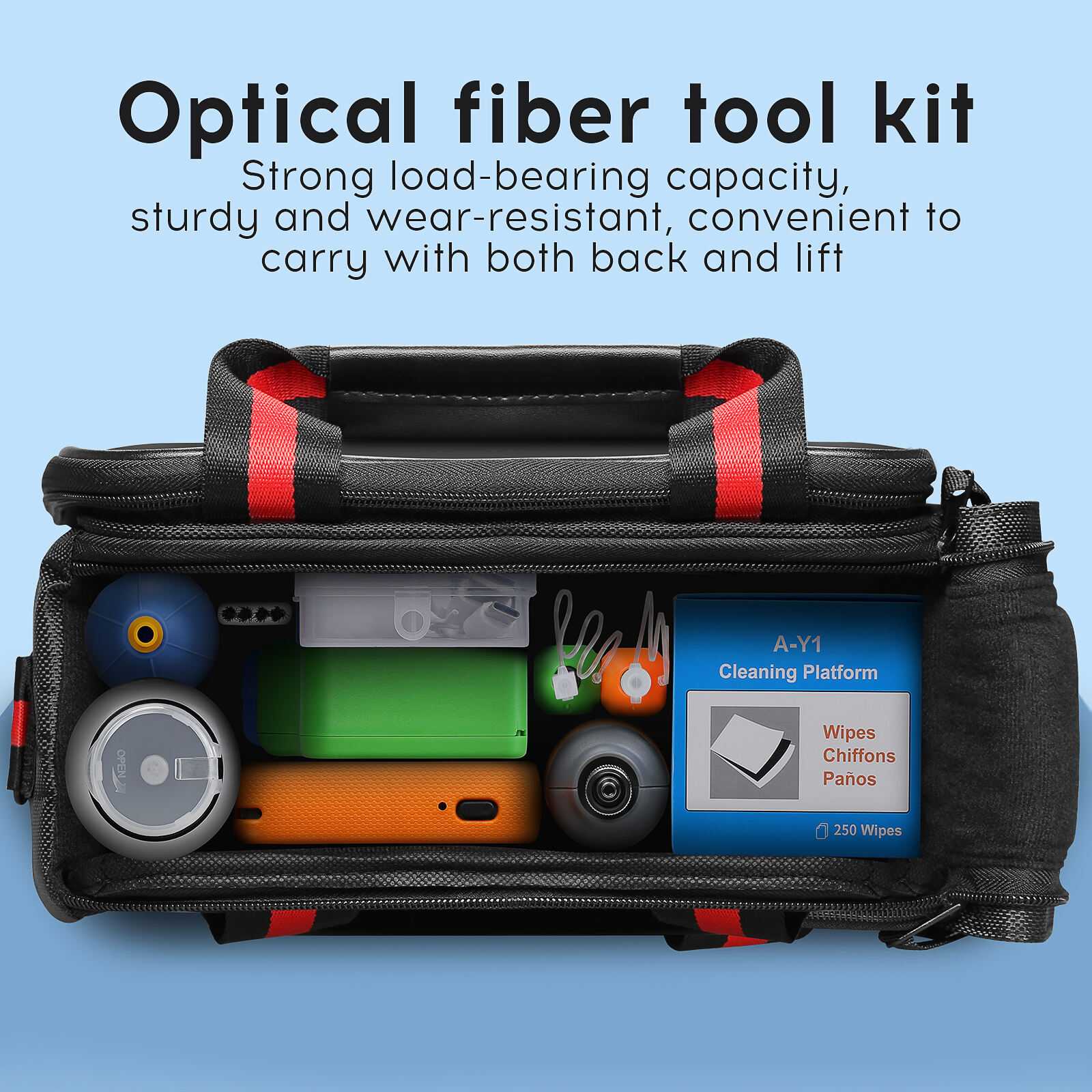
The high quality fiber identifier features meticulously engineered ergonomic design elements that prioritize user comfort and operational efficiency during extended field work sessions. The lightweight construction reduces operator fatigue while maintaining robust durability required for professional telecommunications applications. The device's balanced weight distribution and contoured grip surfaces ensure secure handling even when wearing protective gloves in various weather conditions. The intuitive user interface incorporates a high-contrast LCD display that remains clearly visible under direct sunlight and low-light conditions commonly encountered during field operations. Menu navigation utilizes simple button combinations that technicians can operate efficiently without extensive training or reference documentation. The high quality fiber identifier includes tactile feedback mechanisms that confirm user inputs, preventing operational errors in challenging working environments. Audio indicators provide alternative feedback options when visual confirmation proves difficult. The display shows real-time signal information, battery status, and operational parameters simultaneously, enabling comprehensive monitoring without menu switching. Customizable display options allow technicians to prioritize information most relevant to specific tasks. The device incorporates protective features including shock-resistant housing and sealed connectors that withstand moisture, dust, and temperature variations typical in telecommunications infrastructure environments. The high quality fiber identifier's compact form factor facilitates single-handed operation while leaving the other hand free for cable manipulation and fiber positioning. Strategic placement of controls prevents accidental activation while ensuring quick access to frequently used functions. The device includes a convenient carrying case with organized storage compartments for accessories and spare components. Battery life indicators provide advance warning before power depletion, preventing unexpected shutdowns during critical operations. The interface supports multiple language options and measurement units to accommodate diverse user preferences and regional requirements. Quick-start guides and operation shortcuts reduce learning curves for new users while maintaining advanced functionality for experienced professionals.
Comprehensive Network Compatibility and Versatility

Comprehensive Network Compatibility and Versatility

The high quality fiber identifier demonstrates exceptional versatility through comprehensive compatibility with diverse fiber optic network architectures and signal types encountered in modern telecommunications infrastructure. This device seamlessly interfaces with single-mode and multi-mode fiber systems, supporting wavelengths ranging from 800nm to 1700nm to accommodate various transmission standards and equipment configurations. The high quality fiber identifier recognizes multiple connector types including SC, LC, ST, FC, and MPO configurations without requiring adapter changes or special preparation procedures. This universal compatibility eliminates the need for multiple specialized tools and reduces equipment investment costs for telecommunications organizations. The device effectively identifies signals from different network technologies including SONET, SDH, Ethernet, and emerging high-speed transmission systems. Advanced signal processing algorithms automatically detect modulation formats and bit rates, providing comprehensive network analysis capabilities. The high quality fiber identifier supports both core mode and cladding mode detection techniques, enabling identification of fibers carrying live traffic as well as dark fibers prepared for future services. This flexibility proves essential for network expansion projects and maintenance operations involving mixed-service environments. The device operates effectively with various fiber cable constructions including loose-tube, tight-buffer, ribbon, and armored cable designs commonly deployed in different applications. Environmental adaptability ensures reliable performance in aerial, buried, and indoor installations across temperature ranges from -10°C to +60°C. The high quality fiber identifier accommodates different signal power levels from high-power transmission systems to low-power distribution networks without manual adjustment requirements. Automatic gain control maintains optimal sensitivity across the entire dynamic range. The device includes preset configurations for common network types, simplifying setup procedures for routine applications while retaining full customization capabilities for specialized requirements. Data export functions enable integration with network management systems and documentation platforms. The high quality fiber identifier supports firmware updates that extend compatibility with emerging technologies and standards, protecting long-term equipment investments and ensuring continued operational effectiveness as network technologies evolve.

High Quality Fiber Identifier - Professional Optical Signal Detection & Network Testing Solutions High Quality Fiber Identifier - Professional Optical Signal Detection & Network Testing Solutions High Quality Fiber Identifier - Professional Optical Signal Detection & Network Testing Solutions High Quality Fiber Identifier - Professional Optical Signal Detection & Network Testing Solutions
High Quality Fiber Identifier - Professional Optical Signal Detection & Network Testing Solutions