Kompatibilitas Jaringan yang Komprehensif dan Serbaguna
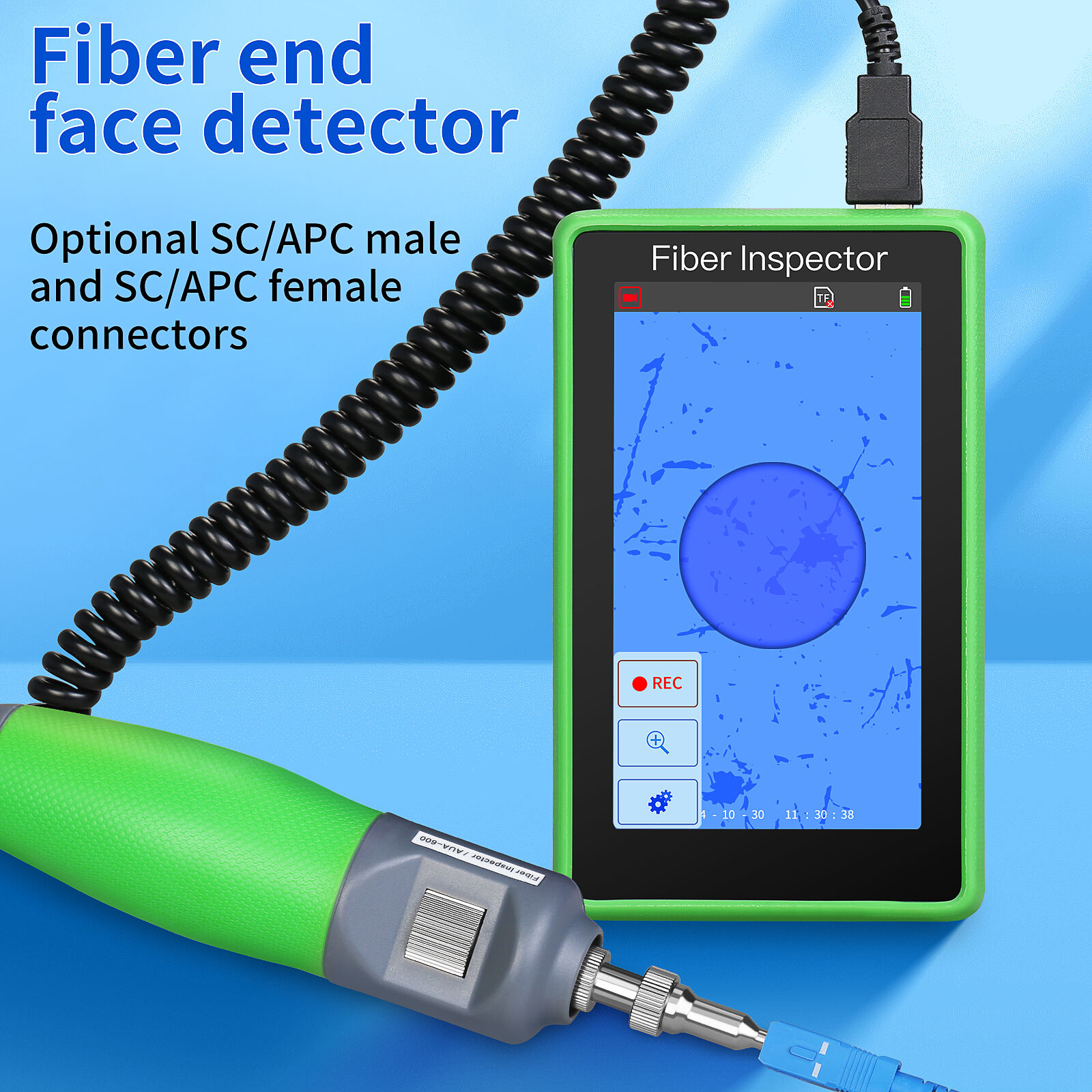
Pengidentifikasi serat berkualitas tinggi ini menunjukkan fleksibilitas luar biasa melalui kompatibilitas menyeluruh dengan berbagai arsitektur jaringan serat optik dan jenis sinyal yang ditemui dalam infrastruktur telekomunikasi modern. Perangkat ini terhubung secara mulus dengan sistem serat tunggal (single-mode) dan serat multimode (multi-mode), mendukung panjang gelombang mulai dari 800 nm hingga 1700 nm untuk memenuhi berbagai standar transmisi dan konfigurasi peralatan. Pengidentifikasi serat berkualitas tinggi ini mampu mengenali berbagai jenis konektor, termasuk konfigurasi SC, LC, ST, FC, dan MPO, tanpa memerlukan penggantian adaptor atau prosedur persiapan khusus. Kompatibilitas universal ini menghilangkan kebutuhan akan beberapa alat khusus sekaligus mengurangi biaya investasi peralatan bagi organisasi telekomunikasi. Perangkat ini secara efektif mengidentifikasi sinyal dari berbagai teknologi jaringan, termasuk SONET, SDH, Ethernet, serta sistem transmisi berkecepatan tinggi yang sedang berkembang. Algoritma pemrosesan sinyal canggih secara otomatis mendeteksi format modulasi dan laju bit, sehingga memberikan kemampuan analisis jaringan yang komprehensif. Pengidentifikasi serat berkualitas tinggi ini mendukung teknik deteksi mode inti (core mode) maupun mode selubung (cladding mode), memungkinkan identifikasi serat yang membawa lalu lintas aktif maupun serat gelap (dark fibers) yang disiapkan untuk layanan masa depan. Fleksibilitas semacam ini sangat penting dalam proyek ekspansi jaringan dan operasi pemeliharaan yang melibatkan lingkungan layanan campuran. Perangkat ini beroperasi secara efektif dengan berbagai konstruksi kabel serat, termasuk tipe loose-tube, tight-buffer, ribbon, dan armored cable yang umum digunakan dalam berbagai aplikasi. Adaptabilitas lingkungan menjamin kinerja andal pada instalasi udara (aerial), terkubur (buried), dan dalam ruangan (indoor) di rentang suhu antara -10°C hingga +60°C. Pengidentifikasi serat berkualitas tinggi ini mampu menangani berbagai tingkat daya sinyal—mulai dari sistem transmisi berdaya tinggi hingga jaringan distribusi berdaya rendah—tanpa memerlukan penyesuaian manual. Kontrol penguatan otomatis (automatic gain control) menjaga sensitivitas optimal di seluruh rentang dinamisnya. Perangkat ini dilengkapi konfigurasi bawaan untuk jenis jaringan umum, sehingga menyederhanakan prosedur penyiapan untuk aplikasi rutin, sekaligus tetap mempertahankan kemampuan penyesuaian penuh (full customization) guna memenuhi kebutuhan khusus. Fungsi ekspor data memungkinkan integrasi dengan sistem manajemen jaringan dan platform dokumentasi. Pengidentifikasi serat berkualitas tinggi ini mendukung pembaruan firmware yang memperluas kompatibilitasnya terhadap teknologi dan standar baru, sehingga melindungi investasi jangka panjang dalam peralatan serta menjamin efektivitas operasional berkelanjutan seiring perkembangan teknologi jaringan.

 EN
EN