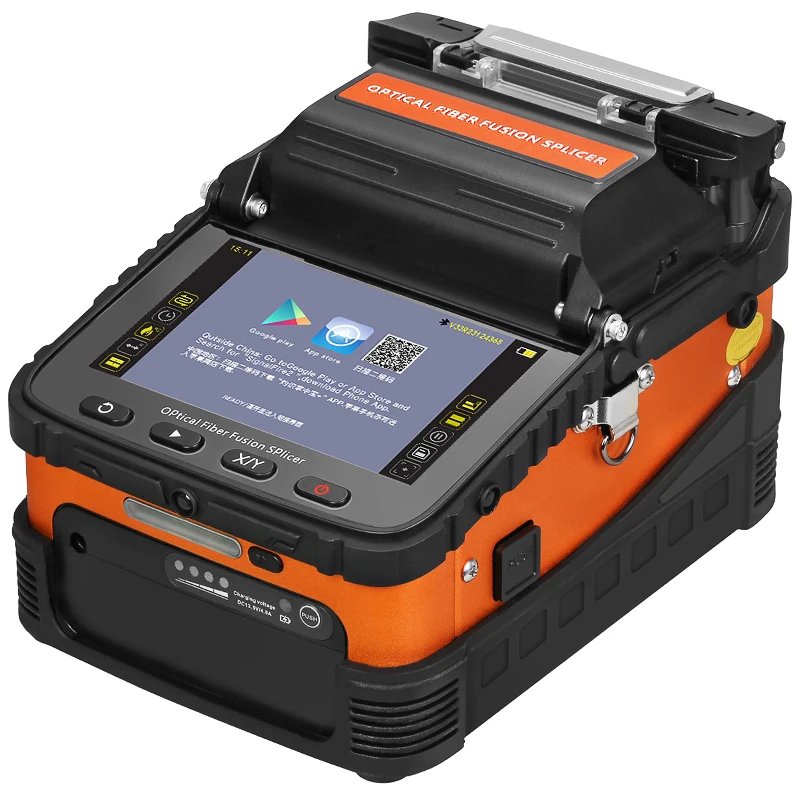
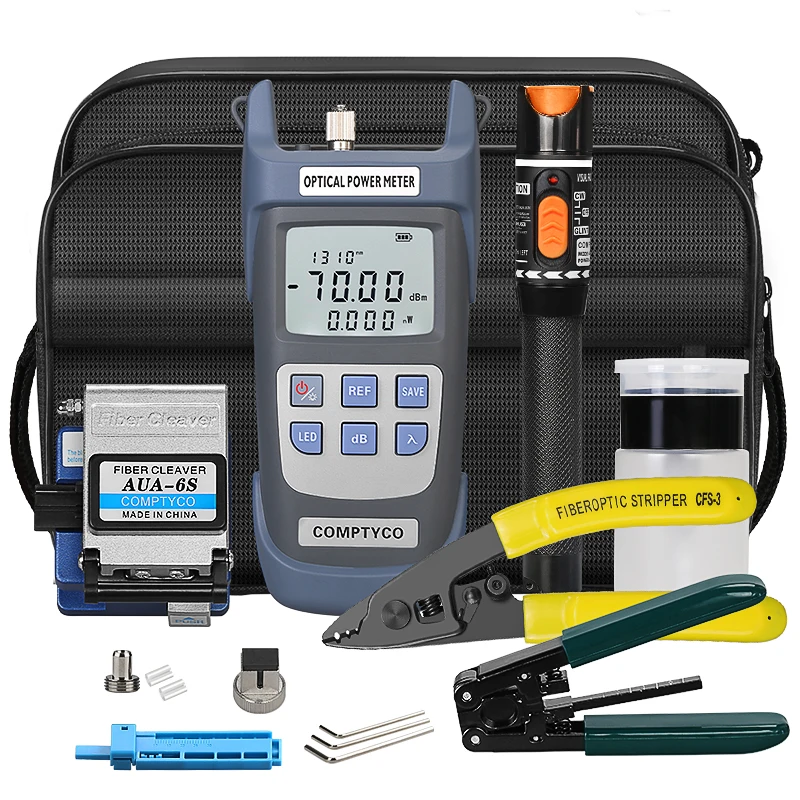
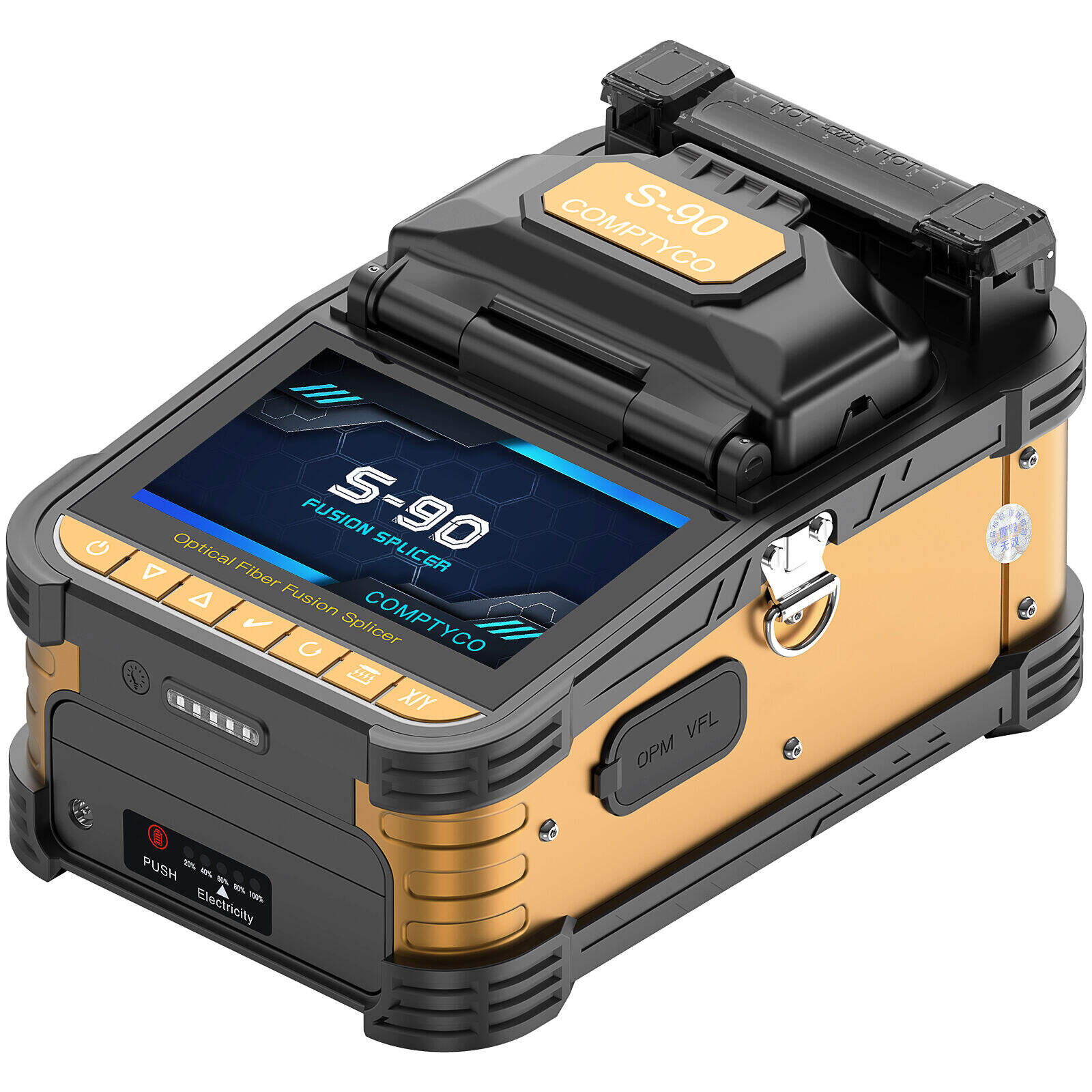
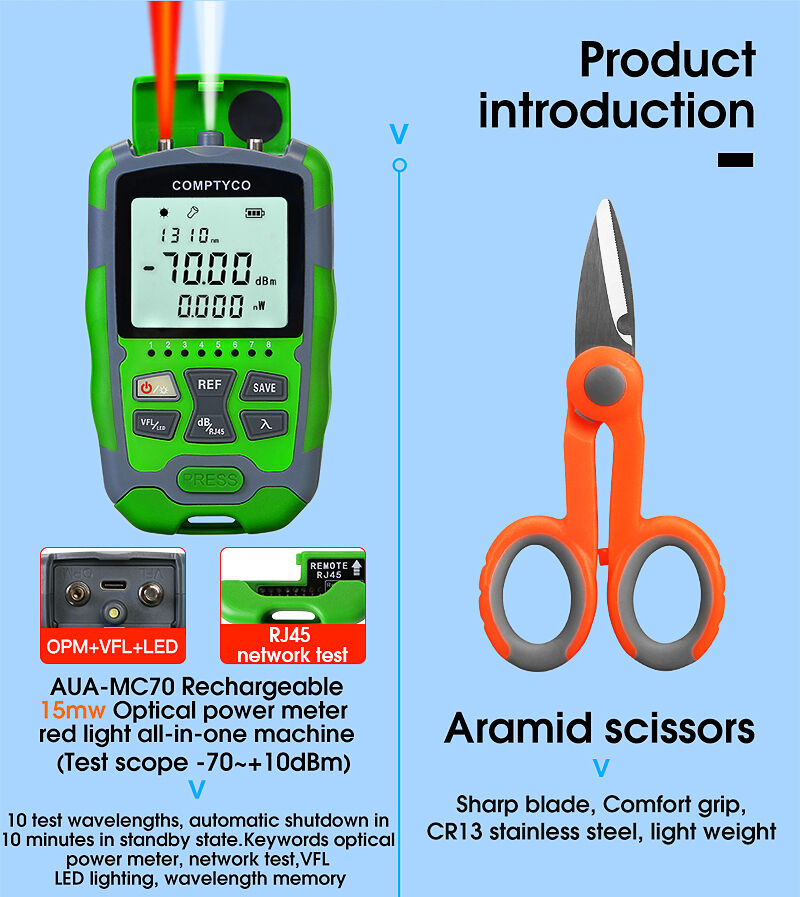
Professional Fiber End Face Detector - Advanced Optical Fiber Inspection Solutions

All Categories

fiber end face detector

The fiber end face detector represents a crucial advancement in optical fiber communication technology, serving as an essential diagnostic tool for maintaining and optimizing fiber optic networks. This sophisticated device enables technicians and engineers to perform comprehensive analysis of fiber optic cable terminations with unprecedented precision and efficiency. The primary function of a fiber end face detector revolves around examining the physical condition of fiber optic connectors, identifying potential issues that could compromise signal quality and network performance. By utilizing advanced imaging technology and automated analysis algorithms, these detectors provide detailed assessments of connector cleanliness, geometric parameters, and surface defects that are invisible to the naked eye. The technological framework of modern fiber end face detectors incorporates high-resolution microscopy systems, typically featuring magnification capabilities ranging from 200x to 800x, enabling detailed visualization of microscopic imperfections on fiber surfaces. These devices employ sophisticated lighting systems, including LED illumination with multiple wavelength options, to enhance contrast and reveal various types of contamination or damage patterns. The automated analysis functionality represents a significant technological advancement, utilizing artificial intelligence algorithms to classify defects according to international standards such as IEC 61300-3-35. This automation eliminates human error and provides consistent, objective results across different operators and testing environments. Modern fiber end face detectors also feature comprehensive data management systems, allowing users to store, organize, and retrieve inspection results for future reference and compliance documentation. The portability of contemporary models makes them suitable for both laboratory environments and field installations, with ruggedized designs capable of withstanding harsh outdoor conditions. Integration capabilities with existing network management systems enable seamless incorporation into broader infrastructure monitoring protocols, facilitating proactive maintenance strategies and reducing network downtime risks.

New Products

The fiber end face detector delivers substantial operational benefits that directly translate into improved network reliability and reduced maintenance costs for telecommunications providers and enterprise users. These devices significantly enhance diagnostic accuracy by eliminating guesswork and subjective interpretation that traditionally plagued manual inspection methods. The automated analysis capabilities ensure consistent results regardless of operator experience level, making it possible for technicians to quickly identify problems without extensive specialized training. This standardization reduces the likelihood of human error and provides reliable, repeatable measurements that meet strict industry quality standards. Speed represents another critical advantage, as modern fiber end face detectors complete comprehensive inspections in seconds rather than the minutes required for manual assessment methods. This efficiency improvement allows maintenance teams to process larger numbers of connections in shorter timeframes, directly reducing labor costs and minimizing service disruption during installation or repair activities. The documentation capabilities provide essential traceability for quality assurance programs and regulatory compliance requirements. Detailed reports generated by these devices include high-resolution images, measurement data, and pass-fail determinations that create permanent records for future reference. These comprehensive reports prove invaluable during warranty claims, troubleshooting sessions, and performance optimization initiatives. Cost savings extend beyond immediate labor reductions to encompass long-term network reliability improvements. By identifying potential problems before they cause service interruptions, fiber end face detectors enable proactive maintenance strategies that prevent costly emergency repairs and customer service disruptions. The ability to detect contamination and damage early in the deterioration process allows for timely cleaning or replacement actions that restore optimal performance levels. Training requirements decrease substantially when using automated fiber end face detectors compared to traditional manual inspection methods. New technicians can achieve proficiency quickly, reducing training costs and enabling more efficient workforce deployment. The intuitive interfaces and guided inspection procedures minimize the learning curve while ensuring consistent application of industry best practices. Integration capabilities with existing network management systems provide additional value by enabling centralized monitoring and trend analysis across multiple locations and installation teams.

Latest News

2025 Best Fusion Splicer Models: Expert Buying Guide

13

Jan

2025 Best Fusion Splicer Models: Expert Buying Guide

The telecommunications industry continues to evolve rapidly, demanding increasingly sophisticated equipment for fiber optic network installation and maintenance. Professional technicians and network engineers require reliable tools that deliver preci...
View More
How a Fusion Splicer Improves Speed and Accuracy in Fiber Deployment

26

Jan

How a Fusion Splicer Improves Speed and Accuracy in Fiber Deployment

In today's fast-paced expansion of digital infrastructure, the efficiency and quality of fiber optic network deployment are critical. Every splice point is a potential bottleneck for data and a key node for long-term reliability. The evolution from t...
View More
What to Look for When Choosing an Industrial-Grade Fusion Splicer?

26

Mar

What to Look for When Choosing an Industrial-Grade Fusion Splicer?

Selecting the right industrial-grade fusion splicer requires careful evaluation of multiple technical specifications and operational factors that directly impact splice quality, field efficiency, and long-term reliability. Industrial environments dem...
View More
The Comptyco Commitment: Quality and Reliability in Every Product.

26

Mar

The Comptyco Commitment: Quality and Reliability in Every Product.

When businesses invest in fiber optic testing equipment and network infrastructure solutions, they need assurance that their chosen provider delivers consistent quality and unwavering reliability. Comptyco has built its reputation on a fundamental co...
View More

Get a Free Quote

Our representative will contact you soon.
Email
Name
Company Name
Message
0/1000

fiber end face detector

Advanced Automated Analysis Technology

Advanced Automated Analysis Technology

The automated analysis technology integrated into modern fiber end face detectors represents a revolutionary advancement that transforms how fiber optic networks are maintained and optimized. This sophisticated system employs artificial intelligence algorithms specifically developed for optical fiber inspection, utilizing machine learning capabilities that have been trained on thousands of connector samples to recognize various types of defects and contamination patterns. The analysis engine processes high-resolution images captured by precision optics systems, examining each fiber surface according to strict international standards including IEC 61300-3-35 and Telcordia GR-326-CORE requirements. The automated system evaluates multiple critical parameters simultaneously, including core concentricity, fiber height variations, surface scratches, contamination particles, and geometric irregularities that could impact signal transmission quality. Unlike manual inspection methods that rely on subjective human interpretation, the automated analysis provides objective, quantifiable measurements that eliminate operator bias and ensure consistent results across different technicians and testing environments. The system generates comprehensive pass-fail determinations based on predefined acceptance criteria, enabling technicians to make informed decisions about connector condition without requiring extensive expertise in optical fiber theory. Real-time analysis capabilities allow immediate feedback during installation and maintenance procedures, enabling on-the-spot corrective actions that prevent future performance issues. The automated system also maintains detailed statistical databases that track inspection results over time, identifying trends and patterns that help optimize maintenance schedules and predict potential failure points before they impact network performance. This predictive capability proves particularly valuable for large-scale network operators managing thousands of fiber connections across multiple locations. The analysis algorithms continuously update and improve through machine learning processes, ensuring that detection accuracy improves over time as more inspection data becomes available. Advanced filtering and enhancement algorithms compensate for varying lighting conditions and environmental factors, maintaining consistent analysis quality regardless of field conditions or operator technique variations.
High-Resolution Imaging and Precision Optics

High-Resolution Imaging and Precision Optics

The high-resolution imaging system incorporated into fiber end face detectors provides unparalleled visibility into microscopic details that determine fiber optic connection quality and long-term reliability. These advanced optical systems typically feature magnification capabilities ranging from 200x to 800x, enabling detailed examination of features measuring just a few micrometers in diameter. The precision optics utilize specialized lens configurations designed specifically for fiber optic inspection applications, incorporating aberration correction and depth-of-field optimization that ensures sharp, clear images across the entire fiber surface area. Multi-wavelength LED illumination systems provide optimal contrast enhancement for different types of defects and contamination materials, with adjustable intensity controls that accommodate various connector types and environmental conditions. The imaging sensors employ high-resolution CCD or CMOS technology capable of capturing microscopic details with exceptional clarity, utilizing specialized algorithms that enhance image quality and reduce noise interference. Advanced focusing mechanisms ensure precise image capture regardless of connector variations or mounting tolerances, with automated adjustment capabilities that compensate for different connector geometries and surface heights. The optical design incorporates specialized filters and polarization controls that enhance visibility of specific defect types, including scratches, contamination particles, and surface irregularities that could impact signal transmission quality. Real-time image processing capabilities enable immediate visualization of inspection results, with zoom and pan functions that allow detailed examination of specific areas of concern. The imaging system also supports comparison modes that enable side-by-side analysis of before and after cleaning results, helping technicians verify the effectiveness of cleaning procedures and ensure optimal connector condition. Color-coded overlay systems highlight different types of defects and measurements, making it easy for technicians to quickly identify problems and prioritize corrective actions. The high-resolution capabilities extend beyond simple visualization to enable precise dimensional measurements, including core diameter variations, concentricity deviations, and surface roughness parameters that directly correlate with optical performance characteristics. Advanced image capture modes accommodate different connector types and inspection requirements, with specialized settings optimized for single-mode, multimode, and specialty fiber applications.
Comprehensive Documentation and Data Management

Comprehensive Documentation and Data Management

The comprehensive documentation and data management capabilities of modern fiber end face detectors provide essential tools for maintaining detailed records, ensuring regulatory compliance, and optimizing network performance through systematic analysis of inspection data. These advanced systems automatically generate detailed inspection reports that include high-resolution images, quantitative measurements, pass-fail determinations, and timestamp information for complete traceability throughout the network lifecycle. The documentation system captures multiple data points for each inspection, including connector identification information, location details, technician credentials, environmental conditions, and specific test parameters used during the evaluation process. Customizable report templates accommodate different organizational requirements and industry standards, enabling users to generate documentation that meets specific compliance requirements or customer specifications. The data management system utilizes secure database technology that protects sensitive network information while enabling efficient storage, retrieval, and analysis of large volumes of inspection data collected across multiple locations and time periods. Advanced search and filtering capabilities allow users to quickly locate specific inspection records or identify trends across different network segments, connector types, or maintenance teams. Export functions support multiple file formats including PDF, Excel, and CSV, enabling seamless integration with existing documentation systems and quality management programs. The system also supports batch processing capabilities that enable simultaneous analysis of multiple inspection records, generating summary reports and statistical analyses that help identify system-wide performance trends and optimization opportunities. Cloud-based storage options provide secure remote access to inspection data, enabling centralized management of distributed network assets and facilitating collaboration between different maintenance teams and locations. Audit trail functionality maintains complete records of all system activities, including user access, data modifications, and report generation activities, ensuring compliance with quality assurance requirements and regulatory standards. Integration capabilities with existing network management systems enable automated data transfer and analysis, reducing manual data entry requirements and minimizing the potential for transcription errors. The documentation system also supports predictive maintenance applications by tracking connector performance over time and identifying patterns that indicate potential failure risks or optimization opportunities. Advanced analytics tools process historical inspection data to generate insights about network reliability trends, maintenance effectiveness, and equipment performance characteristics that inform strategic decision-making processes.

Professional Fiber End Face Detector - Advanced Optical Fiber Inspection Solutions Professional Fiber End Face Detector - Advanced Optical Fiber Inspection Solutions Professional Fiber End Face Detector - Advanced Optical Fiber Inspection Solutions Professional Fiber End Face Detector - Advanced Optical Fiber Inspection Solutions
Professional Fiber End Face Detector - Advanced Optical Fiber Inspection Solutions