
 EN

An opm stands as one of the most fundamental tools in modern fiber optic network deployment and maintenance. Whether you are building a new telecommunications infrastructure or maintaining existing fiber links, an opm provides the precise measurements necessary to ensure signal integrity and network reliability. Without proper measurement capabilities, technicians risk deploying faulty connections, experiencing unexpected downtime, and facing costly troubleshooting scenarios that could have been prevented with basic opm testing.
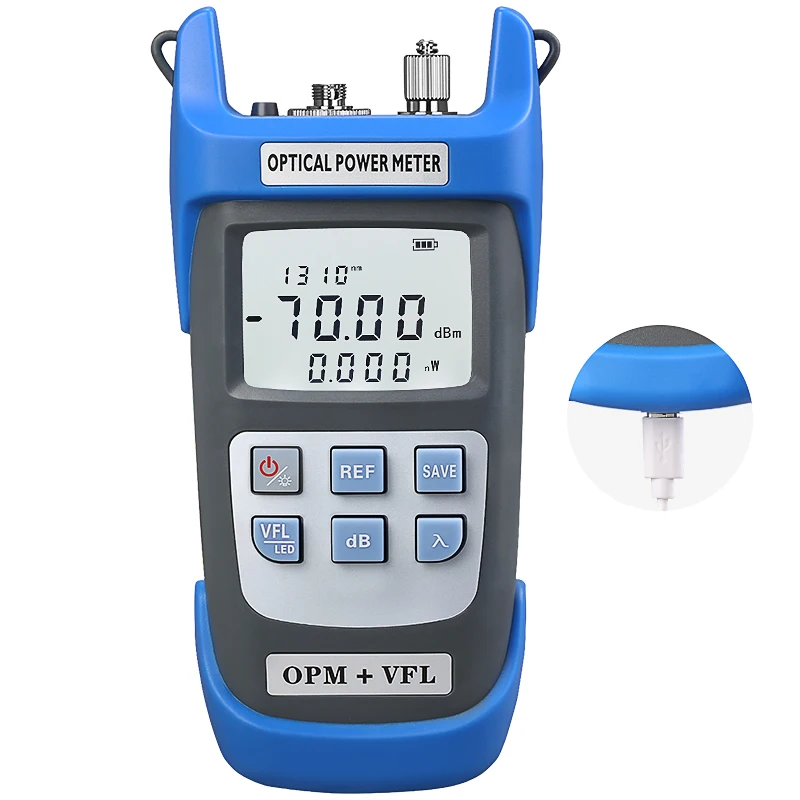
The role of an opm extends far beyond simple power measurement. An opm serves as a diagnostic gateway that validates the physical integrity of fiber connections, confirms proper signal transmission levels, and identifies potential problems before they escalate into service failures. For any organization relying on fiber optic infrastructure, investing in a quality opm represents a direct investment in network uptime, performance consistency, and long-term operational efficiency.
Understanding the Critical Role of an OPM in Fiber Testing
Power Measurement as a Foundation for Network Validation
Every fiber optic connection transmits data through precisely calibrated light pulses traveling along glass strands. An opm quantifies the strength of these light signals at various points along the transmission path. This measurement capability is absolutely essential because signal degradation often occurs invisibly—connectors accumulate microscopic dust particles, fiber bends introduce undetectable loss, and equipment aging gradually reduces output power. An opm reveals these problems through concrete numerical data rather than speculation or worst-case assumptions.
When technicians deploy a new fiber link, they must establish a baseline measurement using an opm to document acceptable performance levels. This baseline becomes the reference point for all future maintenance activities. If network performance degrades months later, comparing current opm readings to the original baseline immediately identifies whether the degradation stems from newly introduced loss or reflects a systemic installation problem. Without baseline opm data, troubleshooting becomes exponentially more difficult and time-consuming.
Ensuring Signal Integrity and Connection Quality
The physical quality of fiber connections directly impacts the accuracy of opm measurements and the reliability of data transmission. Contaminated connectors, improper fiber alignment, and inadequate splice quality all produce measurable power loss that an opm immediately detects. Network operators use an opm to verify that each connection meets industry-standard power requirements before they allow traffic to flow through newly installed or repaired segments.
A properly calibrated opm can identify connection problems with sufficient precision to guide connector cleaning, re-termination, or replacement decisions. Technicians can measure power at multiple points along a fiber segment using an opm, progressively isolating the exact location of signal loss. This targeted diagnostic capability makes an opm indispensable for efficient troubleshooting in complex network environments where multiple connections exist in series.
Practical Applications Where an OPM Becomes Non-Negotiable
Installation and Commissioning of New Fiber Infrastructure
When deploying new fiber optic networks—whether in metropolitan area networks, data centers, or campus connectivity—every connection must be tested before acceptance. An opm provides the quantitative proof that installation meets design specifications. Equipment manufacturers typically specify acceptable power levels for their transceivers, and an opm verifies that installed fiber links deliver sufficient power to operate those transceivers reliably.
During new fiber installation, contractors use an opm to test each segment immediately after termination. If an opm reading falls outside acceptable ranges, the technician addresses the problem immediately rather than discovering it months later when the network is operational. This preventative approach using an opm eliminates service interruptions, reduces warranty disputes, and accelerates project completion timelines.
Ongoing Maintenance and Condition Monitoring
Fiber optic networks experience gradual performance degradation over months and years. An opm enables regular monitoring that tracks this degradation before it becomes critical. Network operators typically schedule quarterly or semi-annual testing with an opm to ensure that power levels remain within acceptable margins. This proactive maintenance approach allows technicians to schedule connector cleaning or equipment upgrades during planned maintenance windows rather than responding to emergency outages.
Environmental factors such as temperature fluctuations, humidity changes, and physical stress gradually affect fiber performance. An opm captures these subtle changes through repeated measurements over extended time periods. Organizations that maintain detailed historical records of opm measurements can predict when maintenance becomes necessary, optimize resource allocation, and prevent costly service disruptions.
Troubleshooting Service Interruptions and Performance Issues
When network performance degrades unexpectedly, technicians immediately deploy an opm to measure signal levels and identify the source of the problem. An opm reading below baseline indicates signal loss, while an opm reading near zero suggests a complete fiber break or severe connection failure. This diagnostic information enables rapid isolation of the problem location, directing repair efforts to the exact affected segment rather than testing the entire network.
In complex network topologies with multiple branching points and numerous connections, an opm becomes essential for efficient troubleshooting. Instead of manually testing every possible connection, technicians use opm measurements to systematically narrow the problem area, ultimately reaching the exact problematic connection or fiber segment with minimal time investment.
Technical Considerations and Measurement Best Practices
Selecting Appropriate OPM Features and Specifications
Different applications require different opm capabilities. Data center environments typically demand opm devices that measure across multiple wavelengths—1310 nm, 1550 nm, and 1625 nm—to accommodate various transmission technologies. Long-distance telecom applications often require an opm with extremely high sensitivity to detect weak signals traveling hundreds of kilometers. An opm designed for short-distance campus networks may lack the sensitivity needed for long-haul applications.
Modern opm devices increasingly feature integrated visual fault locators that combine power measurement capabilities with fiber continuity verification. These multifunctional opm tools reduce the equipment needed in technician kits and streamline testing workflows. When selecting an opm for your organization, matching device capabilities to your specific network environment ensures that measurements remain accurate and relevant to your operational requirements.
Measurement Accuracy and Calibration Requirements
An opm provides measurement accuracy only when properly calibrated and maintained. Regular calibration checks ensure that an opm continues delivering reliable readings over time. Environmental factors such as temperature can affect opm accuracy, so technicians should verify calibration status before conducting critical measurements. Most professional-grade opm devices include temperature compensation to maintain accuracy across typical operating conditions.
When comparing opm measurements across time or between different locations, consistency in measurement methodology becomes crucial. Technicians should use identical opm settings, connector types, and measurement approaches to ensure that variations reflect actual fiber condition changes rather than procedural differences. Documenting the specific opm model and calibration date alongside each measurement creates an auditable record that supports network reliability claims and troubleshooting investigations.
FAQ
What specific measurements does an OPM provide in fiber link testing?
An opm primarily measures optical power in decibels (dB) at specific wavelengths, quantifying the strength of light signals traveling through fiber segments. An opm displays absolute power levels, making it possible to identify excessive signal loss that indicates connection problems or fiber damage. Advanced opm devices can measure across multiple wavelengths simultaneously, allowing technicians to test different transmission channels using a single opm device. This comprehensive measurement capability makes an opm invaluable for complete network validation.
How frequently should fiber links be tested with an OPM?
New fiber installations should be tested with an opm immediately after termination and before service activation to establish baseline measurements. Operating networks typically benefit from quarterly or semi-annual opm testing to monitor gradual performance degradation. Networks experiencing environmental stress, temperature fluctuations, or physical movement may require more frequent opm monitoring. Additionally, any service interruption warrants immediate opm testing to diagnose the problem and guide remediation efforts. The specific testing frequency depends on your network's operational criticality and environmental conditions.
Can an OPM identify the exact location of fiber damage or connection problems?
While an opm alone cannot pinpoint exact fiber break locations, it effectively narrows the problem area by comparing measurements at different points along a link. By testing opm readings at multiple connections and splice points, technicians systematically isolate the affected segment. For precise break location identification, an opm used in combination with an optical time-domain reflectometer (OTDR) provides comprehensive diagnostic capabilities. However, the power measurements from an opm are essential for initial problem detection and severity assessment.