
 EN
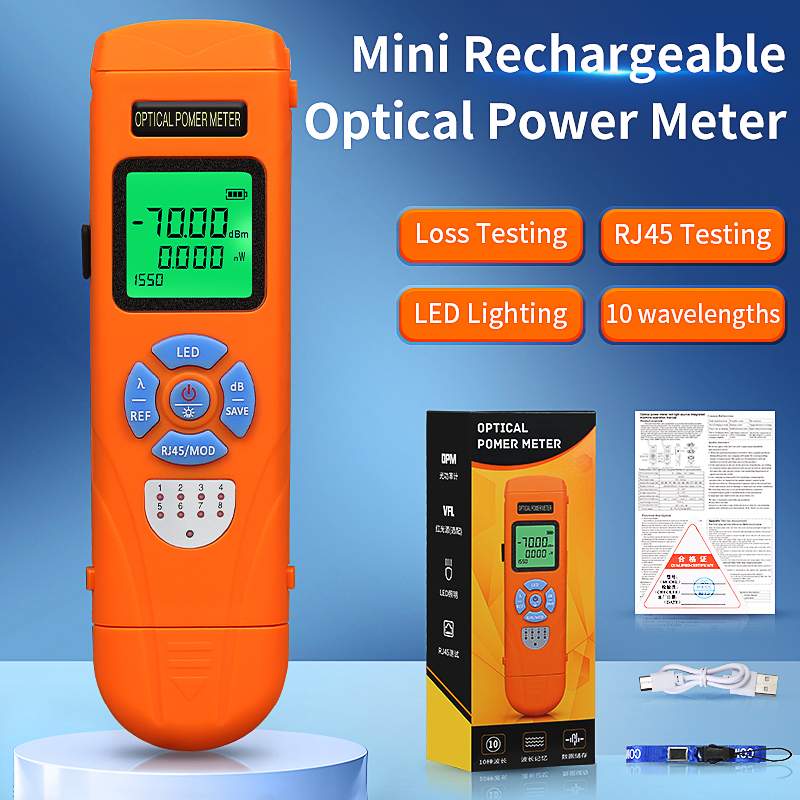
Accurate measurement is the foundation of reliable fiber optic network installation and maintenance. When technicians deploy an optical power meter at a job site, they depend on consistent, repeatable results to verify signal strength, identify losses, and troubleshoot network performance. However, the precision of any optical power meter reading is only as good as the light source used during testing. Without a stable, predictable light source, even the most advanced optical power meter cannot deliver trustworthy data. Understanding why stability matters is critical for anyone responsible for fiber optic infrastructure testing and quality assurance.

The relationship between a stable light source and optical power meter accuracy runs deeper than most technicians realize. A fluctuating light source introduces measurement uncertainty that propagates through every optical power meter test, compromising network validation efforts. Stable emission characteristics ensure that the optical power meter captures true signal levels rather than random variations caused by source instability. This direct connection between light source consistency and optical power meter performance makes stability a non-negotiable requirement for professional testing operations.
The Core Role of Light Source Stability in Optical Power Meter Measurements
Understanding Measurement Baseline Reliability
An optical power meter measures the power of light traveling through a fiber optic cable by converting photons into an electrical signal. The accuracy of this conversion depends entirely on the consistency of the incoming light signal. When a light source fluctuates, the optical power meter receives varying input levels that make it impossible to establish a reliable baseline. Technicians need to know whether variations they observe represent actual network conditions or simply measurement artifacts. A stable light source eliminates this ambiguity, allowing the optical power meter to deliver measurements that reflect true network performance rather than source volatility.
Impact on Repeatability and Validation
Professional fiber optic testing requires repeatability. When a technician measures the same point on a cable multiple times, the optical power meter should display nearly identical readings if conditions remain unchanged. Unstable light sources violate this principle, producing scattered results that undermine confidence in optical power meter data. Network engineers cannot reliably compare measurements across different time periods or validate installation work if source instability introduces random noise. Repeatability is the cornerstone of quality assurance, and achieving it requires an optical power meter paired with a stable, predictable light source.
How Light Source Fluctuations Compromise Optical Power Meter Accuracy
Temperature-Induced Drift and Measurement Error
Light sources are sensitive to environmental conditions, particularly temperature variations. As an unstable light source heats or cools, its emission wavelength and power output drift subtly but measurably. An optical power meter connected to such a source will record these shifts as if they were real changes in the network, leading technicians to investigate non-existent problems or miss genuine faults. This thermal drift becomes especially problematic during outdoor installations where ambient temperature fluctuates throughout the day. A stable light source maintains its characteristics across normal operating temperatures, ensuring that the optical power meter captures authentic signal changes rather than light source artifacts.
Wavelength Consistency and Optical Power Meter Calibration
Different wavelengths travel through fiber optic cables with different characteristics, and optical power meter accuracy depends on knowing the exact wavelength being tested. An unstable light source may drift across wavelengths, causing the optical power meter to measure power that appears inconsistent with calibration standards. This wavelength drift is particularly critical in dense wavelength division multiplexing environments where precise wavelength control is fundamental. A stable light source maintains its specified wavelength within tight tolerances, allowing the optical power meter to deliver measurements that align with calibration expectations and industry standards.
Practical Testing Scenarios Where Source Stability Directly Affects Optical Power Meter Results
Long-Distance Cable Loss Measurements
Measuring attenuation across long fiber optic cable runs demands exceptional optical power meter precision. Technicians typically measure power at the source and at the far end, then calculate loss by the difference. If the light source fluctuates during this procedure, the measurements become unreliable because the starting power level changes between readings. An optical power meter connected to a stable light source produces consistent baseline measurements, making the loss calculation valid and actionable. This scenario is common in carrier-grade installations where accurate loss accounting directly impacts network capacity planning and troubleshooting decisions.
Splice and Connector Loss Verification
Every splice joint and fiber connector introduces some loss, and field technicians use an optical power meter to verify that this loss falls within acceptable limits. Consistent results are essential because acceptance criteria are typically tight margins. An unstable light source produces optical power meter readings that scatter around the true loss value, making it nearly impossible to determine whether a particular splice meets specifications. A stable light source ensures that the optical power meter measurements cluster tightly around the actual loss, enabling reliable pass-fail decisions that protect network integrity and customer satisfaction.
Return Loss and Reflectance Testing
Return loss testing measures how much light reflects back from a fiber termination or splice point. This measurement requires careful optical power meter calibration and consistent source behavior. Unstable light source output compromises the reference level, making optical power meter reflectance readings unreliable. Technicians might incorrectly accept poor terminations or reject good ones based on flawed data. A stable light source provides the consistent baseline that allows the optical power meter to accurately quantify reflectance, ensuring that only high-quality terminations pass validation.
FAQ
What happens if an optical power meter is used with an unstable light source?
Using an optical power meter with an unstable light source introduces measurement error and unpredictability. The optical power meter will capture fluctuations in source output rather than true network conditions, leading to inconsistent readings, false failure detection, and compromised confidence in test results. This creates risk for network installations because technicians cannot distinguish between actual cable problems and measurement artifacts caused by the unstable light source.
How does light source stability affect optical power meter calibration validity?
An optical power meter's calibration assumes a stable, known input signal. When the light source drifts, the calibration relationship between measured power and actual signal degrades. The optical power meter may still function, but its accuracy relative to true power values diminishes. Regular recalibration with a stable light source restores the optical power meter's measurement validity, whereas recalibrating with an unstable source creates new problems rather than solving existing ones.
Can an optical power meter compensate for an unstable light source?
Modern optical power meters include digital filtering and averaging features, but these tools cannot fully compensate for a genuinely unstable light source. While averaging may reduce the visual scatter in optical power meter readings, it cannot eliminate the underlying measurement bias caused by source drift. The only reliable solution is to use a stable light source from the start. An optical power meter functions correctly only when paired with a dependable, consistent light source that meets industry stability specifications.