
 EN
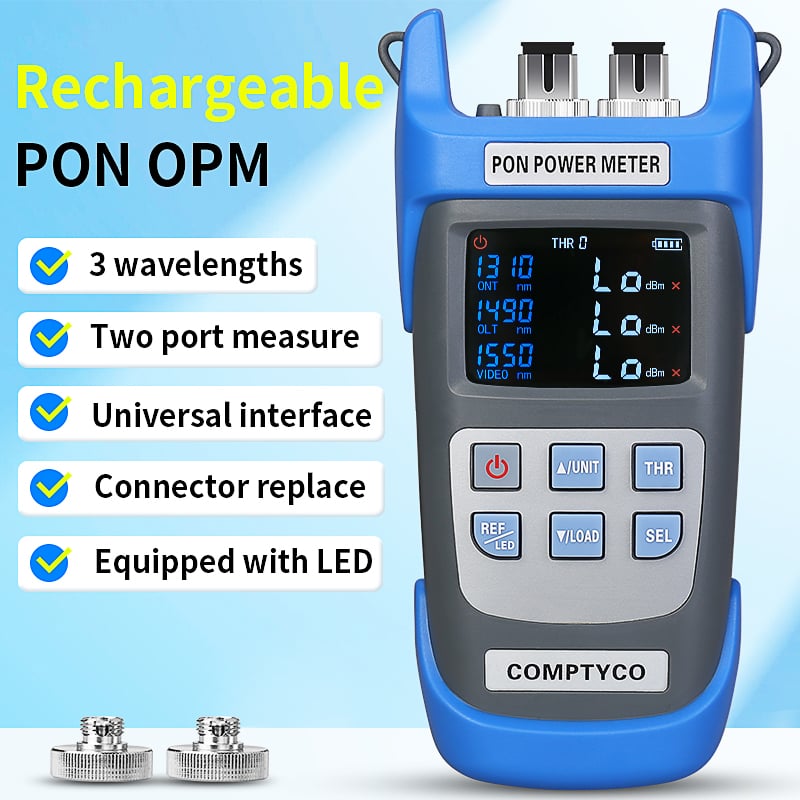
Selecting the right handheld opm is a critical decision for field technicians and installation professionals working with fiber optic networks. An opm, or optical power meter, measures light power transmitted through fiber optic cables, making it essential for commissioning, troubleshooting, and maintenance work. The quality of your opm directly impacts installation accuracy, diagnostic speed, and long-term operational reliability. Understanding what to look for in a handheld opm ensures you invest in equipment that meets your specific field requirements and delivers consistent performance across diverse installation scenarios.
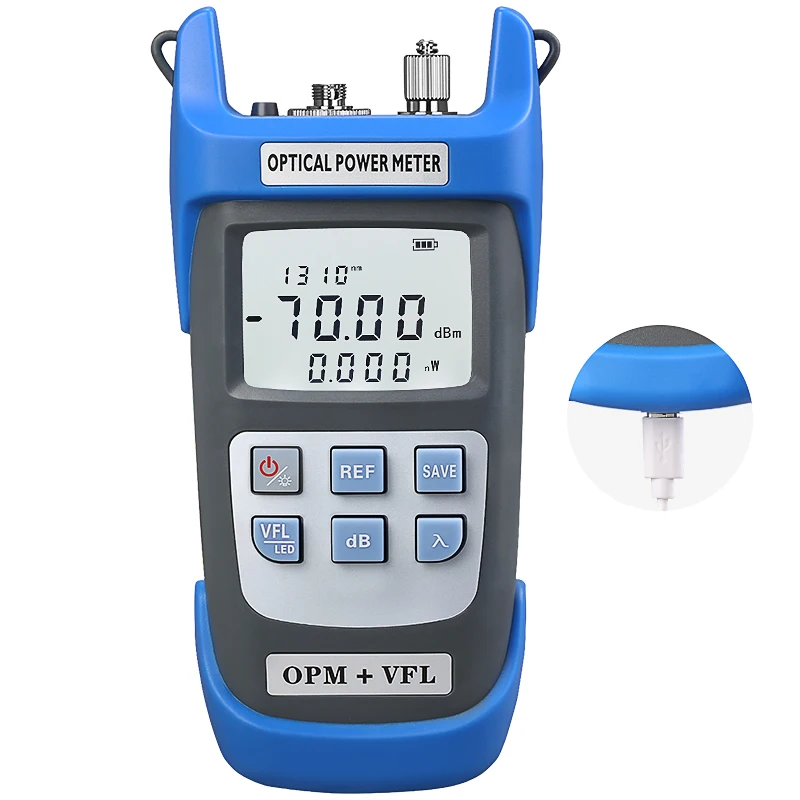
Field technicians face unique challenges when selecting a handheld opm. Your meter must withstand rugged outdoor conditions, provide reliable readings in varying temperatures, and integrate with your existing test equipment inventory. A poorly chosen opm can introduce measurement errors that cascade into costly rework, customer complaints, and project delays. This guide explores the essential factors to evaluate when choosing a handheld opm, ensuring you select instrumentation that aligns with both immediate field needs and long-term operational goals.
Understanding Handheld OPM Specifications and Measurement Range
Core Performance Parameters for Field Work
The foundation of selecting a handheld opm begins with understanding its core specifications. Every opm has a specified measurement range, typically expressed in decibels per milliwatt (dBm) or milliwatts (mW). Common ranges for field-grade opm models span from approximately negative 70 dBm to positive 10 dBm, though specialized high-power opm units extend beyond this range. Your handheld opm must accommodate the actual power levels you encounter during installation and repair work. For single-mode fiber networks, a typical opm handles signals between negative 40 and positive 10 dBm, while multimode applications often require different sensitivity thresholds.
Resolution and accuracy represent the second critical layer of opm specifications. An opm with 0.1 dB resolution provides more granular data than one with 1 dB increments, enabling technicians to detect subtle power variations that indicate emerging fiber issues. Accuracy, typically expressed as a percentage of the reading plus a fixed offset, determines how closely the handheld opm reflects true power levels. When commissioning networks, a precision opm with accuracy better than plus-or-minus 0.5 dB helps identify marginal circuits before they become customer service problems. Field installations demand an opm that balances resolution and accuracy without sacrificing battery life or portability.
Wavelength Compatibility and Multi-Wavelength OPM Options
A handheld opm must support the specific wavelengths deployed in your network environment. Single-wavelength opm models target one frequency, such as 1550 nanometers for long-distance single-mode applications. Multi-wavelength opm instruments accommodate multiple frequency bands, enabling technicians to test diverse network segments with a single device. Many modern field environments require an opm capable of operating at 850 nanometers (short-reach multimode), 1310 nanometers (intermediate single-mode), and 1550 nanometers (long-distance single-mode). Selecting a multi-wavelength opm reduces equipment redundancy and simplifies field kit management, though multi-wavelength capabilities typically increase cost relative to single-wavelength opm options.
Physical Design, Durability, and Field Usability Factors
Environmental Ruggedness and Temperature Stability
Field technicians operate a handheld opm in environments ranging from indoor data centers to rooftop installations and outdoor cable vaults. Your opm must withstand temperature extremes, humidity, vibration, and accidental impacts without losing calibration or functionality. Industrial-grade handheld opm units incorporate protective housing, sealed connectors, and internal thermal compensation to maintain accuracy across operating temperatures from negative 10 degrees Celsius to positive 60 degrees Celsius or beyond. An opm designed for field work includes reinforced sensor elements and shock-absorbing chassis features that survive drops and rough handling. When evaluating candidate opm instruments, examine construction quality, connector robustness, and display visibility in bright sunlight or low-light conditions where field technicians typically operate.
Battery life directly affects field productivity for a handheld opm. Rechargeable battery-equipped opm models offer cost advantages over disposable-battery variants, particularly for high-utilization field teams. A quality handheld opm should deliver eight or more continuous operating hours per charge, minimizing downtime during extended installation projects. Some opm instruments include fast-charge capability or hot-swap battery options, enabling technicians to rotate fresh batteries without service interruption. Examine the opm's power management features, available charging options, and whether the manufacturer offers spare battery packs compatible with your field tool rotation strategy.
User Interface and Data Logging Capabilities
The user interface of a handheld opm significantly influences field efficiency and error reduction. A well-designed opm features intuitive menu navigation, clearly labeled buttons, and a bright display that remains readable in variable outdoor lighting. Advanced opm models include data logging functions that record measurements timestamped and correlated to specific locations or customer sites. This documentation capability transforms a basic handheld opm into a comprehensive commissioning and troubleshooting tool. When selecting an opm, evaluate whether it integrates with your existing field reporting systems or data management platforms. Some modern opm instruments offer wireless connectivity or cloud synchronization, enabling real-time data sharing with central engineering teams and eliminating manual data transcription errors.
Integration, Maintenance, and Total Cost of Ownership Considerations
Connector Compatibility and Universal Probe Interfaces
Fiber optic connector types proliferate across network installations: ST, SC, LC, and MPO represent common standards. A versatile handheld opm accommodates multiple connector formats through interchangeable probe tips or universal adapters. Selecting an opm with broad connector compatibility eliminates the frustration of encountering fiber terminations your handheld opm cannot test directly. Some premium opm models include built-in universal connectors that accept diverse fiber termination styles, reducing the field kit complexity. When evaluating opm options, inventory the connector standards present in your customer base and service territory. A flexible opm capable of rapid connector transitions minimizes technician downtime and improves first-visit resolution rates during repair and maintenance activities.
Calibration and maintenance requirements influence long-term handheld opm ownership costs. Professional-grade opm instruments require annual calibration certification to maintain metrological accuracy and support compliance documentation for regulated installations. Identify whether your candidate opm vendor maintains convenient calibration services, offers calibration coupons or kits for in-house verification, and provides clear traceability documentation. A handheld opm with straightforward maintenance procedures reduces operational burden on field staff. Evaluate probe cleaning requirements, connector care protocols, and whether replacement probes remain available and affordable throughout your anticipated opm service lifetime.
Cost Analysis and Long-Term Value Assessment
Purchasing a handheld opm represents an investment evaluated across multiple dimensions beyond initial acquisition cost. A lower-priced opm may deliver poor temperature stability, unreliable battery performance, or inadequate accuracy that generates hidden costs through rework and customer dissatisfaction. Calculate the total cost of ownership by factoring in battery replacement cycles, calibration servicing, connector probe consumables, and potential warranty coverage. Premium handheld opm instruments from established manufacturers typically justify higher upfront cost through superior reliability, extended service life, and comprehensive manufacturer support. When selecting an opm for your organization, align the instrument class with your anticipated utilization frequency, field environment severity, and required measurement precision. This structured approach transforms opm selection from a simple purchase decision into a strategic capital allocation that supports long-term operational excellence.
FAQ
What measurement range should my handheld opm support?
Your handheld opm should support the power levels present in your specific network architecture. For single-mode long-distance applications, select an opm with range spanning at least negative 40 to positive 10 dBm. Multimode or shorter-distance deployments may function with narrower handheld opm ranges. Verify that your candidate opm exceeds your expected power levels by at least 5 dB margin to prevent measurement clipping and ensure reliable operation at network extremes.
Is a multi-wavelength opm worth the additional cost compared to single-wavelength options?
A multi-wavelength handheld opm becomes financially justified when your field team encounters diverse network types requiring different test wavelengths. If your organization services multiple customer networks or deploys varied fiber infrastructure, a versatile opm reduces equipment redundancy and field kit complexity. For organizations supporting homogeneous network environments using a single wavelength standard, a single-wavelength opm may offer adequate functionality at lower cost. Evaluate your service portfolio diversity before deciding whether multi-wavelength opm capability aligns with your operational needs.
How frequently should a handheld opm be calibrated?
Most manufacturers recommend annual calibration for field-grade handheld opm instruments to maintain metrological traceability and ensure continued measurement accuracy. High-utilization field opm units employed in demanding environments may benefit from semi-annual calibration cycles. Verify your candidate opm vendor's calibration recommendations, establish a service schedule that aligns with your organization's quality requirements, and budget calibration costs as part of the handheld opm total cost of ownership calculation.