
 EN
EN
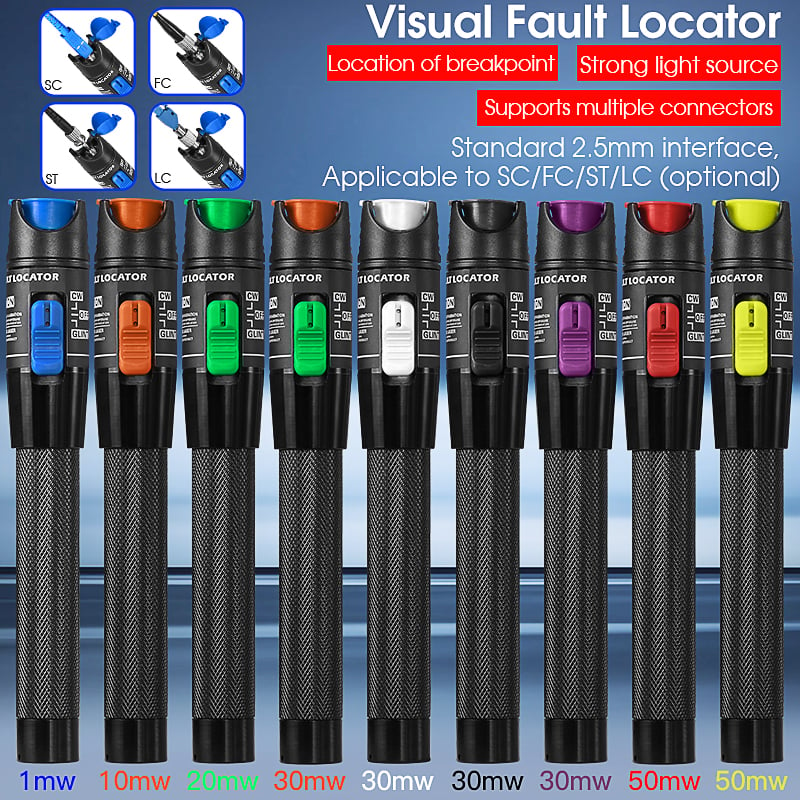
Residential fiber-to-the-home (FTTH) deployment has become the standard for high-speed broadband infrastructure in modern neighborhoods and communities. The installation and maintenance of these networks require precise tools and technical expertise to ensure reliable connectivity for every household. A vfl, or visual fault locator, has emerged as one of the most critical instruments in the technician's toolkit for both installation phases and post-deployment troubleshooting. Understanding how a vfl functions and why it matters in residential FTTH work can significantly improve project efficiency, reduce service interruptions, and enhance the overall quality of fiber network deployments.
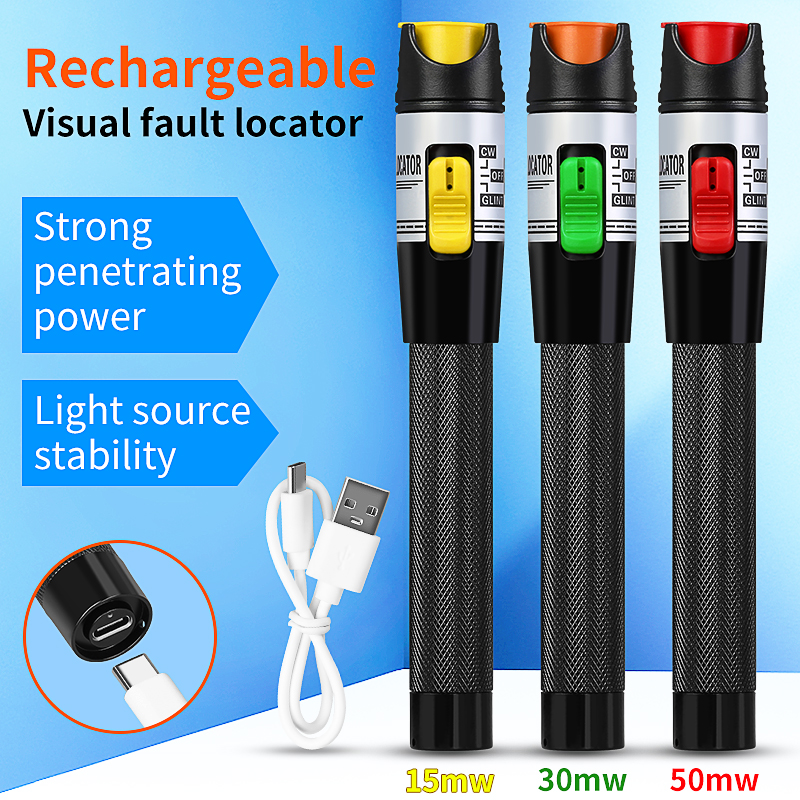
The role of a vfl extends far beyond simple fault detection. In residential settings where fiber cables run through underground conduits, wall cavities, and aerial spans, technicians face unique challenges in locating breaks, misalignments, and connection points. A vfl tool emits a visible red laser light into the fiber optic cable, which escapes at points of damage or discontinuity, making faults visible to the naked eye even in daylight conditions. This visual identification capability transforms abstract network problems into tangible, observable issues that technicians can address systematically and confidently.
Understanding VFL Technology and Core Applications
How VFL Operates in Fiber Networks
A vfl works by introducing a bright red laser beam into a fiber optic strand. Unlike other diagnostic tools that rely on numerical readings or complex software interfaces, a vfl provides immediate visual feedback. When the laser encounters a break, bend, or mismatch in the fiber, the light escapes and becomes visible as a red spot on the cable's exterior. This direct visual indication is particularly valuable in residential FTTH installations where technicians must work with minimal downtime and maximum accuracy. The simplicity of vfl operation means that field technicians can quickly identify problem locations without requiring advanced interpretation skills or expensive diagnostic equipment setups.
The vfl is safe for residential environments and poses minimal risk to personnel or equipment when used according to manufacturer guidelines. The red laser light used in most vfl devices operates at a power level sufficient for visibility but well below hazardous thresholds, making it suitable for work in occupied homes and public spaces. This safety profile is especially important in residential FTTH projects where technicians frequently work near homeowners and their families. The non-destructive nature of vfl testing also means that fiber cables can be tested repeatedly without degradation or damage, supporting comprehensive troubleshooting workflows.
Integration with FTTH Installation Workflows
During the initial phases of residential FTTH deployment, a vfl becomes essential for verifying cable continuity before and after splicing operations. When technicians pull fiber cables through conduits and bend them around corners, microbends and stress points can accumulate along the route. A vfl inspection conducted before connections are made can reveal these problematic areas early, allowing technicians to adjust cable routing and reduce future maintenance calls. This proactive approach using a vfl is far more cost-effective than addressing connectivity issues after customer handoff, when service disruptions directly impact household broadband access and customer satisfaction.
The vfl also plays a crucial role during the connection phase of residential FTTH installation. After fusion splicing or mechanical connector installation, technicians use a vfl to confirm that the connection point is secure and not leaking light. Any visible light escape at a splice junction indicates inadequate fusion quality or misalignment, which the technician can immediately correct. This real-time validation using a vfl significantly reduces rework requirements and speeds up the installation timeline, directly benefiting the project schedule and budget.
VFL Troubleshooting Applications in Residential Networks
Rapid Fault Location and Service Restoration
When service interruptions occur in a residential FTTH network, response time directly affects customer satisfaction and network operator reputation. A vfl accelerates the troubleshooting process by allowing technicians to isolate faults to specific cable segments within minutes rather than hours. In situations where multiple homes lose connectivity, a vfl-assisted investigation can rapidly determine whether the problem originates in the customer premises equipment, the feeder cable, or the distribution network. This diagnostic clarity enables targeted repairs and prevents unnecessary visits to unaffected properties, reducing operational costs while maximizing uptime for the majority of customers.
The speed advantage of using a vfl is particularly significant in residential environments where neighborhoods contain dozens or hundreds of individual fiber drops. Technicians can systematically move from junction point to junction point, using the vfl to identify exactly where signal loss occurs. This methodical but rapid approach using a vfl transforms what might otherwise be a hours-long investigation into a task that skilled technicians complete in 30–45 minutes, restoring service and customer confidence quickly.
Prevention of Future Outages Through Preventive Testing
Forward-thinking residential fiber operators incorporate vfl inspections into their preventive maintenance schedules. By conducting periodic vfl checks on critical network segments and customer drop cables, operators can identify marginal conditions before they develop into full service outages. Small cracks in protective conduit, microbends developing under stress, and early-stage connector degradation all become visible through regular vfl inspections. This preventive approach using a vfl reduces emergency service calls, improves network reliability metrics, and demonstrates proactive service quality to residential customers who increasingly depend on consistent broadband connectivity.
Environmental factors in residential settings, including temperature fluctuations, moisture ingress, and physical disturbance from construction or landscaping, regularly stress fiber cables. A vfl assessment conducted after major weather events or external construction work can verify that the residential fiber network remains intact and fully functional. This post-event validation using a vfl provides network operators with confidence that customer service continuity is maintained and helps prioritize maintenance resources toward areas that genuinely require attention.
Best Practices and Integration with Network Tools
Combining VFL with Optical Power Meter Measurements
While a vfl provides excellent visual fault location capability, integrating it with optical power meter (OPM) measurements creates a comprehensive diagnostic approach for residential FTTH networks. The vfl identifies the location of faults, while the OPM quantifies signal loss at each segment, allowing technicians to distinguish between minor degradation and complete breaks. In residential applications where multiple customer connections depend on network health, this combined approach using a vfl and OPM ensures that repairs address the actual severity of problems rather than applying one-size-fits-all solutions. The complementary nature of these tools makes them essential components of professional FTTH installation and maintenance operations.
Documentation practices also improve when technicians employ both a vfl and OPM during residential fiber assessments. By recording vfl findings and OPM measurements at standardized network test points, operators build a historical database of network condition trends. This data supports strategic planning for network reinforcement in residential areas experiencing increased demand or repeated faults. The documentation practices enabled by systematic vfl use enhance network management discipline and support justified investment decisions for infrastructure upgrades.
Training and Competency Development for Residential Technicians
Effective use of a vfl in residential FTTH environments requires technician training focused on proper technique, safety protocols, and interpretation of visual indicators. Comprehensive training programs ensure that field teams maximize the diagnostic value of vfl tools while maintaining consistent work quality across different neighborhoods and installation phases. Technicians trained in vfl use develop the pattern recognition skills necessary to distinguish between acceptable light escape at component junctions and problematic leakage that indicates physical or connection faults. This competency foundation supports consistent service quality and reduces the likelihood of missed diagnoses or unnecessary component replacements in residential fiber networks.
Ongoing vfl training also addresses emerging challenges in residential deployments, such as working with increasingly dense fiber routing in retrofit installations and troubleshooting complex splitter configurations within residential distribution nodes. As residential fiber networks mature and expand, technician expertise with vfl tools becomes a competitive advantage for service providers and a key quality indicator for infrastructure operators.
FAQ
Can a vfl detect breaks inside protective conduit without exposing the fiber cable?
A vfl can detect breaks and significant faults through some conduit materials because the red laser light escapes at break points and becomes visible on the exterior. However, detection capability depends on conduit material type and thickness. For residential FTTH installations using standard plastic conduit, a vfl typically provides reliable detection. If the vfl cannot clearly identify a fault location, technicians may need to expose short cable segments for more direct assessment. This capability makes the vfl invaluable for minimizing disruption to residential property while still achieving accurate fault diagnosis.
What is the maximum distance a vfl can effectively trace faults in residential fiber cables?
The effective range of a vfl depends on the fiber type and the vfl model's laser power, typically ranging from 1 to 5 kilometers in standard residential networks. For most residential FTTH applications where individual customer drops span less than 500 meters and feeder segments remain under 2 kilometers, the vfl operates well within its effective range. Technicians should consult their specific vfl device documentation for accurate range specifications and consider additional optical testing equipment for longer network segments in extensive residential deployments. The vfl's practical range proves more than adequate for typical residential troubleshooting scenarios.
How does a vfl complement optical time-domain reflectometer (OTDR) testing in residential installations?
The vfl and OTDR serve complementary roles in residential FTTH diagnostics. An OTDR provides detailed attenuation profiles and distance measurements to faults with high precision, while a vfl offers immediate visual confirmation and physical location identification. In residential settings, technicians often use the vfl for initial fault isolation and quick decision-making, then deploy OTDR equipment for detailed characterization and documentation when complex network issues require comprehensive analysis. This combination of vfl and OTDR capabilities supports both rapid response requirements in service restoration scenarios and thorough analysis needed for permanent network improvements in residential areas.