
 EN
EN

Choosing the correct length for a fiber optic patch cord is one of the most practical and often underestimated decisions in any network installation. Whether you are connecting equipment within a data center rack, linking patch panels across a server room, or setting up a telecommunications distribution frame, the physical length of your fiber optic patch cord directly affects how well your network performs and how manageable your cabling environment remains over time. Selecting a length that is too short creates physical tension on the connector end-faces, while selecting one that is far too long introduces unnecessary cable slack, bending risks, and potential signal degradation.
Understanding the relationship between fiber optic patch cord length and signal integrity helps network engineers and procurement teams make smarter decisions from the start. A fiber optic patch cord that is sized correctly reduces connector stress, minimizes attenuation caused by tight bending, and keeps your cable management clean and professional. This guide walks through the critical selection factors you need to evaluate before specifying or ordering any fiber optic patch cord for your infrastructure project.
Why Patch Cord Length Affects Signal Quality
Attenuation and Cable Length
Every fiber optic patch cord introduces a small amount of insertion loss, which is the reduction of optical signal power as light travels through the fiber. While a single fiber optic patch cord used in a short run introduces only minimal attenuation, using an unnecessarily long fiber optic patch cord adds measurable optical loss to your link budget. In high-density environments where multiple fiber optic patch cord segments are cascaded, these small losses accumulate and can push a link beyond its acceptable signal threshold. Keeping each fiber optic patch cord as short as practically useful helps preserve your overall optical power budget.
Bending Radius and Macro-Bend Loss
A fiber optic patch cord that is too long must be coiled or looped to manage excess slack. If those loops fall below the minimum bend radius of the fiber, macro-bend loss occurs. This type of signal loss happens when the fiber core is physically curved too tightly, causing light to escape from the waveguide. Standard single-mode and multimode fiber optic patch cord types have specified minimum bend radii, and violating them results in permanent performance degradation. Choosing a fiber optic patch cord length that matches the actual routing distance removes the need for tight coiling and protects the fiber from bend-induced signal loss.
How to Measure and Specify the Correct Length
Measuring the Physical Routing Path
Before ordering any fiber optic patch cord, measure the full physical path the cable will travel rather than simply the straight-line distance between two ports. A fiber optic patch cord routed through cable managers, around rack edges, or along cable trays follows a longer path than a direct measurement suggests. Always add a small service loop of approximately 15 to 30 centimeters to your measured length so the fiber optic patch cord can be connected and disconnected without pulling tension on the connector ferrule. This allowance protects the fiber optic patch cord end-face alignment and extends its operational lifespan.
Standard Length Options and Custom Orders
Most fiber optic patch cord products are available in standard lengths such as 0.5 m, 1 m, 2 m, 3 m, 5 m, 10 m, and beyond. When standard lengths do not match your exact routing requirement, a custom-length fiber optic patch cord is the right solution. Custom-length fiber optic patch cord options allow you to specify the exact meter or fractional meter length you need, eliminating excess slack without introducing tension. For test environments and OTDR launch applications, a fiber optic patch cord with a customized length provides accurate dead-zone elimination and reliable measurement results. Specifying the correct length from the beginning avoids costly rework and cable management complications later.
Practical Guidelines for Different Installation Scenarios
Data Center and High-Density Rack Environments
In a data center, the fiber optic patch cord must navigate structured cable managers, horizontal organizers, and vertical routing channels. Using a fiber optic patch cord that is even 50 centimeters longer than needed creates visible slack that increases the risk of accidental snagging or disconnection. Network engineers in high-density environments typically categorize their fiber optic patch cord inventory by rack unit distance, matching specific lengths to specific connection types. Keeping a fiber optic patch cord inventory organized by accurate length categories dramatically improves maintenance efficiency and reduces downtime during patching operations.
Outside Plant and Long-Run Connections
When a fiber optic patch cord is used in outside plant enclosures or between remote distribution points, longer lengths are sometimes necessary to bridge the gap between fiber termination boxes and active equipment. In these cases, the fiber optic patch cord should still be sized as closely as possible to the required routing distance. Excess fiber optic patch cord length stored inside a closure or enclosure must be coiled carefully, respecting the minimum bend radius at all times. A fiber optic patch cord that is pre-cut or custom-ordered to suit the specific enclosure depth reduces the risk of signal issues caused by improper storage of excess fiber.
OTDR Testing and Launch Cable Requirements
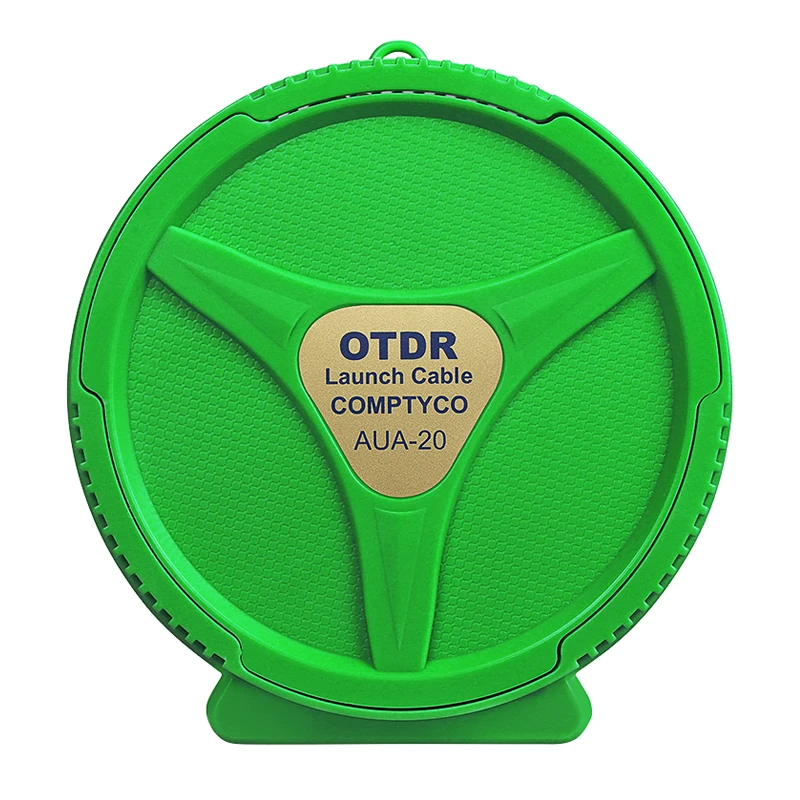
A fiber optic patch cord used as an OTDR launch cable requires careful length selection to push the instrument's dead zone beyond the first connector being tested. A launch fiber optic patch cord that is too short will leave the first splice or connector hidden within the dead zone, producing inaccurate test results. The ideal launch fiber optic patch cord length depends on the OTDR model and the pulse width used during testing, but lengths of 50 m to 500 m are common for this application. Selecting the correct fiber optic patch cord length for OTDR work is not just a matter of cable management but a technical requirement for test accuracy.
FAQ
What happens if my fiber optic patch cord is too long?
If a fiber optic patch cord is too long, the excess length must be coiled or managed in a way that risks violating the minimum bend radius. Tight bends in a fiber optic patch cord cause macro-bend loss, which reduces signal power and can push the link below acceptable performance thresholds. Excess fiber optic patch cord length also creates untidy cable environments that increase the chance of accidental damage.
Can I use a shorter fiber optic patch cord than the measured distance?
No, a fiber optic patch cord that is shorter than the routing path will pull tension on the connector ferrules, distorting the end-face contact and increasing insertion loss. A strained fiber optic patch cord connection can produce return loss degradation and physical damage to the connector over time. Always measure the full routing path and add a small service allowance before specifying your fiber optic patch cord length.
Are custom-length fiber optic patch cords worth the cost?
Yes, a custom-length fiber optic patch cord is a practical investment for any installation where standard lengths do not match routing requirements. The cost difference between a standard and custom fiber optic patch cord is typically small, while the performance and cable management benefits are significant. For OTDR testing, structured cabling projects, and high-density data centers, custom-length fiber optic patch cord options deliver a cleaner, more reliable infrastructure outcome.


