
 EN
EN
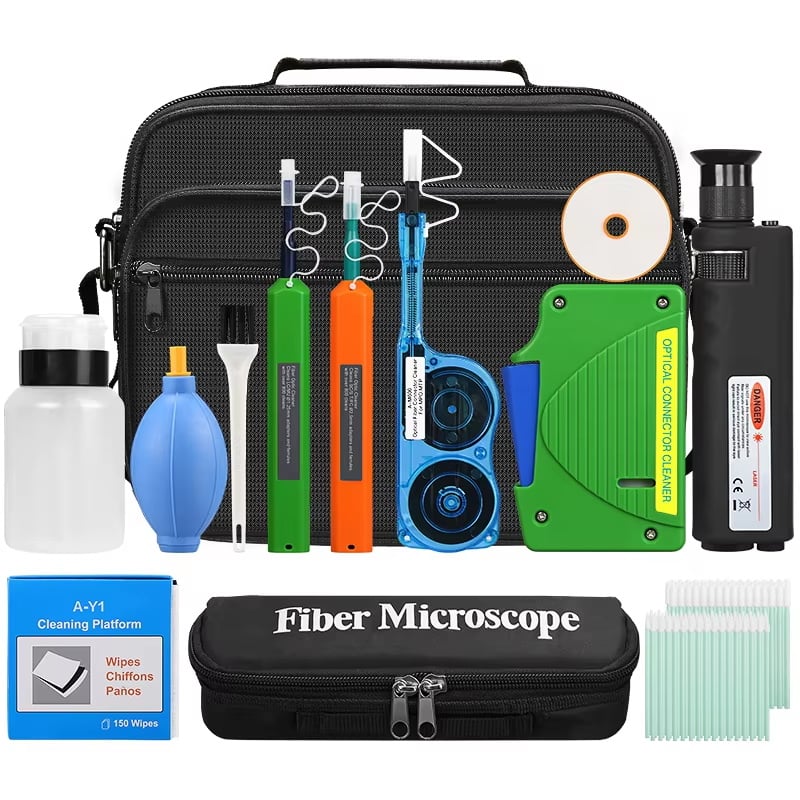
In fiber optic networks, the cleanliness of a connector end-face is not a minor detail — it is a direct determinant of signal quality, insertion loss, and overall link performance. Dust particles, oil residue, and microscopic contaminants on the end-face can scatter or absorb light, causing degradation that compounds across a network. The fiber cleaning clip has emerged as one of the most efficient solutions to this challenge, offering a reliable, repeatable, and tool-free method for keeping connector faces contamination-free in both field and lab environments.
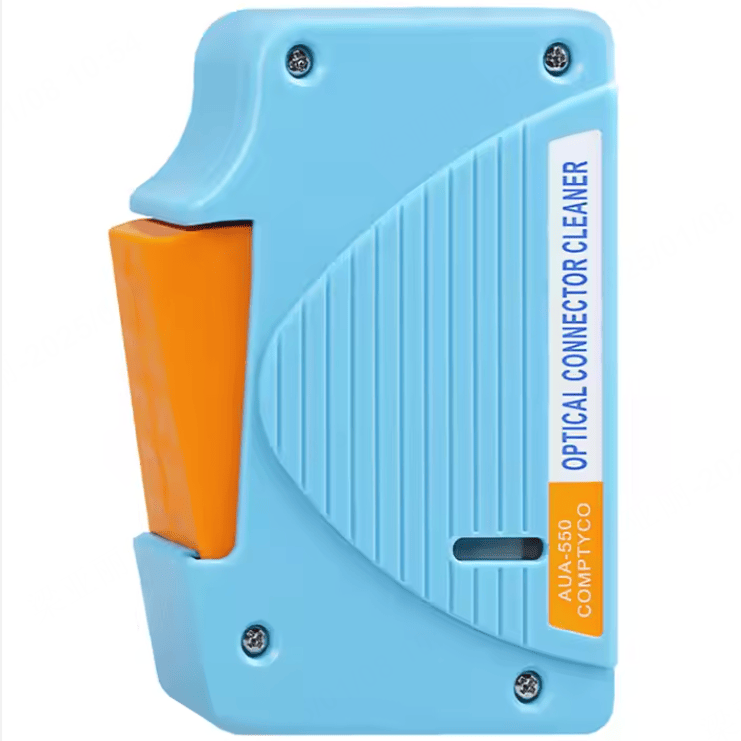
Understanding how a fiber cleaning clip achieves such consistent results requires a closer look at its internal mechanism, the physics of end-face contact, and the workflow it creates for technicians. Unlike traditional swabs or wipes that depend heavily on user technique, the one-click design standardizes the cleaning action and eliminates many of the variables that lead to inconsistent outcomes. This article explores the mechanism behind the fiber cleaning clip, when it matters most, and why the one-click format has become a preferred standard in professional fiber optic maintenance.
The Mechanism Behind One-Click Cleaning
How the Internal Tape Cartridge Works
At the core of the fiber cleaning clip is a precision tape cartridge that advances a fresh segment of ultra-fine cleaning fabric with each press of the mechanism. When the technician presses the tip against a connector end-face and applies slight pressure, the internal spring actuates a controlled forward motion that both advances the tape and wipes the ferrule surface in a single fluid action. This ensures that every cleaning event uses a clean, unused section of fabric rather than reusing a contaminated surface.
The fabric used inside a fiber cleaning clip is engineered specifically for optical surfaces. It is lint-free, ultra-absorbent, and electrostatically neutral, which means it lifts contaminants away from the end-face rather than redistributing them. The controlled tape advance is calibrated to move a precise distance per click, which is why these tools are often rated for a specific number of cleans — commonly 800 or more per unit.
This cartridge-based approach removes user judgment from the process. There is no decision about whether to use a dry or wet wipe, no estimation of how much pressure to apply, and no risk of recycling a dirty section of material. The fiber cleaning clip standardizes each action down to the mechanical level, which is a key reason for its adoption in high-density network environments where consistency is critical.
The Tip Interface and Ferrule Compatibility
The tip of a fiber cleaning clip is designed to match specific ferrule diameters, most commonly the 1.25 mm format used in LC connectors and the 2.5 mm format used in SC, FC, and ST connectors. This dimensional precision ensures that the cleaning fabric makes full, even contact with the entire end-face surface rather than leaving uncleaned zones at the edges or center of the ferrule.
When the tip engages with the connector port, it self-aligns to the ferrule axis, which prevents lateral movement during the wipe stroke. Lateral drift is a known cause of incomplete cleaning and, in some cases, can actually smear contaminants across the optical core rather than removing them. The guided contact geometry of the fiber cleaning clip eliminates this risk by constraining the cleaning path to a straight, controlled axis.
For connectors housed inside adapters, patch panels, or bulkhead ports, the tip is also designed with an appropriate insertion depth so that the cleaning fabric reaches the recessed ferrule face without the technician needing to access it directly. This matters greatly in dense installations where physical access is limited and visual confirmation of contact is difficult.
Why End-Face Cleanliness Depends on Controlled Contact
The Physics of Contamination on Optical Surfaces
Fiber optic end-faces operate at tolerances measured in microns. The optical core of a single-mode fiber, for example, is typically 9 microns in diameter — smaller than most dust particles. A single contamination event on the end-face can therefore obstruct a significant portion of the light-guiding area. More critically, some contaminants such as hydrocarbon oils from fingerprints form films that bond to the glass surface and scatter light across a broad area rather than at a single point.
Traditional dry-wiping methods using standard swabs or tissues are problematic because they can generate static electricity during the wiping motion, which actually attracts additional airborne particles back onto the surface immediately after cleaning. The fiber cleaning clip avoids this by using materials with low triboelectric potential, meaning the fabric does not generate meaningful static charge during the wipe stroke. This is a subtle but technically significant advantage in dusty or particle-rich installation environments.
Wet-dry combination cleaning, sometimes recommended for heavily soiled connectors, can also be supported by the fiber cleaning clip workflow. A drop of optical-grade solvent applied to the connector end-face before using the dry fiber cleaning clip removes bonded oils while the tape captures loosened particles. This two-stage approach is widely used in data center commissioning where connectors may have accumulated contamination during shipping or extended storage.
How Repeatable Cleaning Prevents Recontamination
One of the less obvious but practically important features of the fiber cleaning clip is its ability to prevent recontamination during the cleaning process itself. Because the tape advances to a fresh segment with each click, the contaminant removed from one connector is not transferred to the next. This is a direct failure mode of reusable wipes or multi-use swabs, which carry residue from one surface to another unless replaced between uses.
In a high-density patch panel scenario where a technician is cleaning dozens of connectors in sequence, this per-click freshness is essential. A reusable tool that accumulates contamination over repeated uses will eventually deposit more material onto a connector than it removes, which defeats the purpose of the cleaning step entirely. The fiber cleaning clip eliminates this failure mode through its consumable tape design.
Repeatability also matters for certification and compliance workflows. Many structured cabling standards and data center operational procedures require documented cleaning before testing. Using a fiber cleaning clip with a known number of cleans per cartridge allows facilities teams to track usage, schedule replacements, and maintain an auditable cleaning workflow that supports certification requirements.
Application Scenarios Where the Fiber Cleaning Clip Performs Best
Data Center and High-Density Patch Environments
Data centers represent perhaps the most demanding environment for fiber optic cleaning. Thousands of connectors may need to be inspected and cleaned during initial installation, equipment moves, or routine maintenance. In these environments, speed and consistency are equally important, and the one-click fiber cleaning clip delivers both. A technician can clean a connector in under three seconds without removing any tools from a pouch or preparing any cleaning materials.
The compact form factor of the fiber cleaning clip also suits data center ergonomics well. Racks are dense, airflow is managed, and access angles are often awkward. The pen-like profile of the fiber cleaning clip allows it to reach connectors in tight spaces without requiring the technician to manipulate the cable or disrupt adjacent connections. This is a practical advantage that traditional cleaning methods cannot easily replicate.
Data centers also benefit from the fiber cleaning clip's dust-cap compatibility. When not in use, the cleaning tip is protected by a cap that prevents the fabric from being exposed to ambient contamination between cleaning events. This means the tool remains ready for use even after sitting in a toolkit for extended periods, which is relevant in facilities where cleaning tasks are intermittent rather than continuous.
Field Deployment and Outdoor Fiber Installation
Field technicians working on outside plant fiber, telecommunications infrastructure, or enterprise campuses face a different set of cleaning challenges. Dust, moisture, and organic contamination are more prevalent outdoors, and technicians often work without access to cleanroom-grade supplies. The fiber cleaning clip is well-suited to these conditions because it is self-contained, requires no liquid preparation, and produces no waste materials that need to be disposed of in the field.
The mechanical simplicity of the fiber cleaning clip also means it functions reliably across temperature and humidity ranges typical of outdoor work. There are no electrical components, no batteries, and no moving parts other than the spring-actuated tape advance mechanism. This makes it a robust and dependable tool in conditions where more complex cleaning systems would be impractical or unreliable.
For field fusion splicing and connector termination workflows, the fiber cleaning clip also supports pre-inspection cleaning routines. Before any connector is inspected with an OTDR or video microscope, cleaning the end-face first eliminates false readings caused by surface contamination rather than physical defects. The fiber cleaning clip enables this pre-inspection step to be completed quickly and consistently, improving the reliability of field test results.
Factors That Determine Cleaning Effectiveness Over Time
Tape Quality and Fabric Specification
Not all fiber cleaning clip products use the same tape formulation. Higher-grade units use fabric that meets IEC 61300-3-35 cleanliness standards, which specify acceptable contamination levels for optical connector end-faces. The fabric weight, fiber diameter, and surface treatment of the tape all influence how effectively it captures and retains contaminants without leaving residue on the optical surface.
A well-specified fiber cleaning clip will use tape that passes optical-grade cleanliness validation, meaning a cleaned connector end-face inspected under a video microscope should meet the 'clean' classification for both the core and cladding zones. Inferior tape materials may leave fibrous residue or fail to remove certain contamination types, which would be undetected without post-cleaning inspection and could cause intermittent performance issues in the link.
The tape advance mechanism also affects longevity. A well-engineered fiber cleaning clip advances precisely the same tape distance per click throughout its rated life, ensuring that the final cleans are as effective as the first. Mechanisms that lose tension or slip as the cartridge depletes will produce inconsistent results toward the end of the tool's service life, which undermines the consistency argument that makes the format valuable in the first place.
Usage Tracking and Replacement Scheduling
Most fiber cleaning clip products include a visual indicator or click counter that signals when the tape cartridge is nearing depletion. This allows technicians to replace the unit before it runs out mid-task, which is particularly important in time-sensitive maintenance windows or during network commissioning where cleaning continuity must be maintained.
From a procurement standpoint, understanding the rated clean count of a fiber cleaning clip — typically 800 cleans per unit — allows facilities managers to calculate consumption rates and maintain appropriate stock levels. This is more predictable than managing traditional swab or wipe inventories, which are consumed at variable rates depending on technician habits and contamination levels encountered in the field.
Proper storage also extends the effective service life of a fiber cleaning clip. Keeping the dust cap in place when the tool is not in use, storing it away from direct sunlight, and avoiding exposure to solvents or adhesives will preserve tape quality and prevent premature degradation of the cleaning fabric. These are simple practices that significantly affect whether the tool performs to its rated specification throughout its intended life.
FAQ
How many times can a fiber cleaning clip be used before replacement?
Most fiber cleaning clip products are rated for approximately 800 cleans per cartridge. The exact count depends on the manufacturer's specification and the tape advance distance per click. Many units include an indicator that signals when the cartridge is nearly depleted, allowing timely replacement before the tool runs out during active use.
Can the same fiber cleaning clip be used for both LC and SC connectors?
No. The fiber cleaning clip is available in ferrule-specific sizes, typically 1.25 mm for LC connectors and 2.5 mm for SC, FC, and ST connectors. Using the wrong tip size will result in incomplete contact with the ferrule end-face and inconsistent cleaning results. Technicians working with mixed connector environments should carry both sizes.
Is a fiber cleaning clip effective without using any cleaning solvent?
For most routine contamination — dust, light particulates, and airborne debris — the dry fiber cleaning clip is fully effective on its own. For heavily soiled connectors with bonded oils or fingerprint residue, applying a small amount of optical-grade solvent to the end-face before using the dry fiber cleaning clip improves results by loosening the contamination before the tape wipe removes it.
How do I know if the connector end-face is clean after using the fiber cleaning clip?
The recommended verification method is post-cleaning inspection using a fiber inspection probe or video microscope that meets IEC 61300-3-35 criteria. Visual inspection under magnification confirms whether the end-face meets cleanliness standards for the core, cladding, adhesive, and contact zones. A fiber cleaning clip used correctly should produce a 'pass' result in most routine cleaning scenarios, though heavily contaminated connectors may require a second cleaning cycle.


