single mode fiber jumpers
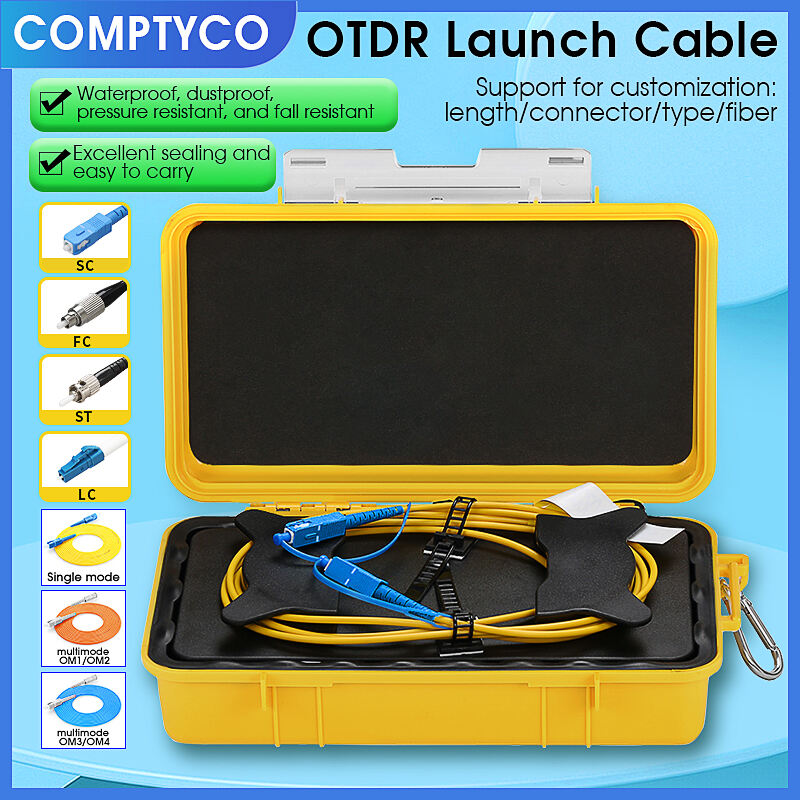
Single mode fiber jumpers represent cutting-edge optical connectivity solutions designed for high-performance data transmission applications. These specialized cables feature a narrow core diameter of approximately 9 micrometers, enabling light to travel in a single path or mode, which significantly reduces signal dispersion and maintains signal integrity over extended distances. Single mode fiber jumpers serve as essential components in modern telecommunications infrastructure, data centers, and enterprise networks where reliable, high-speed connectivity is paramount. The primary function of single mode fiber jumpers involves establishing secure optical connections between network equipment, including switches, routers, optical transceivers, and patch panels. These cables effectively bridge the gap between different network components while maintaining optimal signal quality and minimizing transmission losses. The technological architecture of single mode fiber jumpers incorporates advanced glass fiber cores surrounded by protective cladding layers that guide light signals through total internal reflection principles. This sophisticated design enables these cables to support extremely high bandwidth capacities and transmission speeds reaching up to 100 Gigabits per second and beyond. Single mode fiber jumpers excel in long-distance communication scenarios, making them ideal for metropolitan area networks, wide area networks, and backbone infrastructure applications. The precision engineering of these cables ensures consistent performance across temperature variations and environmental challenges commonly encountered in professional installations. Modern single mode fiber jumpers utilize various connector types, including LC, SC, ST, and FC configurations, providing flexibility for different equipment interfaces and installation requirements. The exceptional signal clarity achieved through single mode fiber jumpers makes them indispensable for applications demanding minimal latency and maximum data throughput, such as financial trading systems, cloud computing platforms, and high-definition video streaming services. These cables support multiple wavelengths simultaneously through wavelength division multiplexing techniques, effectively multiplying available bandwidth without requiring additional physical infrastructure investments.

 EN
EN