
 EN
EN
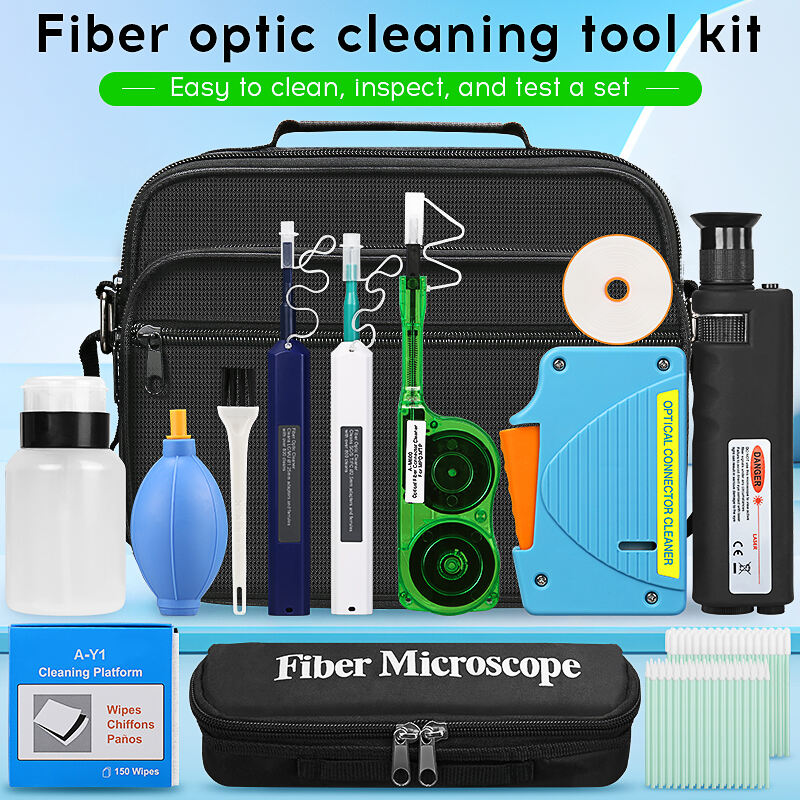
Fiber optic networks form the backbone of modern telecommunications, carrying vast amounts of data at lightning speeds across global networks. However, even microscopic contamination on fiber optic connectors can dramatically degrade signal quality, increase bit error rates, and compromise network reliability. Understanding why proper cleaning protocols are essential reveals the critical relationship between connector cleanliness and optimal network performance in today's demanding digital infrastructure.
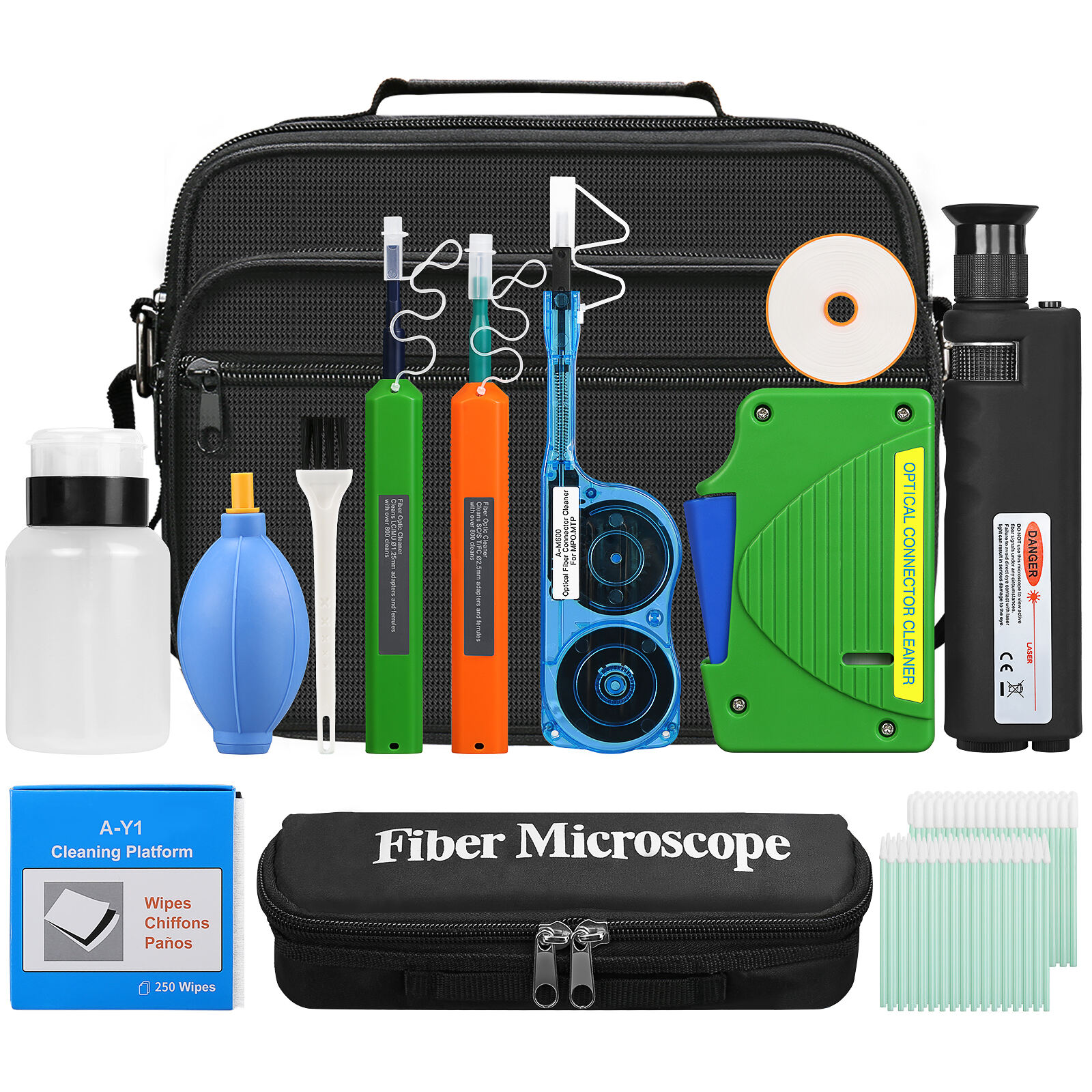
The physics of light transmission through fiber optic cables makes contamination particularly problematic, as particles smaller than human hair can cause significant signal loss. Professional network technicians recognize that systematic cleaning procedures using appropriate fiber optic cleaner tools directly impact system uptime, data integrity, and overall network performance metrics that organizations depend upon for business continuity.
The Science Behind Fiber Optic Contamination Impact
Light Propagation and Signal Integrity
Fiber optic communication relies on total internal reflection to guide light signals through glass or plastic cores with minimal loss. When contaminants accumulate on connector end faces, they create optical discontinuities that scatter, absorb, or reflect transmitted light away from its intended path. This phenomenon, known as insertion loss, directly correlates with the size, type, and location of contaminants on the connector surface.
Research demonstrates that particles as small as 1 micrometer can cause measurable signal degradation in single-mode fiber systems operating at high data rates. The relationship between contamination and performance becomes exponentially more critical as network speeds increase, making proper use of a fiber optic cleaner essential for maintaining system specifications in modern high-bandwidth applications.
Types of Contamination and Their Effects
Fiber optic connectors encounter various contamination sources during installation, maintenance, and operation. Dust particles from environmental exposure create the most common form of contamination, while oil residues from human skin contact, cleaning solvents, and manufacturing processes form films that attract additional particles. Each contamination type requires specific cleaning approaches using appropriate fiber optic cleaner solutions and techniques.
Organic contamination, including fingerprint oils and adhesive residues, typically requires alcohol-based cleaning agents, while inorganic particles like silica dust respond better to dry cleaning methods. Understanding contamination characteristics helps technicians select the most effective fiber optic cleaner approach for specific situations, ensuring thorough removal without introducing additional contaminants during the cleaning process.
Performance Degradation Mechanisms
Signal Loss and Power Budget Impact
Network designers allocate specific power budgets for fiber optic links, accounting for expected losses from cables, splices, and connectors under normal operating conditions. Contaminated connectors consume additional power budget through increased insertion loss, potentially pushing systems beyond their operational margins and causing intermittent failures or complete signal dropout.
Systematic measurements reveal that dirty connectors can introduce 0.5 to 3.0 dB of additional loss per connection point, significantly impacting long-haul links with multiple connector interfaces. Regular maintenance using quality fiber optic cleaner tools helps maintain consistent power levels and prevents gradual performance degradation that can go unnoticed until critical failure occurs.
Reflection and Return Loss Consequences
Contaminated connector surfaces create irregular interfaces that increase optical return loss, causing reflected signals to travel back toward transmission sources. These reflections interfere with transmitted signals, increase noise levels, and can damage sensitive laser sources in high-power applications. The cumulative effect of multiple contaminated connectors creates standing wave patterns that severely degrade signal quality.
Modern fiber optic systems specify stringent return loss requirements, particularly for high-speed digital applications and coherent optical transmission systems. Proper connector cleaning using appropriate fiber optic cleaner techniques ensures surfaces meet return loss specifications and maintain the low reflection coefficients necessary for optimal system performance.
Business Impact and Operational Consequences
Network Reliability and Uptime
Contamination-related signal degradation often manifests as intermittent errors that are difficult to diagnose and resolve quickly. These issues can cause packet retransmissions, increased latency, and periodic connection drops that disrupt business operations and user experiences. Organizations relying on fiber optic networks for critical applications face significant operational risks when connector cleaning protocols are inadequate.
Proactive maintenance programs incorporating regular connector inspection and cleaning with professional fiber optic cleaner equipment reduce unscheduled downtime and help maintain service level agreements. Statistical analysis of network failure modes consistently shows that connector-related issues represent a significant percentage of fiber optic system problems, making prevention through proper cleaning economically justified.
Maintenance Cost and Resource Allocation
Emergency troubleshooting of contamination-related network issues typically costs significantly more than preventive maintenance programs. Field technicians spend considerable time isolating intermittent faults caused by dirty connectors, often requiring multiple site visits and specialized test equipment to identify root causes that could have been prevented through routine cleaning procedures.
Investment in quality fiber optic cleaner tools and training enables maintenance teams to perform effective cleaning procedures during scheduled maintenance windows, reducing emergency service calls and improving overall network reliability. The cost-benefit analysis consistently favors proactive cleaning over reactive troubleshooting approaches.
Professional Cleaning Standards and Procedures
Industry Standards and Compliance Requirements
Telecommunications industry standards specify detailed requirements for fiber optic connector cleanliness, including acceptable contamination levels and inspection criteria. These standards provide objective measurement criteria that help technicians determine when cleaning is necessary and verify cleaning effectiveness using appropriate fiber optic cleaner tools and inspection equipment.
Compliance with industry standards ensures consistent performance across different network segments and equipment vendors, reducing integration challenges and maintaining interoperability between system components. Professional fiber optic cleaner procedures aligned with these standards provide documented evidence of proper maintenance practices for quality assurance and warranty purposes.
Advanced Cleaning Technologies and Techniques
Modern fiber optic cleaner technologies incorporate various cleaning mechanisms, including mechanical wiping, solvent application, and ultrasonic cleaning methods. Each approach offers specific advantages for different contamination types and connector geometries, requiring technicians to understand when and how to apply different cleaning techniques effectively.
Automated cleaning systems and specialized fiber optic cleaner tools improve consistency and reduce human error in cleaning procedures, particularly for high-density connector arrays and multimode fiber applications. These advanced systems often include built-in inspection capabilities that verify cleaning effectiveness before connector mating, ensuring optimal results.
Quality Assurance and Verification Methods
Inspection and Testing Protocols
Effective cleaning verification requires systematic inspection procedures using appropriate magnification and lighting conditions to detect residual contamination. Microscopic inspection at 200x to 400x magnification reveals particles and films that are invisible to naked eye examination, enabling technicians to verify fiber optic cleaner effectiveness objectively.
Standardized inspection criteria help technicians make consistent pass/fail decisions regarding connector cleanliness, reducing subjective interpretation and ensuring reliable cleaning outcomes. Documentation of inspection results provides traceability for maintenance records and helps identify recurring contamination sources that require additional attention.
Performance Testing and Validation
Optical power measurements before and after cleaning procedures provide quantitative evidence of cleaning effectiveness and help establish baseline performance levels for future reference. These measurements verify that fiber optic cleaner procedures achieve the intended performance improvements and identify any cleaning-related issues that require correction.
Long-term performance monitoring helps validate the effectiveness of cleaning protocols and identifies optimization opportunities for maintenance scheduling and fiber optic cleaner selection. Trending analysis of connector performance over time reveals the relationship between cleaning frequency and system reliability.
FAQ
How often should fiber optic connectors be cleaned?
The frequency of fiber optic connector cleaning depends on environmental conditions, handling frequency, and application requirements. In clean indoor environments, connectors may only require cleaning when performance issues are detected, while harsh industrial environments may necessitate monthly or quarterly cleaning schedules. Critical applications often benefit from cleaning before each connection, regardless of visual contamination levels.
What are the signs that fiber optic connectors need cleaning?
Common indicators of contaminated connectors include increased bit error rates, higher optical insertion loss measurements, intermittent connection issues, and visible contamination during microscopic inspection. Network monitoring systems may also detect degraded signal-to-noise ratios or increased optical return loss that suggest connector contamination problems requiring immediate attention with appropriate fiber optic cleaner tools.
Can improper cleaning damage fiber optic connectors?
Yes, improper cleaning techniques can scratch connector end faces, introduce additional contamination, or damage protective coatings on connector surfaces. Using inappropriate solvents, excessive pressure, or contaminated cleaning materials can cause permanent damage that requires connector replacement. Following manufacturer recommendations and using proper fiber optic cleaner tools with appropriate techniques prevents cleaning-related damage.
What is the difference between wet and dry cleaning methods?
Dry cleaning methods use mechanical action to remove loose particles and are typically the first step in cleaning procedures, while wet cleaning uses solvents to dissolve oils and remove stubborn contamination. Most effective cleaning protocols combine both approaches, starting with dry cleaning to remove particles, followed by wet cleaning with isopropyl alcohol, and finishing with dry cleaning to remove residual solvents. Professional fiber optic cleaner kits often include both dry and wet cleaning components for comprehensive contamination removal.