
 EN
EN

A fiber optic splitter is a fundamental passive optical component that divides an incoming optical signal into multiple output branches while maintaining signal integrity and consistency. In passive optical network (PON) architectures, the uniformity of a fiber optic splitter directly influences how effectively light is distributed across numerous subscriber terminals and optical line terminals. When a fiber optic splitter lacks uniformity, signal degradation, power loss imbalances, and reduced overall network performance become inevitable consequences that operators cannot ignore.
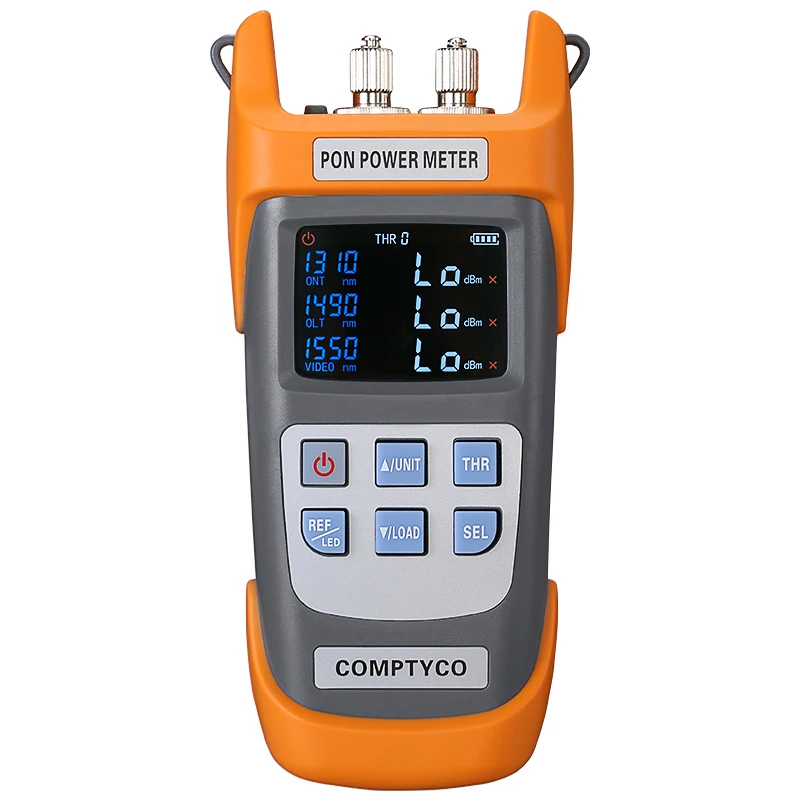
Uniformity in a fiber optic splitter refers to the consistency of optical power distribution across all output ports under identical input conditions. This consistency determines whether every subscriber in a PON deployment receives equivalent signal quality and bandwidth allocation. A high-performance fiber optic splitter with excellent uniformity ensures that no single output port receives disproportionate power, which is critical for maintaining balanced network operations and preventing cascading failures in distributed optical systems.
Understanding Fiber Optic Splitter Uniformity and Its Importance
What Defines Uniformity in a Fiber Optic Splitter
Uniformity in a fiber optic splitter is measured as the deviation in optical power distribution across all output ports when identical input signals are applied. Industry standards typically specify that power division should not deviate by more than 0.5 decibels across all ports, though premium fiber optic splitter designs achieve even tighter tolerances. When a fiber optic splitter maintains strict uniformity specifications, each output port delivers predictable, consistent power levels that enable reliable subscriber connections and minimize signal quality variations throughout the network.
The manufacturing precision required to achieve uniformity in a fiber optic splitter involves careful control of waveguide geometry, refractive index profiles, and coupling ratios at the molecular level. Even minor manufacturing inconsistencies can result in a fiber optic splitter that fails to meet uniformity standards, creating power imbalances that propagate throughout the network. Operators must prioritize sourcing fiber optic splitter components from manufacturers who employ rigorous quality control and testing protocols to validate uniformity before deployment.
Why Uniformity Matters for PON Network Reliability
In PON architecture, a fiber optic splitter serves as the critical junction where one optical fiber branches into dozens or hundreds of subscriber lines. If the fiber optic splitter introduces non-uniform power distribution, some subscribers experience stronger signals while others suffer weaker connections, creating service quality inconsistencies that frustrate end users and complicate troubleshooting. Network operators depend on a fiber optic splitter that maintains predictable, uniform power division to ensure fair resource allocation and stable performance across all connected nodes.
Without uniformity in a fiber optic splitter, downstream optical amplifiers and receivers must be designed with excessive gain margins to compensate for the worst-case power levels, increasing system cost and power consumption. This design inefficiency cascades through the entire network architecture. A fiber optic splitter with superior uniformity eliminates these compensatory measures, allowing operators to design more cost-effective systems that consume less energy while delivering superior performance reliability.
Performance Impacts of Fiber Optic Splitter Uniformity
Signal Quality and Bit Error Rate Optimization
The bit error rate (BER) in downstream PON signals directly correlates with the uniformity characteristics of the fiber optic splitter at the optical line terminal. When a fiber optic splitter distributes power uniformly, all subscriber receivers operate within optimal signal-to-noise ratios, resulting in low BER across the entire network footprint. Conversely, a poorly designed fiber optic splitter that concentrates power unevenly causes some receiver terminals to operate near their sensitivity thresholds while others waste excess power, degrading overall system performance.
Regulatory compliance standards for PON systems mandate specific BER thresholds, typically 10^-10 or better for reliable service delivery. A fiber optic splitter that fails to maintain uniformity forces expensive countermeasures such as increased transmitter power, improved receiver sensitivity, or shorter deployment distances. Selecting a fiber optic splitter engineered for exceptional uniformity ensures compliance margins are maintained naturally, reducing operational complexity and cost.
Network Scalability and Future Growth
As PON networks expand to support higher subscriber densities and increased bandwidth demands, the uniformity of the fiber optic splitter becomes increasingly critical. A fiber optic splitter with marginal uniformity specification may function adequately in initial deployments but fail dramatically when network loads increase or additional splits are cascaded. Premium fiber optic splitter designs with tight uniformity tolerances provide a foundation for sustainable network growth without redesign or replacement of core optical infrastructure.
Future PON standards including NGPON2 and XGS-PON require even more stringent performance requirements, making fiber optic splitter uniformity a strategic consideration for operators planning long-term network investments. A fiber optic splitter chosen today must deliver sufficient uniformity margin to remain viable under next-generation protocols and increased traffic loads that will characterize networks five to ten years forward.
Manufacturing and Testing Considerations for Fiber Optic Splitter Uniformity
Precision Manufacturing Processes and Quality Assurance
Achieving consistent uniformity in a fiber optic splitter requires sophisticated manufacturing techniques including precision fiber coupling, fused biconical taper (FBT) processing, or photonic integrated circuit (PIC) fabrication, depending on the splitter design. Each manufacturing method demands rigorous process control, environmental stability, and specialized testing equipment to validate that every fiber optic splitter meets uniformity specifications before shipping. Manufacturers who invest in advanced quality assurance systems can guarantee that each fiber optic splitter batch delivers predictable, uniform performance across the entire production run.
Third-party independent testing laboratories verify that fiber optic splitter uniformity claims match actual component performance in real-world deployment conditions. These independent validations provide operators with confidence that the fiber optic splitter selected for their network truly delivers the advertised uniformity specifications. When specifying a fiber optic splitter, operators should always request certified test reports demonstrating uniformity performance across the full operating wavelength range and temperature spectrum.
Testing Methodologies and Performance Validation
Comprehensive testing of a fiber optic splitter uniformity involves characterizing optical power distribution across all output ports using calibrated optical power meters and specialized measurement software. The standard test procedure measures insertion loss uniformity, wavelength-dependent uniformity, and temperature-dependent uniformity to ensure the fiber optic splitter maintains performance consistency across all operating conditions. These tests must be repeated across representative samples from multiple production batches to verify that the fiber optic splitter design delivers reliable, consistent uniformity throughout its manufacturing lifecycle.
Environmental stress testing further validates fiber optic splitter uniformity under extreme temperature variations, humidity exposure, and aging conditions that simulate years of field operation. A fiber optic splitter that maintains tight uniformity tolerances after accelerated aging testing provides operators with assurance that network performance will remain stable and predictable throughout the component's operational lifespan. This long-term performance validation distinguishes premium fiber optic splitter products from commodity alternatives that may meet initial specifications but degrade over time.
FAQ
How does fiber optic splitter uniformity affect subscriber bandwidth allocation?
In PON systems using dynamic bandwidth allocation algorithms, non-uniform power distribution from a poorly designed fiber optic splitter causes some subscribers to receive faster channels while others experience throttled connections. When a fiber optic splitter maintains excellent uniformity, all subscribers operate within equivalent signal quality margins, enabling fair, consistent bandwidth allocation that optimizes network resource utilization. This uniform power distribution ensures that bandwidth management algorithms function as designed, preventing certain subscribers from monopolizing system resources due to superior signal strength from an unbalanced fiber optic splitter.
What are typical uniformity specifications for commercial fiber optic splitter products?
Industry-standard fiber optic splitter specifications typically guarantee uniformity of ±0.5 decibels across all output ports, though some premium components achieve ±0.3 decibels or better. The exact uniformity specification for a fiber optic splitter depends on split ratio, wavelength range, and manufacturing technology employed. Operators deploying systems requiring exceptional performance should specify fiber optic splitter components with uniformity better than ±0.4 decibels to ensure adequate performance margins for long-term reliability and future upgrades.
Can non-uniform fiber optic splitter performance be corrected through network optimization?
While sophisticated optical amplifiers and equalizers can partially compensate for power imbalances introduced by a non-uniform fiber optic splitter, such compensation increases system cost, complexity, and power consumption while reducing overall reliability. The optimal solution is selecting a fiber optic splitter engineered for inherent uniformity rather than attempting to mask poor splitter performance through downstream compensation. This approach simplifies network architecture, reduces operational overhead, and ensures the most cost-effective, reliable long-term solution for PON deployment.