
 EN
EN
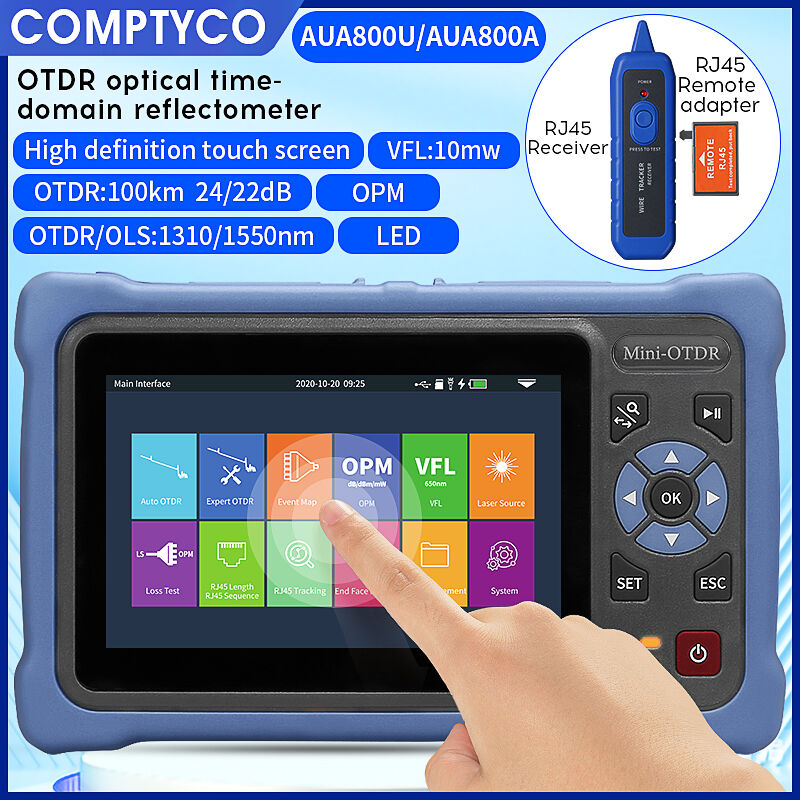
Dead zones in optical time domain reflectometer measurements represent one of the most critical limitations affecting the accuracy of short link fiber testing. These measurement blind spots occur immediately after strong reflection events, creating areas where an optical time domain reflectometer cannot accurately detect or characterize subsequent fiber events. Understanding how dead zones impact testing accuracy is essential for fiber optic technicians working with short links, particularly in dense urban networks, building-to-building connections, and data center environments where precise fault location and loss measurement are paramount.
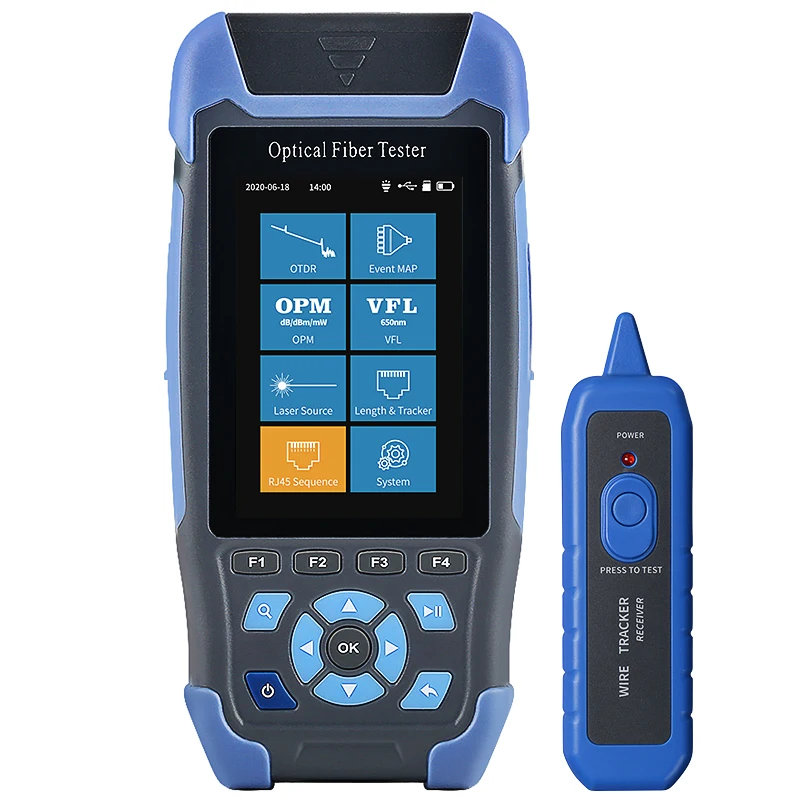
The challenge of dead zones becomes particularly pronounced when testing short fiber links, where the entire span may be shorter than the dead zone length itself. This measurement limitation directly impacts the ability to accurately characterize connector losses, splice points, and fault locations within short distance applications. Modern optical time domain reflectometer technology has evolved to address these challenges through improved pulse width control, advanced signal processing, and specialized short link testing modes, yet understanding the fundamental physics and practical implications of dead zones remains crucial for accurate field measurements.
Understanding OTDR Dead Zone Fundamentals
Physical Origins of Dead Zone Formation
Dead zones in optical time domain reflectometer measurements originate from the fundamental physics of optical pulse reflection and detection. When an optical pulse encounters a high-reflection event such as a connector interface or fiber break, the reflected signal can temporarily saturate the receiver photodiode within the optical time domain reflectometer. During this saturation period, the instrument cannot distinguish between the reflected signal from the initial event and any subsequent reflections that may occur from downstream fiber events.
The duration of this saturation period directly correlates to the dead zone length, which is typically expressed in terms of distance along the fiber. This distance calculation accounts for the round-trip time of the optical pulse, meaning that the actual dead zone represents twice the physical distance that the pulse travels during the receiver recovery time. The recovery characteristics depend on both the optical time domain reflectometer design and the magnitude of the reflection event that triggered the saturation condition.
Modern optical time domain reflectometer systems employ sophisticated receiver designs with automatic gain control and dynamic range optimization to minimize dead zone effects. However, the fundamental physics of high-reflection events means that some degree of dead zone formation remains inherent to the measurement principle, particularly when testing connections with poor return loss characteristics or fiber breaks that create near-total reflection conditions.
Event Dead Zone Versus Attenuation Dead Zone
Optical time domain reflectometer dead zones manifest in two distinct forms, each affecting measurement accuracy differently. Event dead zones represent the distance immediately following a reflection event where the instrument cannot detect the presence of subsequent events. Within this zone, connector interfaces, splice points, or fiber faults may exist but remain completely invisible to the optical time domain reflectometer measurement, creating potential blind spots in network characterization.
Attenuation dead zones extend beyond event dead zones and represent areas where the optical time domain reflectometer can detect the presence of events but cannot accurately measure their insertion loss or return loss characteristics. Within attenuation dead zones, events appear on the trace but their loss measurements may be significantly underestimated or completely unreliable, leading to incorrect assessments of connector performance or splice quality.
The distinction between these dead zone types becomes critical when evaluating short link testing accuracy. An event that falls within an event dead zone will be completely missed, potentially leading to incorrect fault location or incomplete network documentation. Events within attenuation dead zones may be detected but with measurement errors that can impact network performance assessments and compliance verification procedures.
Impact on Short Link Measurement Accuracy
Distance Measurement Errors in Short Links
Short fiber links present unique challenges for optical time domain reflectometer distance measurement accuracy due to the relationship between dead zone length and total link distance. When the dead zone length approaches or exceeds the physical length of the fiber link being tested, conventional distance measurement techniques become unreliable or impossible to implement. This limitation particularly affects building-to-building connections, campus network links, and data center interconnections where link lengths may range from hundreds of meters to several kilometers.
The accuracy of distance measurements in short links depends critically on the optical time domain reflectometer ability to resolve the far-end reflection event from the near-end connector reflection. When these events fall within the same dead zone, the instrument cannot distinguish between them, leading to measurement artifacts that may indicate incorrect link lengths or masking the presence of intermediate events such as splice points or macro-bend losses.
Modern optical time domain reflectometer systems address this challenge through specialized short link testing modes that utilize shorter pulse widths and optimized receiver settings. These configurations reduce dead zone length at the expense of dynamic range and distance capability, representing a fundamental trade-off in optical time domain reflectometer performance optimization for specific application requirements.
Loss Measurement Accuracy Limitations
Dead zones significantly impact the accuracy of loss measurements in short fiber links, particularly affecting the characterization of connector interfaces and splice points. When connection points fall within dead zones, the optical time domain reflectometer cannot accurately measure their insertion loss contribution to total link loss. This measurement limitation can lead to incorrect assessments of connector quality, splice performance, and overall link budget calculations.
The impact on loss measurement accuracy extends beyond simple measurement errors to affect network troubleshooting and maintenance procedures. Connector cleaning requirements may be overlooked when poor connector performance remains hidden within dead zones, leading to ongoing signal quality issues that manifest as intermittent network problems rather than clearly identifiable hardware faults.
Short link applications in high-speed optical networks require particularly stringent loss budgets, where connector insertion losses exceeding specification limits can directly impact bit error rates and transmission performance. Dead zone limitations in optical time domain reflectometer measurements can prevent accurate characterization of these critical performance parameters, necessitating alternative testing approaches or specialized instrumentation designed specifically for short link applications.
Technical Solutions and Mitigation Strategies
Pulse Width Optimization Techniques
Pulse width optimization represents the primary technical approach for reducing dead zone impact in short link optical time domain reflectometer testing. Shorter pulse widths directly reduce dead zone length by minimizing the time required for receiver recovery following high-reflection events. However, this optimization comes with trade-offs in measurement dynamic range and maximum testing distance capability, requiring careful selection of pulse parameters based on specific application requirements.
Advanced optical time domain reflectometer systems provide multiple pulse width settings, allowing technicians to optimize dead zone performance for short link testing while maintaining capability for longer distance measurements when required. The selection of appropriate pulse width depends on the specific characteristics of the link being tested, including expected length, connector types, and required measurement resolution.
Some modern optical time domain reflectometer designs incorporate adaptive pulse width selection, automatically optimizing measurement parameters based on initial link characterization results. This automated approach can improve measurement accuracy while reducing the technical expertise required for proper instrument configuration in short link testing applications.
Launch Cable Implementation Strategies
Launch cable implementation provides an effective strategy for mitigating dead zone impact in short link testing applications. By introducing a known length of fiber between the optical time domain reflectometer output and the link under test, launch cables move the near-end connector reflection away from the instrument, reducing the impact of dead zones on subsequent measurements within the link being tested.
The effectiveness of launch cable implementation depends on proper cable length selection and connector quality control. Launch cables must be sufficiently long to move near-end reflections beyond the expected location of critical measurement points within the link under test, while maintaining low insertion loss characteristics that do not significantly impact measurement dynamic range.
Professional optical time domain reflectometer testing procedures typically specify launch cable requirements based on the specific characteristics of the network being tested. These specifications account for expected connector return loss levels, required measurement accuracy, and the dead zone characteristics of the particular optical time domain reflectometer model being used for testing.
Best Practices for Accurate Short Link Testing
Measurement Configuration Guidelines
Accurate short link testing with optical time domain reflectometer systems requires careful attention to measurement configuration parameters beyond simple pulse width selection. Averaging settings play a critical role in improving measurement signal-to-noise ratio, particularly important when using shorter pulse widths that inherently provide reduced optical power levels. Increased averaging can improve measurement resolution and repeatability, though at the cost of increased testing time.
Refractive index settings must be precisely configured to ensure accurate distance measurements in short link applications where small distance errors can have proportionally large impact on fault location accuracy. The refractive index value should match the specific fiber type being tested, accounting for variations between different fiber manufacturers and specifications.
Range settings should be optimized to provide adequate resolution for the expected link length while minimizing measurement noise. Excessive range settings can reduce distance resolution, while insufficient range may truncate important measurement information at the far end of the link. Modern optical time domain reflectometer systems often provide automatic range optimization based on initial link characterization.
Quality Assurance and Verification Procedures
Quality assurance procedures for short link optical time domain reflectometer testing should incorporate verification measurements using alternative testing methods when possible. Optical loss test sets (OLTS) provide independent verification of total link loss measurements, helping to identify potential measurement errors introduced by dead zone limitations or other optical time domain reflectometer measurement artifacts.
Visual fault locator testing can provide complementary information for identifying fiber breaks or severe bend losses that may fall within optical time domain reflectometer dead zones. While visual fault locators cannot provide quantitative loss measurements, they can confirm the presence and approximate location of faults that might otherwise remain undetected in short link testing scenarios.
Documentation procedures should clearly identify measurement limitations associated with dead zone effects, particularly when testing results may be used for network acceptance testing or compliance verification. Test reports should include information about pulse width settings, launch cable configuration, and any measurement limitations that may affect the reliability of specific results.
FAQ
How short must a fiber link be before OTDR dead zones become a significant concern?
Dead zones become a significant concern when the link length approaches the dead zone specification of your optical time domain reflectometer, typically affecting links shorter than 500 meters to 1 kilometer depending on the instrument and pulse width settings. The exact threshold depends on your specific testing requirements and the dead zone characteristics of your optical time domain reflectometer model.
Can dead zone limitations be completely eliminated in short link testing?
Dead zone limitations cannot be completely eliminated due to the fundamental physics of optical reflection and detection, but their impact can be significantly reduced through proper pulse width optimization, launch cable implementation, and advanced optical time domain reflectometer designs. Modern instruments can achieve dead zones as short as a few meters under optimal conditions.
What alternative testing methods should be used alongside OTDR for short links?
Optical loss test sets provide the most effective complement to optical time domain reflectometer testing for short links, offering accurate end-to-end loss measurements without dead zone limitations. Visual fault locators can help identify breaks or severe bends, while specialized short link test equipment may be required for critical applications requiring maximum accuracy.
How do dead zone specifications vary between different OTDR models?
Dead zone specifications vary significantly between optical time domain reflectometer models, ranging from several meters to over 50 meters depending on instrument design, pulse width settings, and measurement wavelength. High-end instruments typically offer shorter dead zones through advanced receiver designs and signal processing capabilities, while portable units may have longer dead zones but offer other advantages in field testing scenarios.
Table of Contents
- Understanding OTDR Dead Zone Fundamentals
- Impact on Short Link Measurement Accuracy
- Technical Solutions and Mitigation Strategies
- Best Practices for Accurate Short Link Testing
-
FAQ
- How short must a fiber link be before OTDR dead zones become a significant concern?
- Can dead zone limitations be completely eliminated in short link testing?
- What alternative testing methods should be used alongside OTDR for short links?
- How do dead zone specifications vary between different OTDR models?