
 EN
EN
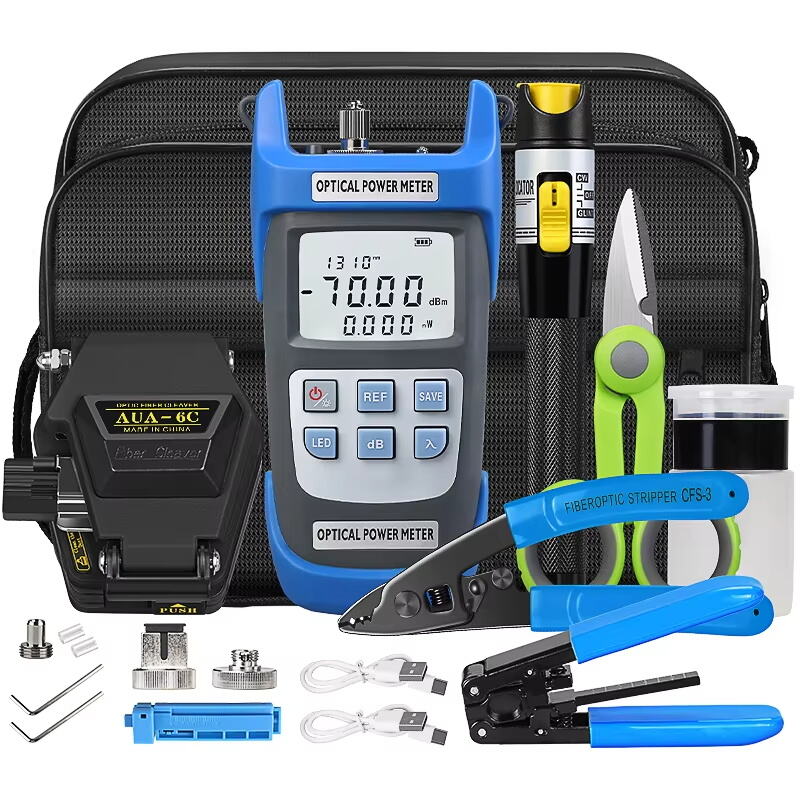
In fiber optic network installation and maintenance, splicing efficiency directly impacts project timelines, labor costs, and connection reliability. While fusion splicers often receive primary attention in workflow discussions, the fiber cleaver plays an equally critical role in determining splice quality and operational speed. A precision fiber cleaver creates the foundation for successful fusion splicing by producing consistent, perpendicular end faces that enable low-loss connections. Understanding how a high-quality fiber cleaver integrates into the broader splicing workflow reveals opportunities to reduce rework, minimize splice losses, and accelerate deployment cycles across telecommunications, data center, and industrial fiber applications.
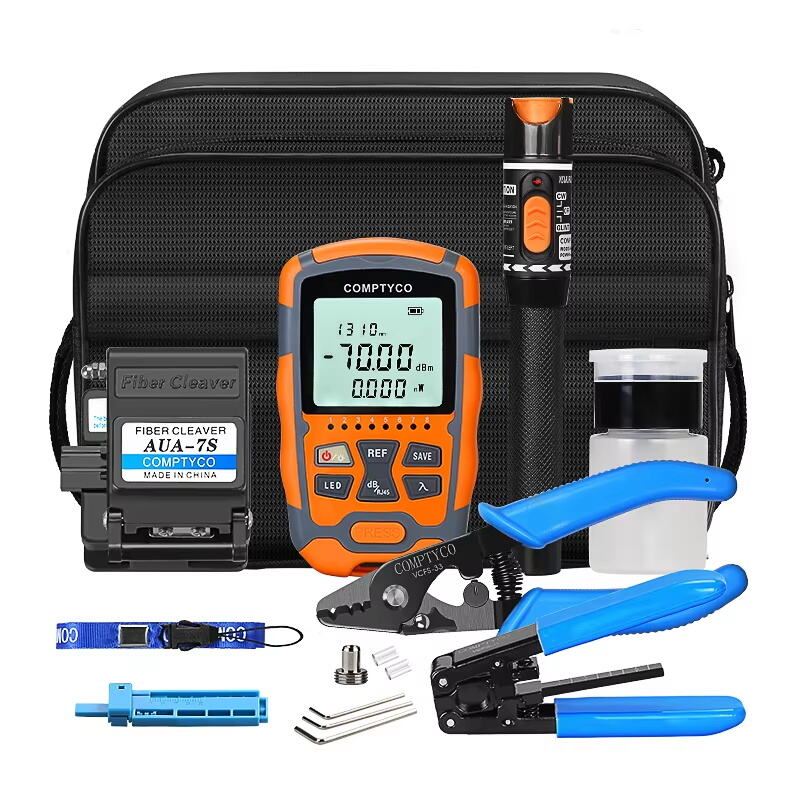
The splicing workflow encompasses multiple interdependent steps, from fiber preparation through final splice verification, where each stage influences downstream outcomes. A quality fiber cleaver reduces variability in the cleave process, creating predictable results that simplify subsequent stripping, cleaning, and fusion operations. This consistency translates into measurable productivity gains as technicians spend less time troubleshooting poor cleaves, adjusting splicer parameters, or repeating failed splices. For field technicians working under time pressure or in challenging environmental conditions, the reliability of a precision fiber cleaver becomes a key determinant of daily throughput and installation quality standards.
Understanding the Fiber Cleaver's Role in Splice Preparation
Creating the Critical End Face Geometry
The primary function of a fiber cleaver is to produce a clean, perpendicular fracture across the fiber end face, typically achieving cleave angles within 0.5 degrees of perfect perpendicularity. This geometric precision directly affects splice loss performance because even slight angular deviations create misalignment between fiber cores during fusion. When a fiber cleaver consistently delivers end faces with minimal angle error, fusion splicers can achieve their specified loss targets without requiring excessive arc calibration or multiple fusion attempts. The cleave quality sets the baseline for what the splicer can accomplish, making it impossible to achieve premium splice performance with substandard cleave preparation.
Beyond angle control, a quality fiber cleaver minimizes end face defects such as hackle, lip formation, and surface irregularities that compromise fusion quality. Hackle patterns occur when the cleaving blade creates uneven stress distribution during fracture, resulting in stepped or rippled end faces that prevent uniform fusion heating. Lip defects manifest as protruding material at the fiber edge, creating obstacles that interfere with fiber alignment in the splicer's v-grooves. By employing precision blade positioning and controlled tension mechanisms, professional-grade fiber cleavers eliminate these defects, ensuring that every cleaved fiber presents an ideal surface for fusion processing.
Impact on Splice Loss and Reflectance Specifications
The relationship between cleave quality and splice performance becomes quantifiable when examining typical loss measurements across different cleave angle ranges. Cleave angles exceeding one degree routinely produce splice losses above 0.05 dB, while precision cleaves below 0.5 degrees typically yield losses under 0.02 dB in standard single-mode applications. For dense wavelength division multiplexing systems or high-performance data center interconnects where cumulative loss budgets are tightly constrained, this difference becomes operationally significant. A reliable fiber cleaver ensures that splice loss remains predictable and within specification, eliminating the uncertainty that forces conservative link budget planning or requires additional amplification stages.
Reflectance performance similarly depends on cleave quality, particularly for applications involving high-power transmission or bidirectional communication over single fibers. Poor cleave angles create Fresnel reflection points that generate return loss, potentially interfering with laser stability or signal quality in sensitive optical systems. While fusion splicing inherently reduces reflectance by eliminating the air gap present in mechanical connections, the initial cleave quality affects how uniformly the fusion zone forms. A precision fiber cleaver contributes to reflectance values below -60 dB by providing the geometric foundation for complete fiber melting and interface elimination during the fusion arc cycle.
Consistency Across Fiber Types and Coating Materials
Modern fiber networks incorporate diverse fiber types including standard single-mode, bend-insensitive designs, and specialty fibers with varying mechanical properties. A versatile fiber cleaver must accommodate these material differences without requiring extensive adjustment or producing inconsistent results. Bend-insensitive fibers with modified trench designs present different stress propagation characteristics during cleaving compared to standard step-index fibers. Quality fiber cleavers incorporate adjustable blade pressure and tension settings that allow technicians to optimize the cleave process for specific fiber constructions while maintaining the geometric precision required for low-loss splicing.
Coating material variations further complicate the cleaving process, as 250-micron acrylate coatings, 900-micron buffer tubes, and specialty high-temperature coatings each interact differently with the cleaving blade. A well-engineered fiber cleaver design prevents coating fragments from contaminating the cleaved end face, which would create contamination issues during fusion and potentially damage fusion electrodes. The ability to consistently produce clean cleaves across various fiber and coating combinations reduces workflow complexity, allowing technicians to work efficiently without constantly adjusting tools or techniques based on the specific fiber construction they encounter in the field.
Workflow Efficiency Contributions Throughout Splicing Operations
Reducing First-Time Splice Failure Rates
First-time splice success rates directly correlate with overall workflow productivity, as failed splices require fiber re-preparation and additional fusion cycles that consume both time and expensive fiber length. When a fiber cleaver consistently produces quality end faces, fusion splicers can achieve fusion success rates exceeding ninety-five percent, dramatically reducing the cumulative time spent on rework throughout a project. This reliability becomes particularly valuable in high-fiber-count applications such as ribbon splicing or multi-fiber trunk installations where a single poor cleave can delay the completion of an entire splice tray or closure.
The economic impact of improved first-time success extends beyond direct labor time to include material costs and project scheduling. Each failed splice consumes fiber length that must be discarded, gradually shortening available working length and potentially requiring cable retermination if excessive failures occur. In aerial or underground installations where accessing splice points involves significant setup time, the ability to complete splices reliably on the first attempt prevents costly return visits and schedule delays. A precision fiber cleaver thus functions as risk mitigation equipment, protecting project margins by minimizing the variability that creates unpredictable completion timelines.
Accelerating Preparation and Setup Cycles
Workflow acceleration extends beyond splice execution to encompass the preparation stages where fibers are stripped, cleaned, and cleaved prior to loading into the fusion splicer. User-friendly fiber cleaver designs with intuitive fiber positioning guides and clear visual indicators enable technicians to achieve proper cleave length and blade alignment quickly without repeated measurement or adjustment. Features such as integrated length guides, built-in scrap collectors, and ergonomic clamping mechanisms reduce the cognitive load and physical manipulation required during the cleaving process, allowing operators to maintain consistent rhythm throughout extended splicing sessions.
The cumulative time savings from streamlined fiber cleaver operation become substantial when aggregated across hundreds or thousands of splices in large-scale deployment projects. Reducing average cleave time by even fifteen seconds per fiber translates to significant productivity gains in environments such as central office buildouts, where technicians may complete several hundred splices daily. Modern fiber cleaver designs achieve these efficiency gains through engineering refinements that eliminate unnecessary steps, such as manual blade rotation indicators that allow operators to track blade life without disassembling the tool or precision tension mechanisms that require minimal adjustment between different fiber types.
Minimizing Operator Fatigue and Error Rates
Extended splicing sessions place physical and cognitive demands on technicians that can degrade performance quality over time. A well-designed fiber cleaver reduces operator fatigue through ergonomic features such as comfortable grip surfaces, smooth clamping actions, and minimal force requirements for fiber loading and cleaving. When technicians can execute hundreds of cleaves without experiencing hand strain or repetitive stress, they maintain focus and precision throughout the workday, reducing the error rates that typically increase during fatigue periods. This human factors consideration becomes particularly important for organizations managing large installation crews where consistent quality across multiple operators determines overall project outcomes.
The psychological impact of using reliable tools also contributes to workflow efficiency in ways that extend beyond measurable time savings. Technicians working with consistent, predictable fiber cleavers develop confidence in their preparation process, allowing them to work at optimal speed without the hesitation and double-checking that accompanies unreliable equipment. This confidence enables experienced operators to achieve higher daily splice counts while maintaining quality standards, effectively increasing the productive capacity of skilled labor resources. For training programs introducing new technicians to fiber splicing, quality fiber cleavers accelerate skill development by removing tool variability as a confounding factor during the learning process.
Integration with Fusion Splicer Capabilities and Limitations
Matching Cleave Specifications to Splicer Requirements
Fusion splicers operate within defined parameter ranges for acceptable fiber end face conditions, with specific tolerances for cleave angle, end face flatness, and fiber length. Understanding these requirements allows technicians to select and operate fiber cleavers that consistently deliver results within the splicer's optimal processing window. High-end core alignment splicers with automated image analysis can detect and report cleave quality issues, providing feedback that helps operators optimize their cleaving technique. However, even advanced splicers cannot compensate for severely defective cleaves, making the fiber cleaver's performance a hard constraint on achievable splice quality regardless of splicer sophistication.
The relationship between cleave specifications and splicer capabilities varies across different fusion splicing technologies and application contexts. Active alignment splicers used for specialty fiber applications may require tighter cleave angle tolerances than standard core alignment systems because of the precision needed for mode field matching. Similarly, ribbon fiber splicers demand consistent cleave quality across all twelve or twenty-four fibers simultaneously, as a single poor cleave can compromise the entire ribbon splice. Selecting a fiber cleaver with performance characteristics matched to specific splicer requirements ensures that the preparation workflow supports rather than limits the splicer's capability to achieve target performance specifications.
Enabling Advanced Splicing Techniques and Applications
Specialized splicing applications such as dissimilar fiber joining, taper splicing, or mode field adapter creation place additional demands on cleave quality beyond standard telecommunications splicing. When joining fibers with different core diameters or numerical apertures, the cleave end face quality becomes even more critical because geometric misalignment compounds the inherent mode field mismatch. A precision fiber cleaver enables technicians to achieve the cleave consistency necessary for these advanced techniques, expanding the range of applications they can address with confidence. This capability proves valuable in research environments, specialty fiber manufacturing, and custom optical assembly applications where standard splicing procedures require adaptation.
Emerging applications in fields such as fiber sensing, optical component pigtailing, and photonic integrated circuit packaging require splice quality levels that exceed typical telecommunications standards. In these contexts, fiber cleavers must deliver sub-quarter-degree cleave angles and near-perfect end face flatness to enable fusion splices with losses below 0.01 dB. Professional-grade fiber cleavers designed for these demanding applications incorporate features such as thermally stabilized blade holders, precision tensioning systems, and environmental isolation to achieve the required performance consistency. For organizations serving these specialized markets, investing in premium fiber cleavers becomes essential for maintaining the quality differentiation that justifies higher service pricing.
Supporting Preventive Maintenance and Quality Assurance Programs
Systematic quality assurance in fiber splicing operations requires tracking and analyzing performance metrics that identify trends and potential issues before they impact project outcomes. A reliable fiber cleaver contributes to these programs by maintaining consistent performance characteristics over extended periods, creating stable baseline conditions that simplify root cause analysis when splice quality variations occur. When technicians can trust that their fiber cleaver is performing within specification, they can focus troubleshooting efforts on other potential variables such as fiber contamination, fusion parameters, or environmental conditions rather than questioning their preparation tools.
Preventive maintenance programs for fiber splicing equipment benefit from fiber cleavers designed with user-serviceable components and clear maintenance indicators. Blade rotation counters, wear indicators, and modular component designs allow technicians to perform routine maintenance without specialized tools or factory service, maintaining optimal performance throughout the tool's service life. This serviceability reduces downtime associated with equipment maintenance and supports inventory management strategies that minimize spare part requirements. Organizations operating distributed field crews particularly value fiber cleavers that support field maintenance, as centralized repair facilities create logistics challenges and equipment downtime that impact productivity across multiple teams.
Selection Criteria for Workflow Optimization
Evaluating Cleave Quality Specifications and Consistency
When selecting a fiber cleaver for workflow integration, documented performance specifications provide essential decision criteria, though real-world consistency often matters more than theoretical maximum performance. Manufacturer specifications for cleave angle typically reference statistical distributions such as maximum angles or standard deviations across sample populations. Understanding these statistical measures helps buyers differentiate between fiber cleavers that occasionally achieve excellent results versus those that consistently deliver within tight tolerances. Field testing or trial periods provide the most reliable assessment of whether a fiber cleaver will maintain performance standards under actual working conditions including temperature variations, operator differences, and extended use between maintenance cycles.
Long-term consistency considerations include blade life characteristics, mechanical wear patterns, and calibration stability over thousands of cleave cycles. A fiber cleaver that requires frequent adjustment or shows rapid performance degradation creates workflow disruptions that offset any initial cost advantages. Premium fiber cleavers typically incorporate wear-resistant materials, precision bearing systems, and robust construction that maintains alignment accuracy throughout the tool's service life. For organizations managing quality metrics and cost-per-splice calculations, evaluating total cost of ownership including blade replacement frequency, maintenance requirements, and expected service life provides more meaningful comparison than initial purchase price alone.
Assessing Operational Features and User Experience
Beyond core cleaving performance, operational features significantly impact workflow efficiency through their influence on setup time, ease of use, and operator comfort. Fiber positioning systems that provide clear visual feedback reduce the cognitive load associated with achieving correct cleave length, while tool-free blade rotation mechanisms eliminate the delays and potential errors associated with manual adjustment procedures. Environmental protection features such as sealed housings and dust covers maintain internal cleanliness in field conditions, extending maintenance intervals and preventing performance degradation from contamination. Evaluating these features in the context of specific deployment environments helps identify which capabilities deliver practical workflow value versus marketing features with limited operational benefit.
Portability and durability considerations become particularly relevant for field splicing applications where equipment must withstand transportation, varying environmental conditions, and occasional impacts or drops. Rugged fiber cleaver designs with protective cases, reinforced housings, and shock-resistant internal mechanisms maintain performance reliability in demanding field environments. Weight and size constraints affect how easily technicians can transport complete splicing kits, influencing their willingness to carry backup tools or specialized equipment for different fiber types. For aerial crews working from bucket trucks or confined space applications with limited working area, compact fiber cleaver designs that maintain full functionality while minimizing footprint provide tangible operational advantages.
Matching Tool Capabilities to Application Requirements
Different fiber optic applications present varying cleave quality requirements that influence appropriate fiber cleaver selection. Standard telecommunications outside plant splicing generally tolerates cleave angles up to 0.5 degrees without significant performance impact, while specialty applications such as coherent transmission systems or fiber laser coupling may require angles below 0.3 degrees. Matching fiber cleaver precision to application requirements avoids both underperformance that compromises splice quality and over-specification that increases tool costs without delivering proportional benefit. Technical specifications provided by fusion splicer manufacturers and industry standards documents provide guidance for determining appropriate cleave quality targets for specific applications.
Fiber type compatibility represents another critical matching consideration, particularly for organizations working with diverse fiber constructions including standard single-mode, multimode, bend-insensitive designs, and specialty fibers. Universal fiber cleavers designed to accommodate multiple fiber types simplify inventory management and reduce the need for technicians to carry multiple specialized tools. However, applications requiring optimal performance with specific fiber constructions may benefit from dedicated fiber cleavers optimized for those fiber characteristics. Understanding the fiber type distribution across typical projects allows organizations to make informed tradeoffs between versatility and specialized performance when building their tool inventory.
FAQ
What cleave angle specification should I target for standard telecommunications splicing?
For standard single-mode telecommunications splicing, targeting cleave angles below 0.5 degrees ensures reliable splice performance with typical fusion splicers. Most quality fiber cleavers designed for professional use consistently achieve angles between 0.3 and 0.5 degrees, which produces splice losses under 0.02 dB in normal conditions. More demanding applications such as long-haul transmission or specialty fiber splicing may require tighter tolerances below 0.3 degrees, necessitating premium fiber cleavers with enhanced precision capabilities.
How frequently should I rotate the cleaving blade to maintain optimal performance?
Blade rotation frequency depends on the specific fiber cleaver design and blade configuration, with typical recommendations ranging from every 3,000 to 12,000 cleaves. Many professional fiber cleavers incorporate 12-position or 16-position blades that provide extended service life between rotations. Monitoring cleave quality through visual inspection or fusion splicer feedback provides the most reliable indicator of when blade rotation becomes necessary, as performance degradation typically manifests as increased cleave angle variation or end face defects before complete blade failure occurs.
Can cleave quality issues cause damage to fusion splicer components?
Poor cleave quality generally does not cause direct damage to fusion splicer electrodes or mechanical components, though severe end face contamination from improper cleaving can transfer debris into the splicer. The primary impact of poor cleaves appears as increased splice loss, higher failure rates, and reduced fusion splicer productivity rather than equipment damage. However, consistently poor cleaves may lead to excessive fusion attempts and arc cycles that accelerate electrode wear over time, indirectly increasing maintenance requirements through higher electrode replacement frequency.
What maintenance procedures are essential for preserving fiber cleaver performance?
Essential fiber cleaver maintenance includes regular blade rotation according to manufacturer specifications, periodic cleaning of fiber positioning guides and clamping surfaces, and verification of tension adjustment mechanisms. Removing accumulated fiber debris and coating fragments prevents contamination of cleaved end faces, while checking tension calibration ensures consistent fracture propagation across the fiber. Storing the fiber cleaver in its protective case when not in use and avoiding exposure to excessive dust or moisture extends service life and maintains precision alignment of internal components between maintenance intervals.
Table of Contents
- Understanding the Fiber Cleaver's Role in Splice Preparation
- Workflow Efficiency Contributions Throughout Splicing Operations
- Integration with Fusion Splicer Capabilities and Limitations
- Selection Criteria for Workflow Optimization
-
FAQ
- What cleave angle specification should I target for standard telecommunications splicing?
- How frequently should I rotate the cleaving blade to maintain optimal performance?
- Can cleave quality issues cause damage to fusion splicer components?
- What maintenance procedures are essential for preserving fiber cleaver performance?